
If reaching for something on a high shelf has started producing a sharp catch in your shoulder, or you’re waking at 3am because you’ve rolled onto the wrong side, you already know the problem is more than a minor ache. Most people’s first instinct is to rest the arm and wait it out. Many find that weeks later, nothing has changed.
What is shoulder impingement syndrome?
Shoulder impingement syndrome is among the most common musculoskeletal conditions in adults. A review by Michener, McClure, and Karduna in Clinical Biomechanics estimated that subacromial impingement accounts for between 44 and 65 per cent of all shoulder pain presentations in primary care. That makes it, statistically, the most likely explanation for the shoulder pain that brought you here.
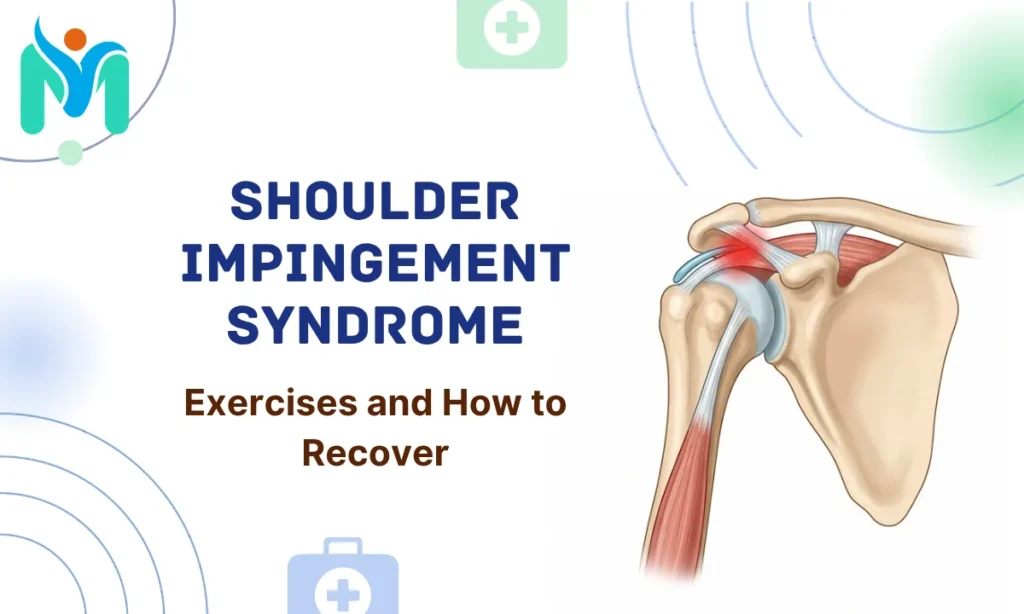
Shoulder impingement syndrome occurs when the tendons and bursa in the subacromial space become compressed during arm movement. The supraspinatus tendon and subacromial bursa sit in a narrow channel between the head of the humerus (your upper arm bone) and the undersurface of the acromion (the bony shelf formed by your shoulder blade). When this space narrows and soft tissue is pinched during movement, the result is the pain you know well: manageable at rest, sharp and catching when you lift your arm.
The condition is also called subacromial pain syndrome or subacromial impingement syndrome in clinical literature. These are the same condition under different names, reflecting an evolving preference among clinicians for terminology that describes where the pain is rather than assuming a single cause. For clarity, this article uses shoulder impingement syndrome throughout.
Shoulder impingement syndrome is a condition affecting the subacromial space, the narrow gap between the head of the humerus and the acromion of the shoulder blade. Compression of the supraspinatus tendon and subacromial bursa within this space during arm movement produces the characteristic painful arc, most pronounced between 60 and 120 degrees of elevation. According to a review in Clinical Biomechanics, the condition accounts for 44 to 65 per cent of shoulder pain presentations in primary care, making it the most common diagnosis in shoulder pain. The majority of cases resolve with physiotherapy-led exercise.
What is actually happening inside your shoulder
Most people picture shoulder impingement as a structural problem: a bony spur pressing down and crushing tissue. That does happen in some cases. But it’s only part of the story, and for many people it isn’t the most important part.
The subacromial space is tight under normal conditions. The supraspinatus tendon passes directly through it on its way from the muscle to its attachment on the greater tubercle of the humerus. The subacromial bursa sits there too, cushioning the tendon from the bony structures above it. When you elevate your arm, those structures move through a gap that briefly narrows, particularly between 60 and 120 degrees of elevation. Charles Neer, who first described the syndrome in 1972, called this the painful arc: the range where compression is maximal. Below it and above it, the space typically reopens and pain eases.
Two mechanisms drive the narrowing. Primary impingement involves structural factors: a hooked acromion (Type III in Bigliani’s classification), thickened coracoacromial ligament, or bony changes around the acromioclavicular joint. Secondary impingement, which Seitz and colleagues identified as the more complex category, happens when the mechanics of movement are faulty rather than the anatomy itself.
That second category produces the clinical insight most people never receive. A 2000 study by Ludewig and Cook in Physical Therapy showed that people with shoulder impingement symptoms had measurably different scapular movement patterns compared with asymptomatic controls. Their scapula didn’t rotate upward or tilt backward as the arm elevated, which meant the subacromial space didn’t open the way it should. Research suggests the pain isn’t only about what is being compressed. It’s about how the whole shoulder system moves.
Neer identified three clinical stages based on what is happening at the tissue level. Each stage corresponds to a different picture on assessment and a different timeline for recovery.
| Stage | Typical age | What is happening at the tissue level | Key symptoms |
|---|---|---|---|
| Stage 1 | Under 25 | Oedema and haemorrhage in the supraspinatus tendon; fully reversible with appropriate treatment | Aching after activity; full or near-full range of motion; pain usually settles at rest |
| Stage 2 | 25 to 40 | Fibrosis and tendinitis; possible partial-thickness tear in the supraspinatus | Painful arc during and after activity; catching sensation; some restriction of overhead range |
| Stage 3 | Over 40 | Degenerative tendon changes; bony changes at acromion; possible full-thickness rotator cuff tear | Pronounced weakness on overhead lifting; significant loss of range; persistent night pain |
The stage distinction matters because Stage 1 typically responds quickly to the right exercise programme. Stage 2 responds well but takes longer. Stage 3 warrants clinical assessment before beginning unsupervised exercise, because a full-thickness rotator cuff tear changes the rehabilitation picture.
What does shoulder impingement feel like?
There is a temptation, when you’ve had a shoulder pain label attached to you, to think that all your symptoms are now explained. But the specific pattern of shoulder impingement syndrome has some distinctive features worth knowing. Understanding them helps you recognise what is normal for this condition, what progress looks like, and when something might need a closer look.
Shoulder impingement syndrome produces a recognisable cluster of symptoms centred on the subacromial region of the shoulder. The most characteristic feature is a painful arc during arm elevation, typically between 60 and 120 degrees. The pain eases both below and above that range. Other common symptoms include night pain when lying on the affected side, weakness on resisted lifting, and difficulty reaching behind the back. These symptoms reflect compression of the supraspinatus tendon and subacromial bursa during specific movement ranges, according to the foundational classification described by Neer in 1972.
Common symptoms include:
- A dull, deep ache in the outer shoulder that worsens during and after overhead or shoulder-height activity
- A sharp, catching sensation at a specific point in the arc of arm elevation, typically between 60 and 120 degrees
- Night pain, often worst when lying directly on the affected shoulder
- Weakness on resisted lifting at shoulder height, particularly with the arm forward or to the side
- Pain when reaching behind the back (fastening a seatbelt, clipping a bra strap, tucking in a shirt)
- Shoulder stiffness after rest that eases with gentle warmup movement
- A general loss of confidence and strength in overhead activities
It is worth knowing that this symptom pattern overlaps with several other shoulder conditions, including rotator cuff tear and other causes of shoulder pain described in NHS guidance. If weakness is pronounced out of proportion to pain, if symptoms are worsening despite consistent exercise, or if pain is constant rather than arc-specific, those are signals worth discussing with a physiotherapist.
Can physiotherapy fix shoulder impingement without surgery?
For most people with shoulder impingement syndrome, the answer is yes. And not just anecdotally. Some of the clearest evidence in orthopaedic research supports physiotherapy as a primary, effective treatment, rather than a bridge to something more invasive.
For most people with shoulder impingement syndrome, physiotherapy-led exercise is as effective as surgery and should be the first-line treatment. The CSAW trial, a multicentre randomised controlled trial published in The Lancet in 2018 by Beard and colleagues, compared arthroscopic subacromial decompression against investigational arthroscopy and physiotherapy alone in 313 patients. At six months, all three groups showed similar improvements in shoulder function and pain, with no significant additional benefit from surgical decompression. A systematic review and meta-analysis by Steuri and colleagues in the British Journal of Sports Medicine in 2017 confirmed that exercise therapy, particularly when combined with manual therapy, produces meaningful reductions in pain and improvements in function.
The CSAW trial (Beard et al., The Lancet, 2018) is the landmark study here. Three groups: one received arthroscopic subacromial decompression (keyhole surgery to increase subacromial space), one received investigational arthroscopy without decompression, and one received physiotherapy alone. At six months, all three groups improved to a similar degree, with no statistically significant advantage from the surgical procedure over physiotherapy alone.
A 2009 randomised controlled trial by Ketola and colleagues in the Journal of Bone and Joint Surgery found the same result at two years. Surgery plus physiotherapy did not outperform physiotherapy alone on any primary outcome measure. The two groups converged.
On the conservative side, a 2017 systematic review and meta-analysis by Steuri and colleagues in the British Journal of Sports Medicine analysed randomised controlled trials on conservative interventions for shoulder impingement. Exercise therapy, particularly in combination with manual therapy, produced consistent improvements in pain and shoulder function. And a long-term study by Haahr and Andersen in the Scandinavian Journal of Rheumatology (2006) found exercise therapy was as effective as subacromial corticosteroid injection at 4 to 8 year follow-up in Stage II impingement. Not just in the short term. At 4 to 8 years.
Shoulder impingement exercises: your structured recovery programme
A structured physiotherapy exercise programme for shoulder impingement syndrome works in progressive phases: restoring movement and reducing pain first, then building rotator cuff strength and scapular control, then progressively loading the shoulder for return to full activity. A systematic review by Kuhn in the Journal of Shoulder and Elbow Surgery (2009), analysing 11 studies, found that progressive exercise programmes produced significant improvements in pain and function across all stages of shoulder impingement. The exercises below reflect that evidence base, ordered by physiological demand from lowest to highest.
Before starting, understand the difference between two types of shoulder sensation during exercise. Working pain is a dull ache or gentle stretch that fades within a few minutes of stopping – this is expected and acceptable during rehabilitation. Warning pain is sharp, sudden, or worsening during the exercise itself. Stop immediately if you feel warning pain and do not continue that exercise until you have spoken with a physiotherapist.
Phase 1: Pain control and mobility restoration
1. Pendulum Exercise (Codman’s Pendulum)
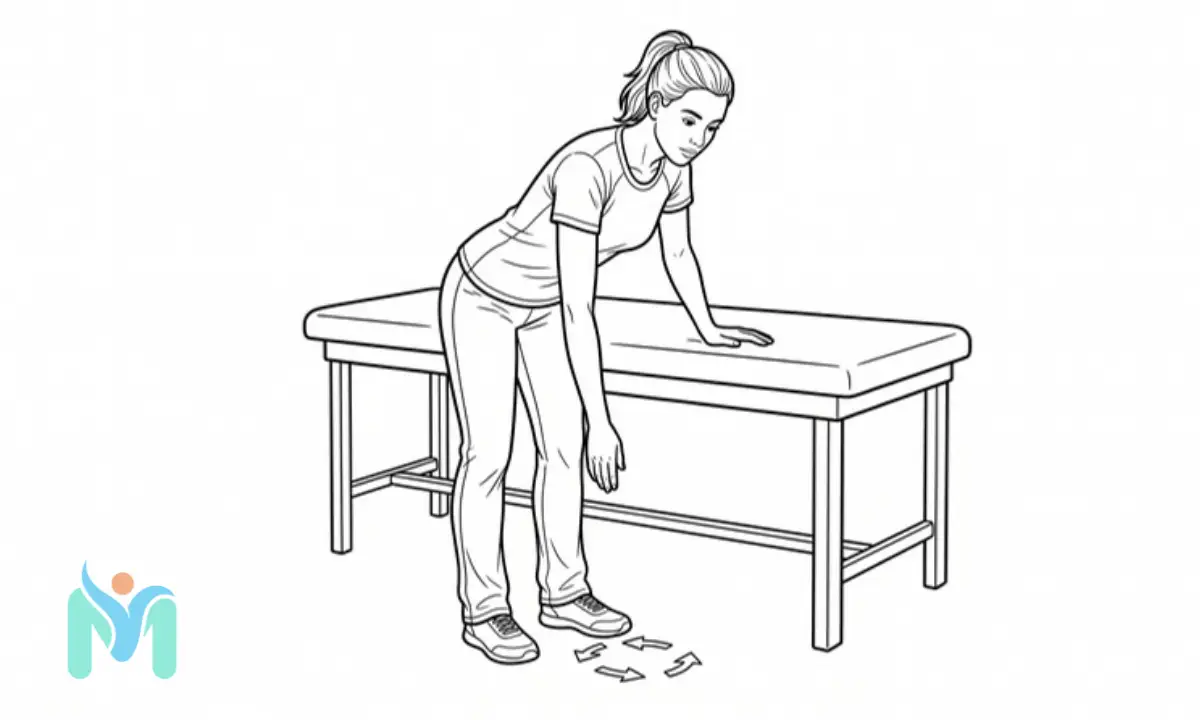
Purpose: Gravity slowly tractions the glenohumeral (shoulder) joint downward, decompressing the subacromial space and allowing the inflamed bursa to settle without requiring active muscle contraction. The shoulder muscles stay completely relaxed throughout.
Start position: Stand beside a table or kitchen worktop. Place your unaffected hand on the surface for balance. Lean forward from the waist so the affected arm hangs freely toward the floor.
Movement: Let the arm swing gently in small circles, clockwise for 10 repetitions, then counterclockwise for 10. The movement comes from the momentum of the hanging arm, not from shoulder muscle effort. Think of the arm as a pendulum, not a tool.
Dosage: 3 sets of 10 circles in each direction, 2 to 3 times daily.
Safety note: Keep the circles small, roughly 30 centimetres in diameter. If you feel the shoulder muscles engaging, you are working too hard.
2. Posterior Capsule Stretch (Cross-body Stretch)
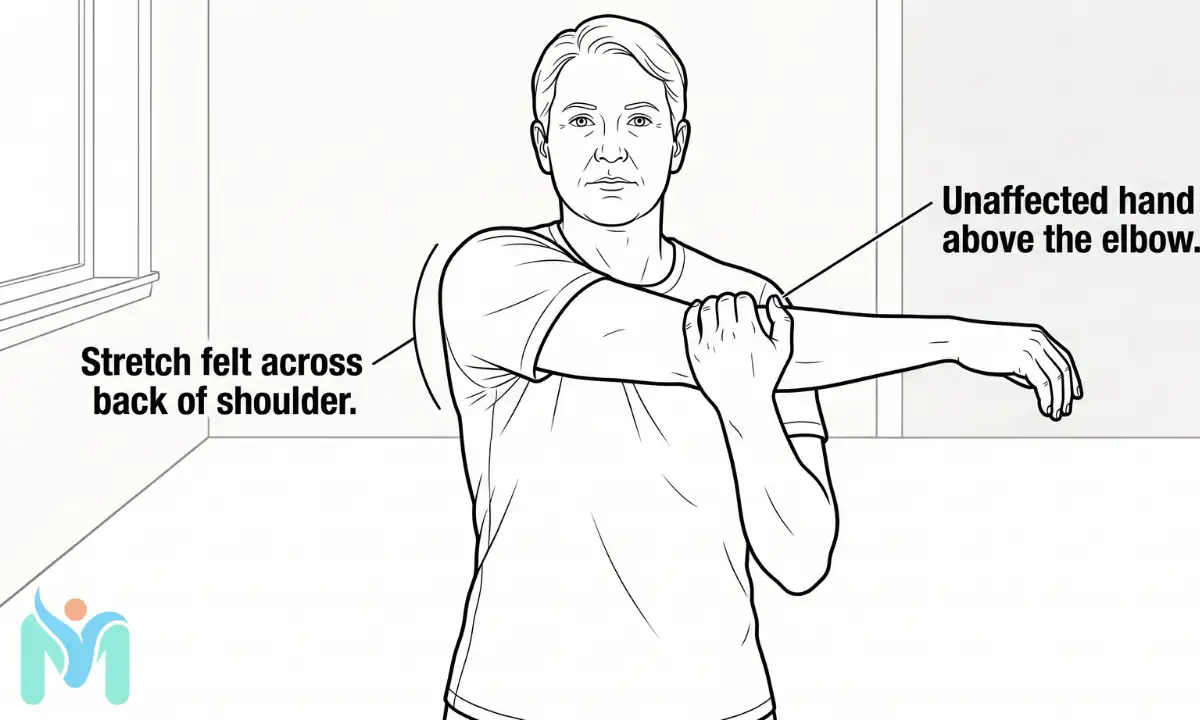
Purpose: Stretches the posterior glenohumeral capsule. When this structure becomes tight, it shifts the humeral head upward and forward, directly reducing the subacromial clearance available during arm elevation. Ellenbecker and Cools, writing in the British Journal of Sports Medicine in 2010, identified posterior capsule tightness as a key biomechanical contributor to impingement that is frequently overlooked.
Start position: Sit or stand upright. Bring the affected arm in front of you at shoulder height.
Movement: Use the opposite hand to guide the affected arm horizontally across your chest, applying steady inward pressure until you feel a stretch in the back of the affected shoulder. Don’t pull aggressively.
Dosage: Hold for 30 seconds. 3 repetitions per session, once or twice daily.
Safety note: The stretch should be felt at the back of the shoulder only. If you feel pinching at the top of the joint, drop the arm slightly before bringing it across.
Phase 2: Rotator cuff strengthening and scapular control
3. Side-lying External Rotation
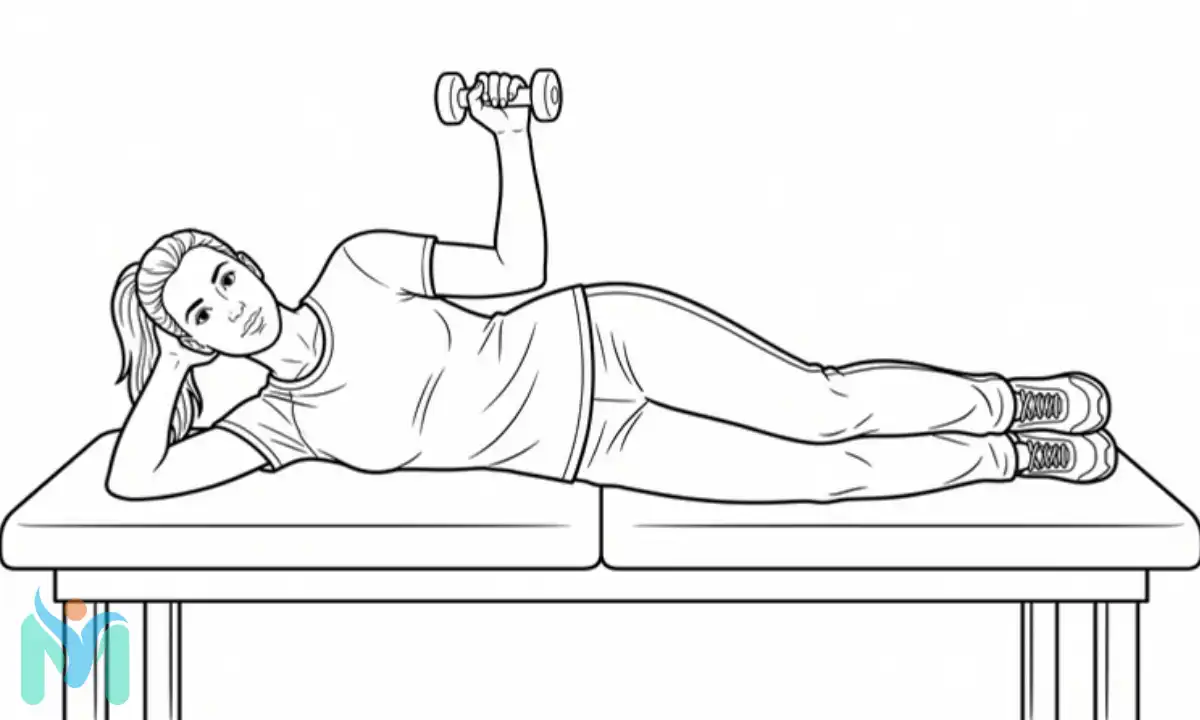
Purpose: Isolates the infraspinatus and teres minor, the external rotators of the rotator cuff. These muscles depress the humeral head during arm elevation, maintaining subacromial clearance. External rotation weakness is among the most consistent objective findings in people assessed with shoulder impingement syndrome.
Start position: Lie on your unaffected side. Bend the affected arm to 90 degrees at the elbow and place a folded towel beneath the elbow to keep the upper arm level with the body.
Movement: Keeping the elbow bent and fixed against your side, rotate the forearm upward toward the ceiling. Move through a comfortable range and lower slowly back to the start. Don’t let the elbow drift away from the body during the movement.
Dosage: 3 sets of 12 to 15 repetitions, 4 to 5 days per week. Begin with no added weight. Progress to a light dumbbell (0.5 to 1 kilogram) only when all sets are completed without compensation.
Safety note: If the elbow lifts away from the body or the neck tenses, the weight is too heavy. Return to body weight and build from there.
4. Prone Y-raise (Lower Trapezius Activation)
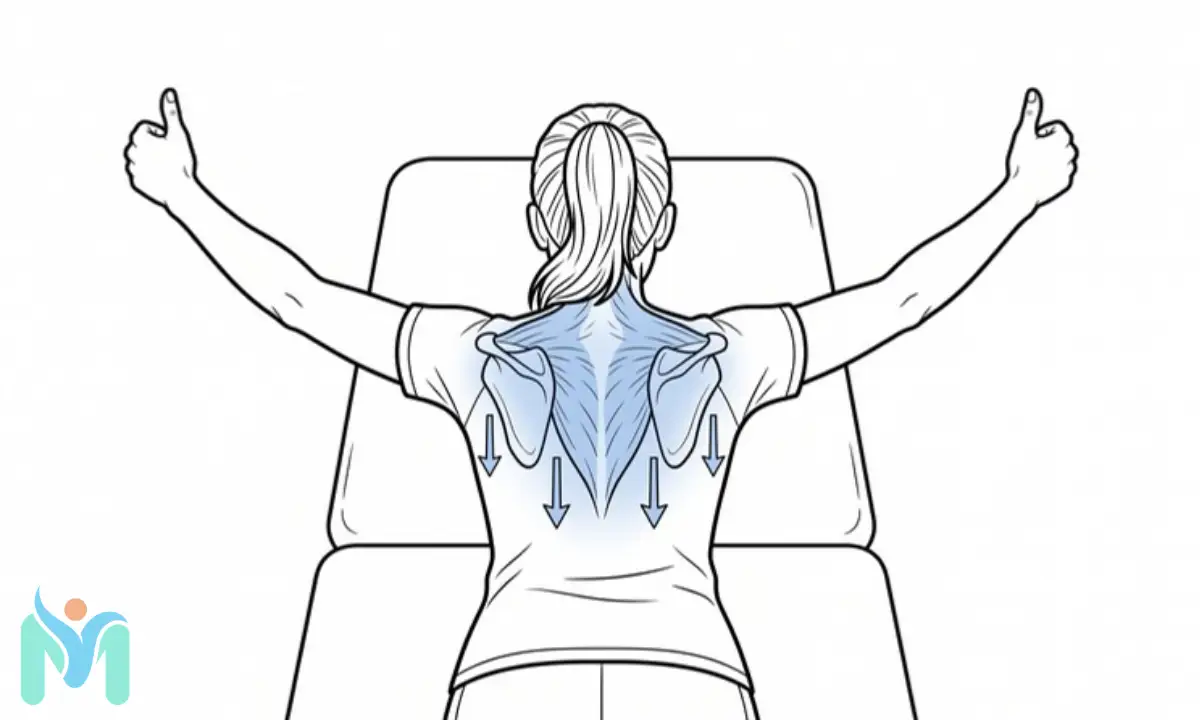
Purpose: Activates the lower trapezius, the primary muscle responsible for scapular upward rotation. Without adequate lower trapezius function, the scapula does not rotate correctly as the arm elevates, and the subacromial space fails to open as it should. Research by Cools and colleagues in the American Journal of Sports Medicine (2004) found altered trapezius recruitment patterns in overhead athletes with impingement symptoms compared with those without.
Start position: Lie face down on a bed or firm surface with both arms hanging off the edge at shoulder height, thumbs pointing upward.
Movement: Raise both arms simultaneously in a Y shape, angled approximately 45 degrees outward from the midline of your body. Squeeze the shoulder blades inward and downward as you lift. Hold at the top for 2 seconds. Lower with control.
Dosage: 3 sets of 10 repetitions.
Safety note: The effort should come from the shoulder blades drawing back and down, not from the upper shoulders rising toward the ears. If the neck tenses, reduce the range.
5. Resisted External Rotation with Resistance Band
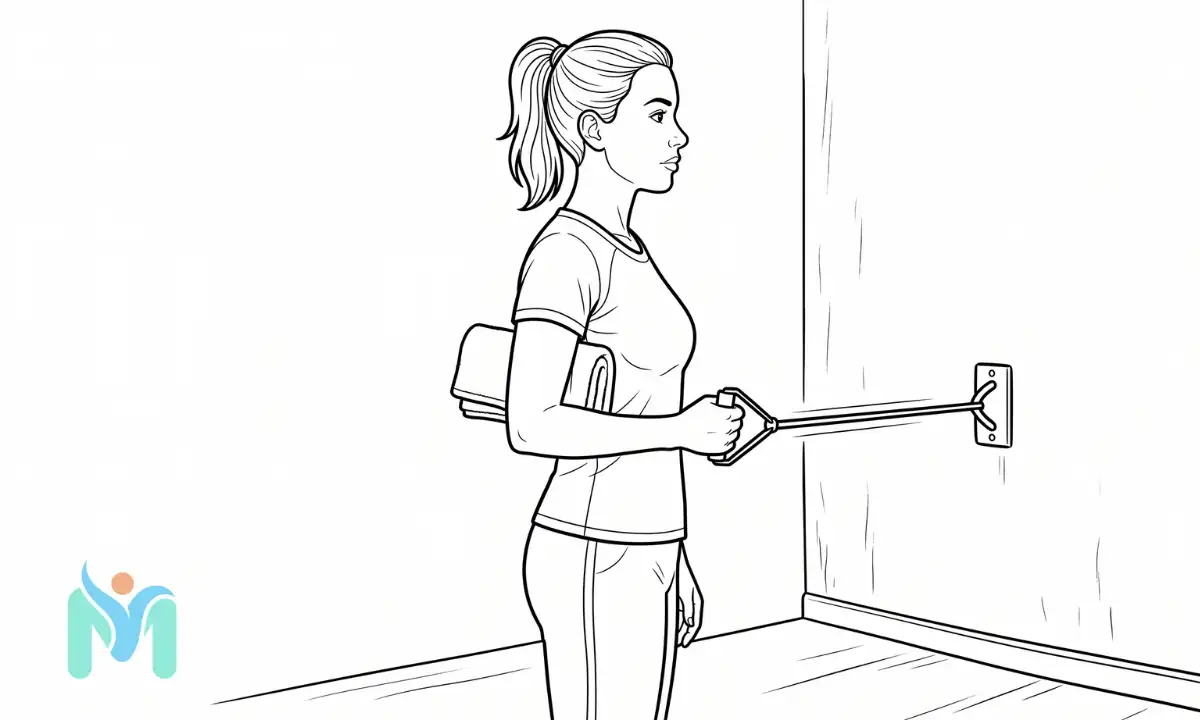
Purpose: Progressively loads the external rotators of the rotator cuff under external resistance, building the strength needed for safe overhead activity. This is the exercise that translates rehabilitation gains into real-world function. A systematic review by Kuhn in the Journal of Shoulder and Elbow Surgery (2009) found resisted external rotation exercises consistently beneficial across the studies included in the analysis.
Start position: Stand sideways to a resistance band anchored at waist height. Hold the band in the affected hand with the elbow bent to 90 degrees and a small folded towel tucked between your elbow and your side to keep the upper arm fixed.
Movement: Rotate the forearm outward, away from your body, against the resistance of the band. Hold briefly at the end of the comfortable range, then return slowly with control. Don’t let the elbow swing outward from the body.
Dosage: 3 sets of 15 repetitions with light resistance. Increase resistance only when all 3 sets feel controlled and easy.
Safety note: If the effort shifts to the neck or upper shoulder rather than the back of the shoulder, the band resistance is too strong.
6. Wall Slides (Serratus Anterior Activation)
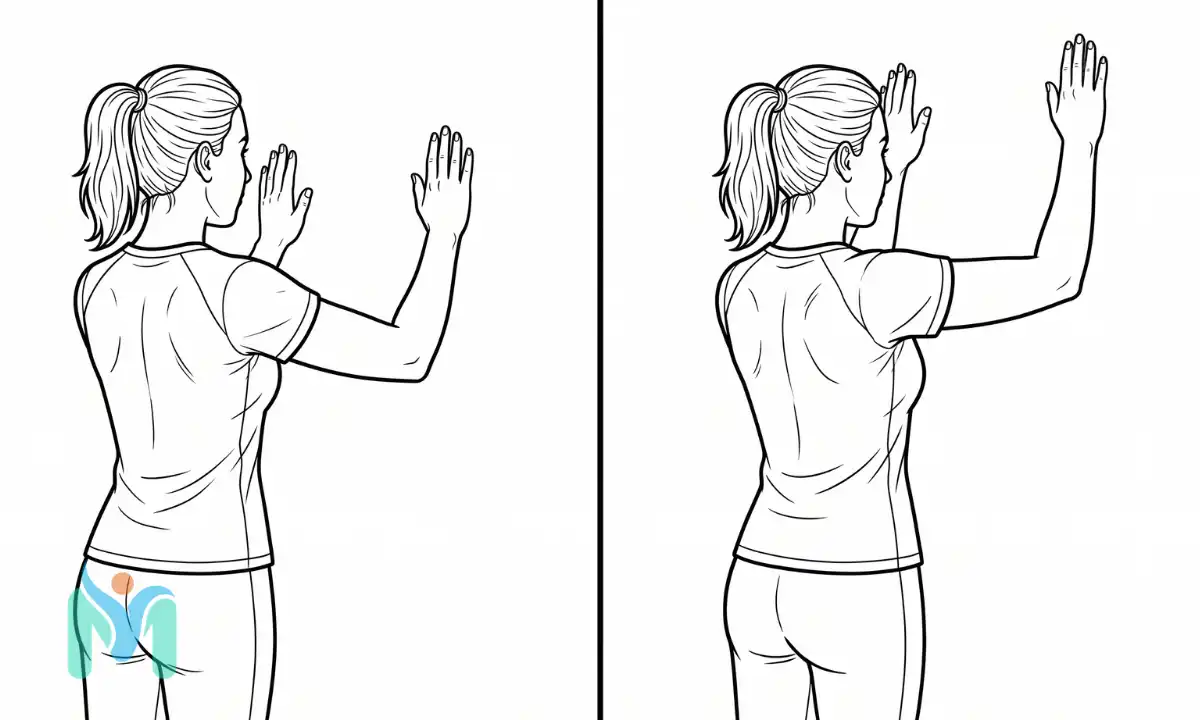
Purpose: Trains the serratus anterior, which works alongside the lower trapezius to protract and upwardly rotate the scapula during arm elevation. Together, these two muscles are responsible for keeping the scapula in the position that maintains subacromial clearance. A randomised controlled trial by Camargo and colleagues in the Journal of Orthopaedic and Sports Physical Therapy (2015) found that targeted scapular strengthening significantly improved shoulder kinematics and function in people with impingement.
Start position: Stand facing a smooth wall with elbows bent to 90 degrees, forearms resting flat against the wall surface at shoulder height.
Movement: Slide both forearms upward along the wall surface, maintaining contact throughout, to a comfortable end range. Hold for 2 seconds at the top, then slide back down slowly.
Dosage: 3 sets of 10 repetitions.
Safety note: Stop short of any range that increases pain. This is a scapular control exercise, not a range-of-motion challenge. The height you reach is irrelevant. Maintaining forearm contact with the wall while the shoulder blade moves correctly is the point.
What to avoid with shoulder impingement
Many people’s instinct with shoulder pain is to push through it, to keep doing what they were doing and hope the body adapts. With shoulder impingement syndrome, that approach tends to slow recovery rather than speed it.
Certain movements consistently load the subacromial structures under compression and should be modified or avoided until rotator cuff strength and scapular control have improved enough to make them safe again. These include:
- Overhead pressing exercises (shoulder press, military press, push press) and heavy overhead lifting of any kind before the shoulder is ready
- Upright rows, which force the arm into the painful arc while under external load
- Freestyle or butterfly swimming if the overhead reach phase reproduces symptoms, particularly on hand entry and pull-through
- Sleeping directly on the affected shoulder, which compresses the subacromial structures for hours
- Sustained overhead work such as painting ceilings or stacking high shelves before strength has been restored
- Any loaded movement that reliably reproduces the sharp, catching pain at the top of the arc
This is a temporary list, not a permanent one. The goal of the exercise programme above is to restore the rotator cuff strength and scapular control that makes these movements safe again. Most people with shoulder impingement syndrome can return to all of their previous activities. It takes time and the right progression.
How long does shoulder impingement take to recover?
Recovery from shoulder impingement syndrome with consistent physiotherapy typically produces meaningful improvement within 6 to 12 weeks, with full recovery taking 3 to 6 months depending on the stage and severity of the condition. According to the synthesis by Kuhn, published in the Journal of Shoulder and Elbow Surgery in 2009, significant pain reduction and functional improvement were documented within 6 to 12 weeks across the exercise-based studies reviewed. Stage 1 impingement responds fastest, often within 4 to 8 weeks of structured exercise. Stage 2 typically requires 3 to 6 months. Stage 3 warrants specialist assessment to rule out full-thickness tendon involvement before establishing a timeline.
Progress with shoulder impingement rarely moves in a straight line. Most people notice improvements in night pain first: the shoulder stops waking them within the first 2 to 4 weeks of consistent exercise. Daytime aching at rest usually settles next. The last thing to return is reliable strength on overhead activities, which often isn’t fully restored until 3 to 4 months in. That sequence is normal and expected.
The most common reason recovery takes longer than expected is inconsistent exercise. A programme done 10 minutes twice a week does not produce the same adaptation as one done 20 minutes daily. If pain is unchanged after 6 to 8 weeks of consistent, daily exercise, a clinical assessment is the sensible next step: it allows a physiotherapist to check whether something has been missed, whether the progression needs adjusting, or whether a different diagnosis is contributing to the picture.
Frequently Asked Questions (FAQs)
No single exercise outperforms all others, but side-lying external rotation is among the most consistently supported exercises in the research for shoulder impingement syndrome. It directly targets the infraspinatus and teres minor, the rotator cuff muscles responsible for depressing the humeral head and maintaining subacromial clearance. A systematic review by Kuhn in the Journal of Shoulder and Elbow Surgery (2009) found resisted external rotation exercises produced consistent improvements across multiple studies. It should be part of any rehabilitation programme for this condition.
Yes, in most cases. Exercise is not only safe with shoulder impingement syndrome: it is the recommended first-line treatment. The key distinction is between working pain (a mild ache or stretch during exercise that settles quickly) and warning pain (sharp, sudden, or worsening pain during the movement). The former is expected and acceptable during rehabilitation. The latter means you should stop and modify. Avoid overhead pressing and upright rows until rotator cuff strength is restored, but gentle pendulum movements, stretching, and progressive strengthening are all appropriate and beneficial.
Shoulder impingement syndrome describes compression of the supraspinatus tendon and subacromial bursa within the subacromial space. A rotator cuff tear is a structural disruption of one or more of the four rotator cuff tendons. The two conditions overlap: prolonged impingement can contribute to tendon degeneration and eventually tearing. The key clinical distinction is weakness. Shoulder impingement typically causes pain-limited weakness. A significant rotator cuff tear often produces weakness that is disproportionate to pain. If your arm feels genuinely weak, not just painful, that warrants a clinical assessment to clarify the picture.
Most people with shoulder impingement syndrome experience meaningful improvement within 6 to 12 weeks of consistent, structured physiotherapy exercise. Full recovery, including return to overhead activities without restriction, typically takes 3 to 6 months depending on the stage at presentation. Stage 1 impingement often resolves within 4 to 8 weeks. Stage 2, where fibrosis and tendinitis are present, generally requires 3 to 6 months. A 2009 synthesis by Kuhn in the Journal of Shoulder and Elbow Surgery confirmed significant functional gains within this timeframe across multiple exercise-based studies.
Both have a role, at different points. Ice is more useful in the early, inflammatory phase, particularly after activity that aggravates the shoulder: apply for 15 to 20 minutes after exercise or a provocative activity to reduce acute reactivity. Heat is more helpful before exercise in the later rehabilitation stages, where it can ease shoulder stiffness and make stretches more comfortable. Neither ice nor heat changes the underlying mechanics driving impingement. They manage symptoms while the exercise programme addresses the cause. If you’re unsure which is appropriate at your stage, a physiotherapist can guide you.
Yes, recurrence is possible, particularly if the underlying movement habits or muscle imbalances that contributed to the condition are not addressed. Shoulder impingement syndrome linked to scapular dyskinesis or external rotation weakness can return if the muscles involved are not maintained through ongoing activity. Research suggests that people who complete a structured rehabilitation programme and continue with maintenance loading, such as resistance training, have better long-term outcomes. The good news is that once you know which movements matter, maintaining the shoulder health you have rebuilt is considerably simpler than achieving it in the first place.
What real progress with shoulder impingement looks like
Recovery from shoulder impingement syndrome doesn’t arrive as a dramatic moment. It builds gradually. The night pain settles first, usually within the first few weeks of consistent exercise. The sharp catching sensation in the painful arc begins to soften, and the range of movement before pain starts increases, sometimes before you consciously notice it. Strength for overhead activities returns last, and it often does so quietly, when you find yourself reaching for something and realising the shoulder didn’t object.
Shoulder impingement syndrome is a manageable condition. The evidence is clear that physiotherapy-led exercise works as a first-line treatment, that it competes with surgery on outcomes while avoiding the risks and recovery time, and that the exercises produce durable results. A systematic review and update by Pieters and colleagues in the Journal of Orthopaedic and Sports Physical Therapy (2020) confirmed that conservative physical therapy interventions remain effective across the range of subacromial shoulder pain presentations.
What the evidence also shows is that the exercises work because they address the underlying mechanics, not just the symptoms. Strengthening the external rotators and restoring scapular control changes the way the shoulder moves, which changes the pressure on the structures inside it. If you work through this programme consistently and don’t see progress within 6 to 8 weeks, that’s the point to bring a physiotherapist into the picture: not to give up on conservative treatment, but to make sure you’re doing the right version of it.
Consult your doctor or a qualified physiotherapist before starting any new exercise programme, especially if you have an existing injury or medical condition.
References
- Michener LA, McClure PW, Karduna AR. “Anatomical and biomechanical mechanisms of subacromial impingement syndrome.” Clinical Biomechanics. 2003;18(5):369-379. DOI: 10.1016/S0268-0033(03)00047-0. PMID: 12763431. URL: https://pubmed.ncbi.nlm.nih.gov/12763431/. Evidence Level: 2.
- Seitz AL, McClure PW, Finucane S, Boardman ND, Michener LA. “Mechanisms of rotator cuff tendinopathy: intrinsic, extrinsic, or both?” Clinical Biomechanics. 2011;26(1):1-12. DOI: 10.1016/j.clinbiomech.2010.08.001. PMID: 20846765. URL: https://pubmed.ncbi.nlm.nih.gov/20846765/. Evidence Level: 2.
- Neer CS 2nd. “Anterior acromioplasty for the chronic impingement syndrome in the shoulder: a preliminary report.” Journal of Bone and Joint Surgery American. 1972;54(1):41-50. PMID: 5054450. URL: https://pubmed.ncbi.nlm.nih.gov/5054450/. Evidence Level: 6.
- Ludewig PM, Cook TM. “Alterations in shoulder kinematics and associated muscle activity in people with symptoms of shoulder impingement.” Physical Therapy. 2000;80(3):276-291. PMID: 10696154. URL: https://pubmed.ncbi.nlm.nih.gov/10696154/. Evidence Level: 5.
- NHS. “Shoulder pain.” NHS Conditions. URL: https://www.nhs.uk/symptoms/shoulder-pain/ (2024). Evidence Level: 7.
- Beard DJ, Rees JL, Cook JA, et al. “Arthroscopic subacromial decompression for subacromial shoulder pain (CSAW): a multicentre, pragmatic, three-group, blinded, randomised controlled trial.” The Lancet. 2018;391(10118):329-338. DOI: 10.1016/S0140-6736(17)32457-1. PMID: 29169354. URL: https://pubmed.ncbi.nlm.nih.gov/29169354/. Evidence Level: 4.
- Ketola S, Lehtinen J, Arnala I, et al. “Does arthroscopic acromioplasty provide any additional value in the treatment of shoulder impingement syndrome?: A two-year randomised controlled trial.” Journal of Bone and Joint Surgery British. 2009;91(10):1326-1334. DOI: 10.1302/0301-620X.91B10.22094. PMID: 19794169. URL: https://pubmed.ncbi.nlm.nih.gov/19794169/. Evidence Level: 4.
- Steuri R, Sattelmayer M, Elsig S, et al. “Effectiveness of conservative interventions including exercise, manual therapy and medical management in adults with shoulder impingement: a systematic review and meta-analysis of RCTs.” British Journal of Sports Medicine. 2017;51(18):1340-1347. DOI: 10.1136/bjsports-2016-096515. PMID: 28533304. URL: https://pubmed.ncbi.nlm.nih.gov/28533304/. Evidence Level: 2.
- Haahr JP, Andersen JH. “Exercises may be as efficient as subacromial corticosteroid injection in patients with subacromial stage II impingement: 4-8-years’ follow-up in a prospective, randomised study.” Scandinavian Journal of Rheumatology. 2006;35(3):224-228. DOI: 10.1080/03009740500360745. PMID: 16766372. URL: https://pubmed.ncbi.nlm.nih.gov/16766372/. Evidence Level: 4.
- Kuhn JE. “Exercise in the treatment of rotator cuff impingement: a systematic review and a synthesized evidence-based rehabilitation protocol.” Journal of Shoulder and Elbow Surgery. 2009;18(1):138-160. DOI: 10.1016/j.jse.2008.06.007. PMID: 18835532. URL: https://pubmed.ncbi.nlm.nih.gov/18835532/. Evidence Level: 2.
- Ellenbecker TS, Cools A. “Rehabilitation of shoulder impingement syndrome and rotator cuff injuries: an evidence-based review.” British Journal of Sports Medicine. 2010;44(5):319-327. DOI: 10.1136/bjsm.2009.058875. PMID: 20371557. URL: https://pubmed.ncbi.nlm.nih.gov/20371557/. Evidence Level: 2.
- Cools AM, Witvrouw EE, Declercq GA, Vanderstraeten GG, Cambier DC. “Scapular muscle recruitment pattern: trapezius muscle activity in overhead athletes with and without impingement symptoms.” American Journal of Sports Medicine. 2004;32(2):484-489. PMID: 14977681. URL: https://pubmed.ncbi.nlm.nih.gov/14977681/. Evidence Level: 5.
- Camargo PR, Alburquerque-Sendín F, Asso NA, Alcântara-Silva TR, Salvini TF. “Effects of stretching and strengthening exercises, with and without manual therapy, on scapular kinematics, function, and pain in individuals with shoulder impingement: A randomized controlled trial.” Journal of Orthopaedic and Sports Physical Therapy. 2015;45(12):984-997. DOI: 10.2519/jospt.2015.6103. PMID: 26394094. URL: https://pubmed.ncbi.nlm.nih.gov/26394094/. Evidence Level: 4.
- Hanratty CE, McVeigh JG, Kerr DP, et al. “The effectiveness of physiotherapy exercises in subacromial impingement syndrome: a systematic review and meta-analysis.” Seminars in Arthritis and Rheumatism. 2012;42(3):297-316. DOI: 10.1016/j.semarthrit.2012.03.015. PMID: 22607807. URL: https://pubmed.ncbi.nlm.nih.gov/22607807/. Evidence Level: 2.
- Pieters L, Lewis J, Kuppens K, et al. “An Update of Systematic Reviews Examining the Effectiveness of Conservative Physical Therapy Interventions for Subacromial Shoulder Pain.” Journal of Orthopaedic and Sports Physical Therapy. 2020;50(3):131-141. DOI: 10.2519/jospt.2020.8498. PMID: 31766910. URL: https://pubmed.ncbi.nlm.nih.gov/31766910/. Evidence Level: 2.