
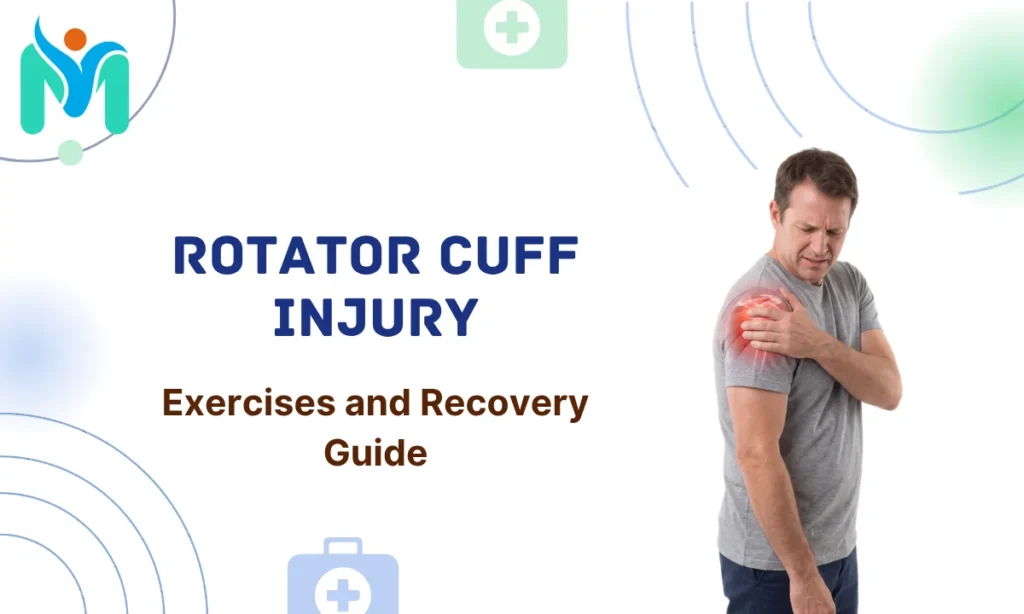
Reaching for a mug, lifting a bag, turning over in bed. These movements become measuring sticks when they hurt. If your shoulder is catching, aching, or refusing to cooperate, the rotator cuff is almost certainly part of the problem. Targeted rotator cuff injury exercises, matched carefully to your stage of recovery, are the most well-supported form of treatment available. For many people, they are the only treatment needed.
What the Rotator Cuff Does (And Why It Gets Injured)
The rotator cuff is a group of 4 muscles: the supraspinatus, infraspinatus, teres minor, and subscapularis, collectively abbreviated to the SITS muscles. Together, they wrap around the glenohumeral joint (the shoulder’s ball-and-socket joint) and hold the head of the humerus (the upper arm bone) firmly seated in the glenoid socket (the shallow cup of the shoulder blade). Injury occurs when these tendons become inflamed, begin to degenerate, or tear, disrupting the precise balance the shoulder depends on to move without pain. According to NHS guidance on rotator cuff injury, this condition is among the most common sources of shoulder pain and becomes more prevalent after age 40 and in people whose work or sport involves repetitive overhead movement.
Of the 4 muscles, the supraspinatus is injured most often, and there is a specific anatomical reason for that. Its tendon inserts onto the greater tubercle of the humerus after passing through a narrow corridor called the subacromial space, bounded above by the coracoacromial arch (formed by the acromion and the coracoacromial ligament). Within this space also sits the subacromial bursa, a small fluid-filled sac that cushions the tendon during arm movement. As Lewis JS noted in a 2009 review in the British Journal of Sports Medicine, a specific region of the supraspinatus tendon has significantly poorer blood supply than surrounding tissue, sometimes called the critical zone. This vascular vulnerability is a core reason injuries here heal slowly and why repeated compression accelerates tissue breakdown far more readily than in other tendons.
The long head of the biceps tendon also passes through this region and can become simultaneously irritated when the bursa is inflamed. That combination of tight corridor, compromised vascularity, and repeated mechanical load produces the hallmark painful arc: the zone of arm elevation, typically between 60 and 120 degrees, where the inflamed tendon or bursa is maximally compressed and pain peaks.
Types of Rotator Cuff Injury: What Your Diagnosis Actually Means
Rotator cuff injuries exist on a spectrum, from low-grade inflammation in the tendon substance through to complete structural tears. The classification framework developed by CS Neer, published in Clinical Orthopaedics and Related Research, remains clinically useful for understanding how rotator cuff disease tends to progress without adequate management. Clinical assessment typically includes tests such as the Hawkins-Kennedy test and the Neer impingement sign, which help clinicians identify where symptoms are originating and inform which stage of the spectrum is most likely. The label your clinician assigns shapes which exercises are appropriate and when.
| Injury Type | What It Means | Typical Symptoms | Exercise Approach |
|---|---|---|---|
| Tendinopathy / Tendinitis | Degeneration or inflammation within the tendon; no structural tear | Activity-related ache, painful arc, mild weakness, disturbed sleep | Full progressive loading programme; responds well to physiotherapy |
| Partial Thickness Tear | Tear affecting part of the tendon’s width or depth, not the full structure | Significant weakness, painful arc, night pain, reduced range of movement | Conservative exercise first; progression must be gradual and stage-matched |
| Full-Thickness Tear | Complete tear through the entire width of the tendon | Marked weakness, difficulty holding the arm against gravity, significant night pain | Conservative exercise appropriate for many patients; surgery reserved for specific presentations |
The type of injury you have matters for prognosis but does not always determine whether surgery is necessary. Many full-thickness tears respond well to a structured physiotherapy programme when the surrounding muscles retain enough strength to compensate.
Why Does a Rotator Cuff Injury Hurt More at Night?
Night pain is one of the most disruptive features of rotator cuff injury, and it has a specific mechanical explanation. When you lie on the injured shoulder, the weight of the arm compresses the already irritated subacromial bursa against the humeral head. With no movement to redistribute that pressure, inflammation accumulates through the night. Lying on the back can also provoke symptoms if the arm falls into a position that narrows the subacromial space without adequate support beneath it.
Rotator cuff night pain is caused by sustained compression of the subacromial bursa when the arm rests in certain positions during sleep. According to NHS guidance on rotator cuff injury, nocturnal shoulder pain is one of the hallmark features of rotator cuff pathology. Supporting the arm on a firm pillow to keep it slightly forward and away from the body reduces that compression and can meaningfully improve sleep quality during the acute phase of recovery.
Rotator Cuff Injury Exercises, Matched to Your Stage
The central principle in rotator cuff rehabilitation is that exercises must match the stage of the injury. Move too quickly and you risk worsening tissue irritation. Move too slowly and the muscles weaken while the joint stiffens. A 2009 systematic review by Kuhn JE, published in the Journal of Shoulder and Elbow Surgery, synthesised the available evidence and produced a phased rehabilitation protocol that continues to shape clinical practice. The multidisciplinary guidelines developed by Diercks R and colleagues, published in Acta Orthopaedica in 2014, similarly recommend a progressive, stage-matched exercise approach as the primary conservative management strategy for subacromial pain. A 2012 systematic review by Littlewood C and colleagues, published in Physiotherapy, confirmed that targeted exercise programmes consistently reduced pain and improved function in rotator cuff tendinopathy across multiple study populations. The key word is targeted: generic movement without appropriate load, sequence, or stage awareness produces far less reliable outcomes.
Before you begin, understand the difference between 2 types of discomfort. Working pain is a mild ache or gentle stretch sensation that appears during exercise and fades within 10 minutes of stopping. This is an acceptable level of discomfort during rotator cuff rehabilitation. Warning pain is sharp, sudden, catching, or worsening pain during or after the exercise, or any pain that persists for more than 30 minutes after stopping. Stop immediately if you experience warning pain and seek professional assessment before continuing.
Stage 1 – Acute Phase (0 to 6 Weeks): Calming the System First
In the acute phase, the goal is to reduce pain and preserve joint mobility without loading the compromised tendon. Resisted strengthening exercises are not yet appropriate. The 2 exercises below work by decompressing the joint and maintaining range of movement through the inflammatory stage, giving the tissue a chance to settle before progressive loading begins.
1. Pendulum Exercise (Codman’s Pendulum)
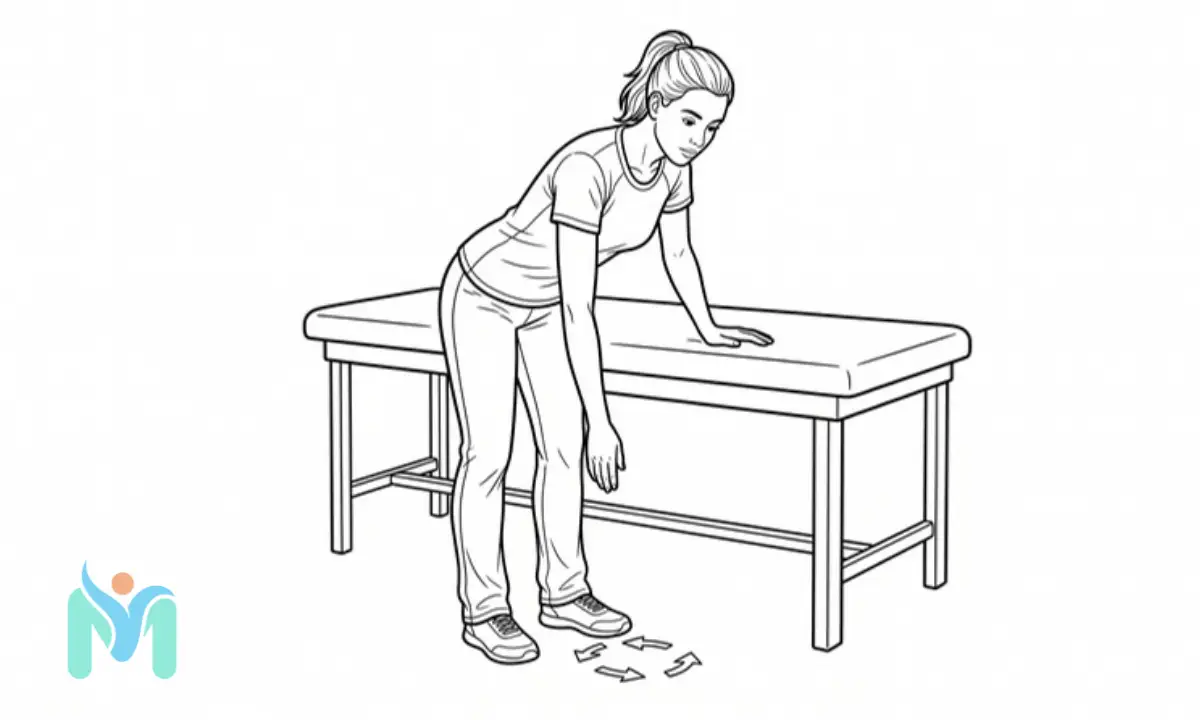
Purpose: Gravity gently tractions the glenohumeral joint, reducing compression on the inflamed subacromial bursa and encouraging early pain-free movement through passive motion rather than active muscle contraction.
Start position: Stand beside a table and place your uninjured hand flat on the surface for support. Lean forward slightly at the waist and let your injured arm hang freely toward the floor.
Movement: Using a gentle rocking of your body (not your shoulder muscles), allow the hanging arm to trace small clockwise circles, roughly 20 to 30 cm in diameter. Repeat anticlockwise. The shoulder stays completely relaxed throughout – the movement comes from your body, not your arm.
Dosage: 2 sets of 10 circles in each direction, 2 to 3 times daily.
Safety note: If this produces sharp pain rather than mild relief, reduce the circle size further or stop and review with a physiotherapist before continuing.
2. Active-Assisted Shoulder Flexion (Cane or Stick)
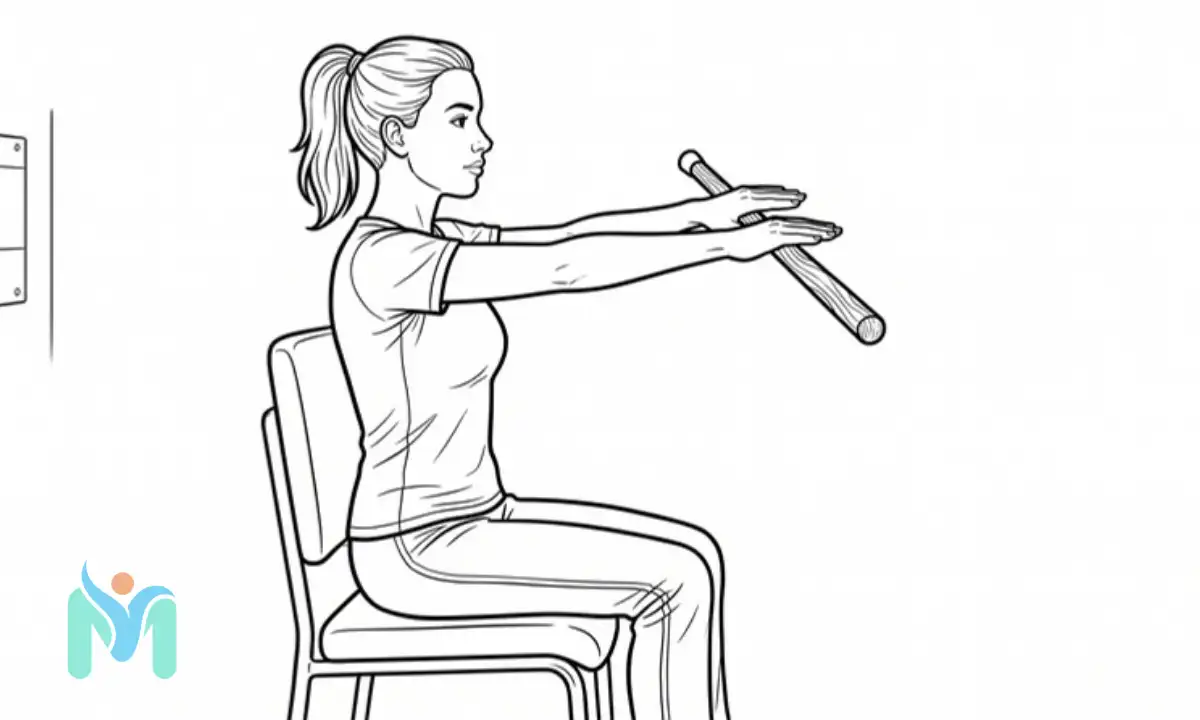
Purpose: The uninjured arm guides the injured shoulder through a pain-free range of forward movement, maintaining joint mobility and reducing muscle guarding without placing active load on the damaged tendon.
Start position: Sit or stand and hold a cane, long umbrella, or broomstick with both hands, palms facing down, arms resting at hip level in front of your body.
Movement: Use your stronger arm to push the stick forward and upward, guiding the injured arm into shoulder flexion (forward raising). Go only as far as you can comfortably. Hold for 2 seconds at the end of the comfortable range, then slowly lower.
Dosage: 2 sets of 10 repetitions, once or twice daily.
Safety note: The uninjured arm should be doing the work. If you notice the injured shoulder tensing or straining, reduce the range of movement.
Stage 2 – Strengthening Phase (6 to 12 Weeks): Rebuilding the Cuff
Once pain has settled and range of movement is improving, the focus shifts to rebuilding the strength and coordination of the rotator cuff muscles and the scapular stabilisers. A 2012 systematic review and meta-analysis by Hanratty CE and colleagues, published in Seminars in Arthritis and Rheumatism, found that targeted rotator cuff and scapular strengthening exercises consistently reduced pain and improved function in patients with subacromial impingement compared to general or passive approaches. Begin each exercise with no load or very light resistance, and progress only when all sets can be completed with full control and no pain.
Without adequate upward rotation of the scapula, the rotator cuff tendons are compressed against the acromion on every overhead movement, regardless of how strong those muscles become. That is why scapular stabilisation work is not supplementary to rotator cuff rehabilitation. It is central to it.
3. Side-Lying External Rotation
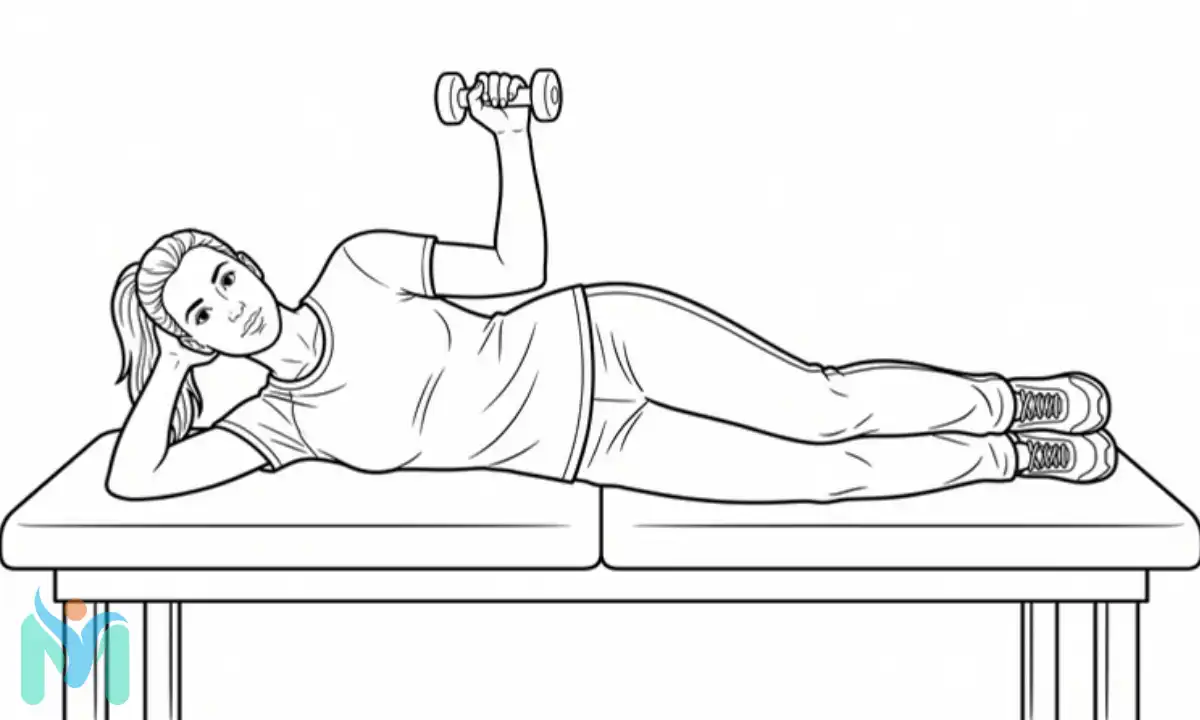
Purpose: Directly strengthens the infraspinatus and teres minor, the 2 muscles responsible for rotating the arm outward and preventing the humeral head from riding upward into the subacromial space during shoulder movement.
Start position: Lie on your uninjured side on a firm bed or physiotherapy plinth. Bend your injured arm to 90 degrees at the elbow, upper arm resting against your side, forearm pointing toward the floor. Hold a light dumbbell (0.5 to 1 kg) or no weight initially.
Movement: Keeping your elbow pressed firmly against your side, rotate your forearm upward toward the ceiling. Stop before the shoulder begins to roll forward. Slowly lower back to the start position.
Dosage: 3 sets of 12 to 15 repetitions. Progress to 1.5 to 2 kg when 15 repetitions feel fully controlled and comfortable.
Safety note: If the elbow lifts away from your side during the movement, you are compensating. Reset and reduce the weight or range before continuing.
4. Resisted Internal Rotation (Resistance Band)
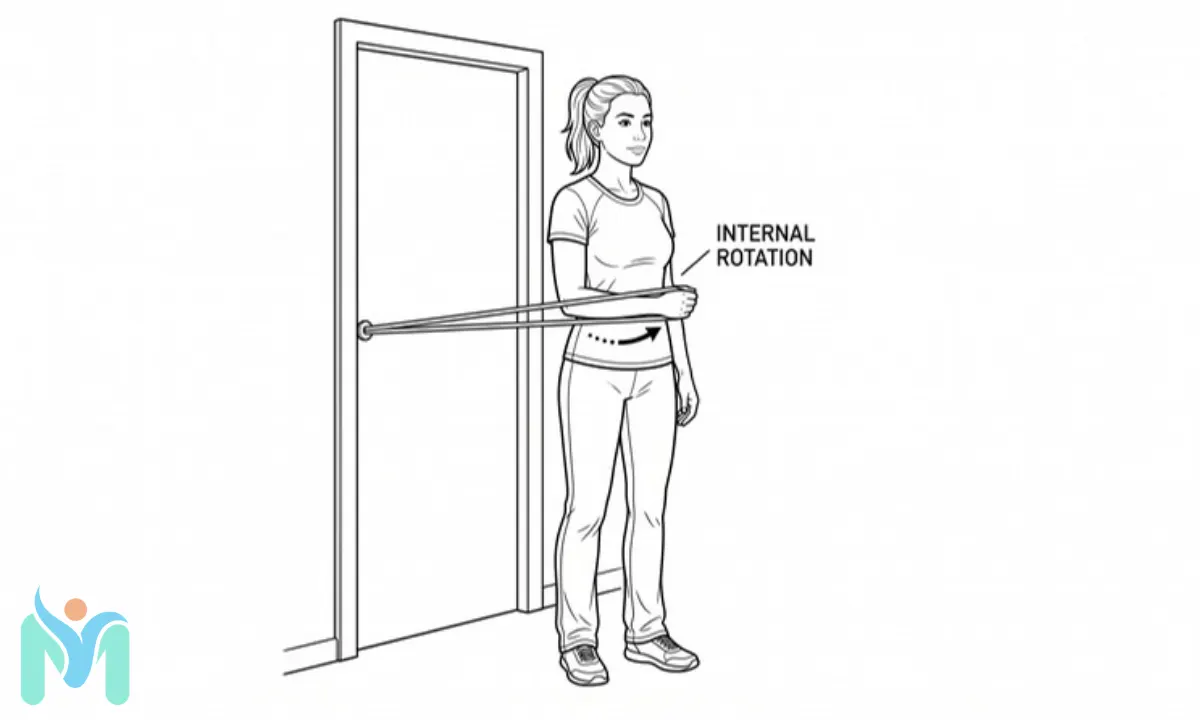
Purpose: Strengthens the subscapularis, the large anterior rotator cuff muscle that stabilises the humeral head from the front. Imbalance between internal and external rotation strength is one of the most consistent findings in shoulders affected by subacromial impingement, and addressing it reduces the risk of recurrence.
Start position: Stand sideways beside a resistance band anchored at waist height (a door anchor works well). Hold the band with your injured hand, elbow bent to 90 degrees, upper arm resting against your side.
Movement: Rotate your forearm inward across your body, pulling the band against its resistance. Slowly return to the start position. Keep the elbow fixed against your side throughout the movement.
Dosage: 3 sets of 12 to 15 repetitions. Use light resistance and progress the band strength gradually over 4 to 6 weeks.
Safety note: A pinching sensation at the front of the shoulder means the resistance is too high or the range too large. Reduce both before continuing.
5. Prone Y Exercise (Lower Trapezius Activation)
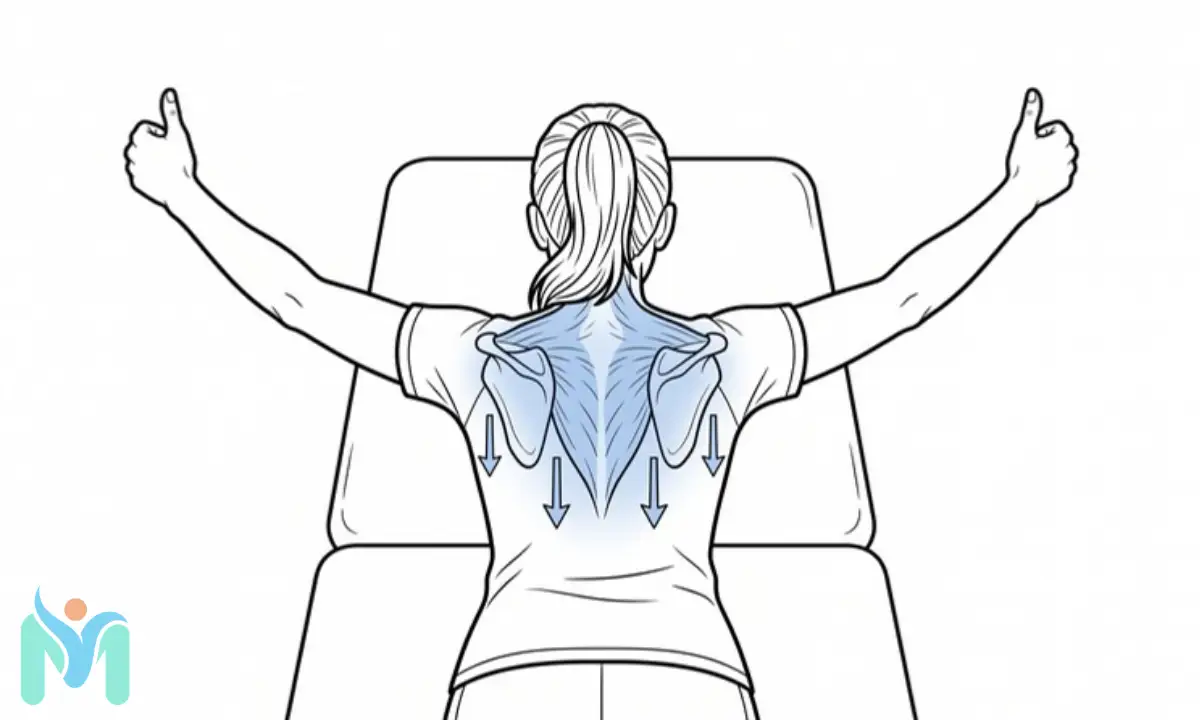
Purpose: Activates the lower trapezius, the muscle responsible for upward rotation of the scapula during arm elevation. Poor scapular movement (sometimes called scapular dyskinesis) is a key contributing factor in subacromial impingement: without sufficient upward scapular rotation, the acromion cannot clear the supraspinatus tendon on overhead movements, compressing it with every repetition.
Start position: Lie face down on a firm surface with your upper chest overhanging the edge. Arms hang freely, thumbs pointing upward.
Movement: Lift both arms simultaneously into a Y shape (approximately 135 degrees from the midline of the body), squeezing the shoulder blades toward each other and slightly downward toward your hips. Hold for 2 seconds at the top, then slowly lower.
Dosage: 3 sets of 10 repetitions. Add light wrist weights (0.5 to 1 kg) when the movement feels strong and controlled, with no compensating shrug at the neck.
Safety note: If the shoulders rise toward the ears during the lift, the upper trapezius is taking over. Consciously keep the shoulders down and wide throughout.
Stage 3 – Functional Phase (12+ Weeks): Progressive Loading
By the functional phase, pain has largely resolved and strength has returned. The goal is to restore full loading capacity through the complete shoulder range, particularly overhead, and to prepare the joint for the demands of daily life, work, or sport. Tendons adapt to load more slowly than muscle, and rushing this phase is the most common reason for setbacks in rotator cuff recovery.
6. Seated Dumbbell Overhead Press
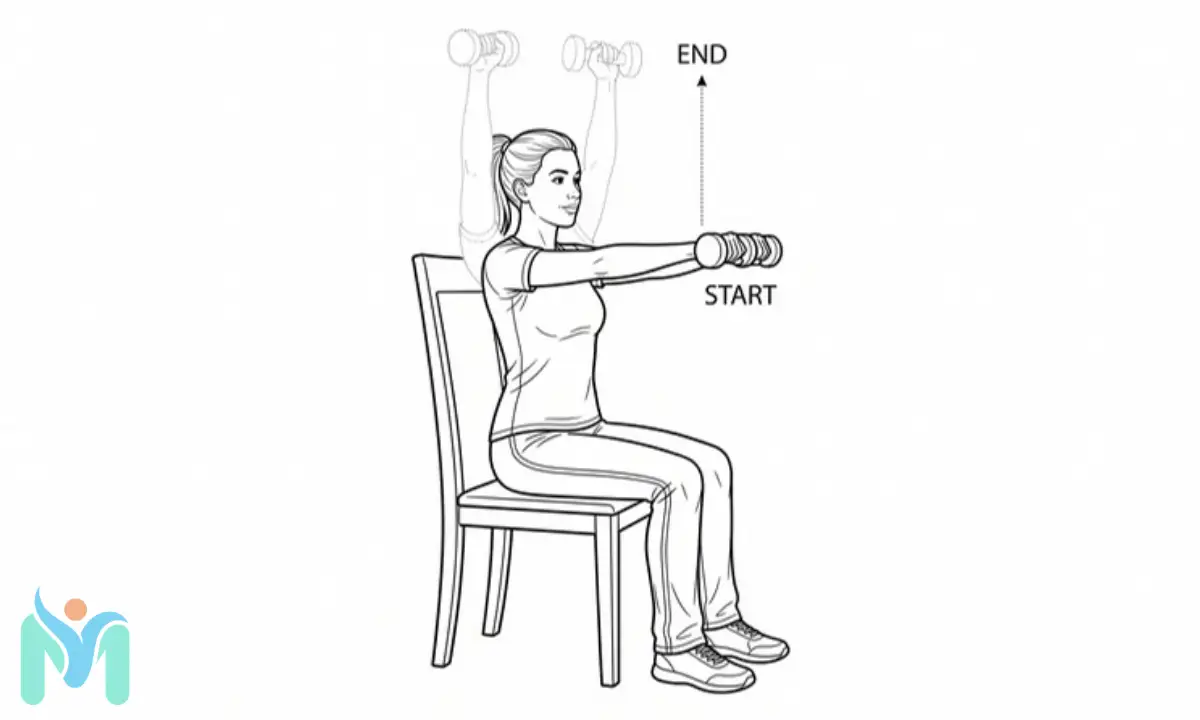
Purpose: Restores the shoulder’s capacity to generate and control force through the full overhead range, integrating the rotator cuff muscles with the deltoid and scapular stabilisers under progressive load. This directly approximates the demands of most overhead daily tasks and sport-specific movements.
Start position: Sit on a firm chair with back support. Hold a light dumbbell (1 to 2 kg) in the injured hand, elbow bent to 90 degrees, upper arm at shoulder height in the goalpost position.
Movement: Press the dumbbell upward until the arm is almost fully extended overhead. Lower slowly, taking 3 to 4 seconds on the descent. Control on the way down matters as much as the upward press.
Dosage: 3 sets of 8 to 10 repetitions. Increase by 0.5 to 1 kg only when all repetitions are achievable with no pain and full controlled range.
Safety note: A sharp, catching pain at the top of the movement is a warning sign, not working discomfort. Stop and reassess with a clinician before progressing the weight.
Evidence-based rotator cuff rehabilitation follows a 3-stage progression: an acute phase (0 to 6 weeks) focused on pain relief and passive mobility through exercises such as pendulums and cane-assisted flexion; a strengthening phase (6 to 12 weeks) targeting the infraspinatus, teres minor, subscapularis, and scapular stabilisers through resisted rotation and prone stabilisation; and a functional phase (12 weeks onward) restoring progressive overhead loading. According to a 2009 systematic review by Kuhn JE in the Journal of Shoulder and Elbow Surgery, this phased approach produces reliable improvements in pain and function for patients with rotator cuff impingement and tendinopathy.
Which Exercises Make a Rotator Cuff Injury Worse?
Some movements that feel manageable in the short term consistently prolong rotator cuff symptoms by compressing the subacromial space or overloading a tendon that is not yet ready for that demand. The following should be avoided through the acute and early strengthening phases of recovery:
- Behind-the-neck pull-downs and overhead presses: These force the shoulder into extreme external rotation and horizontal abduction simultaneously, compressing the supraspinatus tendon at its most structurally vulnerable point.
- Upright rows: The internally rotated, elevated arm position in this exercise directly narrows the subacromial space and impinges the supraspinatus on every repetition of the movement.
- Dips and narrow-grip push-ups: These load the anterior shoulder capsule under full body weight, creating shear forces on structures that are already under stress from the injury.
- Heavy overhead pressing before adequate strength returns: Applying overhead load through a compromised rotator cuff too early increases the risk of converting a partial tear into a full-thickness injury.
- Throwing, serving, and overhead racket sport: Any repetitive overhead action during the acute and early strengthening phases generates high-velocity impingement forces that prevent the tissue from recovering between sessions.
- Any exercise that reproduces sharp pain during or immediately after the movement. Sharp pain is the clearest possible signal that the tissue is not ready for that level of demand.
Does a Rotator Cuff Tear Always Need Surgery?
The short answer, based on the current evidence, is no. A 2012 randomised controlled trial published in the BMJ by Holmgren T and colleagues found that patients with subacromial impingement who followed a specific, progressive rotator cuff exercise programme were significantly less likely to proceed to surgery than those who performed general, non-loaded shoulder movement. The trial provided direct evidence that the type and specificity of exercise matters, not simply the act of moving the shoulder.
A 2007 systematic review by Ainsworth R and Lewis JS, published in the British Journal of Sports Medicine, found that exercise therapy produced clinically meaningful improvements in pain and function for conservatively managed full-thickness rotator cuff tears, challenging the widely held assumption that all complete tears require surgical repair to recover function.
For cases where surgery is considered, the comparative data remains instructive. A 2017 meta-analysis by Ryösä A and colleagues, published in Disability and Rehabilitation, found that arthroscopic rotator cuff repair and physiotherapy-led conservative management produced comparable functional outcomes for many patients with full-thickness tears, particularly where the tear had not resulted in a complete inability to elevate the arm against gravity.
The current weight of evidence suggests that for most partial tears and many full-thickness tears, a structured physiotherapy programme should be the first treatment tried, and for a significant proportion of patients, it is the only treatment needed.
Surgery is more clearly indicated when a tear is acute and caused by trauma (a fall or direct impact), when imaging shows significant muscle atrophy, or when a properly conducted physiotherapy programme of at least 3 to 6 months has failed to produce adequate improvement. At MystPhysio.com, all rehabilitation content is reviewed by qualified physiotherapists and updated in line with current clinical guidelines to ensure this guidance reflects the best available evidence.
How Long Does Rotator Cuff Recovery Take?
Recovery timelines vary considerably by injury type, age, activity level, and how quickly structured rehabilitation begins. NHS guidance indicates that rotator cuff problems managed with physiotherapy generally improve within several months, though more significant tears and longer-standing presentations can take considerably longer to resolve fully. Clinicians often track progress using standardised tools such as the DASH score (Disabilities of the Arm, Shoulder and Hand), the Oxford Shoulder Score, or the Shoulder Pain and Disability Index (SPADI), which allow objective comparison of function over time.
As a practical guide, tendinopathy and mild partial tears often show meaningful improvement within 6 to 12 weeks of consistent, well-structured exercise. More significant partial tears and full-thickness tears managed conservatively typically require 3 to 6 months before function is substantially restored. Return to full overhead sport or heavy occupational loading can take up to 12 months in complex cases.
One factor that consistently lengthens recovery is poor scapular control. If the shoulder blade is not rotating and stabilising correctly during arm elevation, the rotator cuff tendons remain under compression regardless of how well the direct strengthening programme is progressing. That is exactly why Stage 2 exercises address both the rotator cuff and the scapular muscles that support it – they are inseparable parts of the same system.
Frequently Asked Questions (FAQs)
The rotator cuff is a group of 4 muscles: the supraspinatus, infraspinatus, teres minor, and subscapularis. Together they wrap around the glenohumeral joint (the shoulder’s ball-and-socket) and keep the head of the humerus pressed firmly in the glenoid socket during movement. Each muscle contributes differently: the supraspinatus initiates arm elevation, the infraspinatus and teres minor manage external rotation, and the subscapularis handles internal rotation and anterior stabilisation. Weakness or injury to any of these disrupts the whole system’s balance.
A strain or tendinopathy typically produces a dull, activity-related ache, mild weakness, and a painful arc between roughly 60 and 120 degrees of arm elevation. A more significant tear often causes noticeable weakness, difficulty holding the arm outstretched against light resistance, and pronounced night pain. Distinguishing between them reliably requires clinical assessment and often imaging (ultrasound or MRI). If significant weakness accompanies your shoulder pain, seek professional evaluation before beginning a strengthening programme.
Yes, exercise is generally appropriate and beneficial for rotator cuff injuries, but the type and timing matter considerably. In the acute phase (0 to 6 weeks), passive and pain-free exercises such as pendulums and cane-assisted movements are appropriate. Resisted strengthening begins once inflammation has settled. Exercises that compress the subacromial space, such as upright rows or behind-neck pressing, should be avoided regardless of stage. Moving through sharp pain consistently worsens rotator cuff injuries and should never be the goal.
The most effective programmes combine targeted rotator cuff strengthening, particularly side-lying external rotation for the infraspinatus and teres minor, with scapular stabilisation work such as the prone Y exercise for the lower trapezius. Progressive overhead loading follows in the functional phase. According to a 2009 systematic review by Kuhn JE in the Journal of Shoulder and Elbow Surgery, programmes that combine rotator cuff and scapular muscle loading produce reliably better outcomes than non-specific movement approaches for subacromial impingement and tendinopathy.
Surgery is more appropriate when a tear is caused by acute trauma (such as a fall), when significant muscle atrophy is present on imaging, or when a properly conducted physiotherapy programme of at least 3 to 6 months has not produced sufficient improvement. A 2017 meta-analysis by Ryösä A and colleagues, published in Disability and Rehabilitation, found that conservative physiotherapy and arthroscopic repair produced comparable functional outcomes for many patients with full-thickness rotator cuff tears, making physiotherapy the appropriate first-line choice in most presentations.
Rotator cuff tendinopathy and mild partial tears often respond meaningfully within 6 to 12 weeks of structured rehabilitation. Significant partial tears and conservatively managed full-thickness tears typically require 3 to 6 months before function is substantially restored. Return to full overhead sport or heavy occupational loading can take up to 12 months in complex cases. According to NHS guidance, outcomes improve significantly when rehabilitation begins early and progresses through appropriate stages with consistent effort rather than being rushed or unnecessarily delayed.
What Real Recovery from Rotator Cuff Injury Looks Like
Rotator cuff recovery is rarely the straight line most people expect. Pain does not decrease week by week in a steady, predictable arc. Some movements return before others. Some days feel like setbacks. What matters more than any single session is the overall trajectory: steadily longer pain-free periods, steadily heavier loads tolerated without symptoms, steadily wider ranges of movement before discomfort begins.
The clinical evidence is consistent that targeted rotator cuff injury exercises, specifically progressive, stage-matched loading, outperform rest and passive treatment for most presentations of this injury. That same evidence suggests the gap between surgical and non-surgical outcomes is far smaller than most people fear, and that a well-executed physiotherapy programme gives the majority of people with rotator cuff tears the result they are looking for: a shoulder that works without constant management.
What clinicians see most often is that the turning point in recovery comes when a patient stops working against the injury and starts working with it: understanding why the scapular exercises matter, why the stage sequence exists, and why loading the tendon correctly is what drives adaptation. If your symptoms are not following the pattern described here, or if significant weakness is present alongside your pain, a clinical assessment with a qualified physiotherapist is the most direct route to getting your rehabilitation on track.
Consult your doctor or a qualified physiotherapist before starting any new exercise programme, especially if you have an existing injury or medical condition.
References
- Lewis JS. “Rotator cuff tendinopathy.” Br J Sports Med. 2009;43(4):236–241. DOI: 10.1136/bjsm.2008.052175. PMID: 18838408. URL: https://pubmed.ncbi.nlm.nih.gov/18838408/. Evidence Level: 6.
- Neer CS 2nd. “Impingement lesions.” Clin Orthop Relat Res. 1983;(173):70–77. PMID: 6825348. URL: https://pubmed.ncbi.nlm.nih.gov/6825348/. Evidence Level: 6.
- Kuhn JE. “Exercise in the treatment of rotator cuff impingement: a systematic review and a synthesized evidence-based rehabilitation protocol.” J Shoulder Elbow Surg. 2009;18(1):138–160. DOI: 10.1016/j.jse.2008.06.004. PMID: 18835532. URL: https://pubmed.ncbi.nlm.nih.gov/18835532/. Evidence Level: 2.
- Diercks R, Bron C, Dorrestijn O, Meskers C, Naber R, de Ruiter T, Willems J, Winters J, van der Woude HJ. “Guideline for diagnosis and treatment of subacromial pain syndrome: a multidisciplinary review by the Dutch Orthopaedic Association.” Acta Orthop. 2014;85(3):314–322. DOI: 10.3109/17453674.2014.920991. PMID: 24847788. URL: https://pubmed.ncbi.nlm.nih.gov/24847788/. Evidence Level: 1.
- Littlewood C, Ashton J, Chance-Larsen K, May S, Sturrock B. “Exercise for rotator cuff tendinopathy: a systematic review.” Physiotherapy. 2012;98(2):101–109. DOI: 10.1016/j.physio.2011.08.002. PMID: 22898573. URL: https://pubmed.ncbi.nlm.nih.gov/22898573/. Evidence Level: 2.
- Hanratty CE, McVeigh JG, Kerr DP, Basford JR, Finch MB, Pendleton A, Sim J. “The effectiveness of physiotherapy exercises in subacromial impingement syndrome: a systematic review and meta-analysis.” Semin Arthritis Rheum. 2012;42(3):297–316. DOI: 10.1016/j.semarthrit.2012.03.015. PMID: 22607807. URL: https://pubmed.ncbi.nlm.nih.gov/22607807/. Evidence Level: 2.
- Ainsworth R, Lewis JS. “Exercise therapy for the conservative management of full thickness tears of the rotator cuff: a systematic review.” Br J Sports Med. 2007;41(4):200–210. DOI: 10.1136/bjsm.2006.032524. PMID: 17138641. URL: https://pubmed.ncbi.nlm.nih.gov/17138641/. Evidence Level: 2.
- Holmgren T, Björnsson Hallgren H, Öberg B, Adolfsson L, Johansson K. “Effect of specific exercise strategy on need for surgery in patients with subacromial impingement syndrome: randomised controlled study.” BMJ. 2012;344:e787. DOI: 10.1136/bmj.e787. PMID: 22349588. URL: https://www.bmj.com/content/344/bmj.e787. Evidence Level: 4.
- Ryösä A, Laimi K, Äärimaa V, Lehtimäki K, Kukkonen J, Saltychev M. “Surgery or conservative treatment for rotator cuff tear: a meta-analysis.” Disabil Rehabil. 2017;39(14):1357–1363. DOI: 10.1080/09638288.2016.1198431. PMID: 27416348. URL: https://pubmed.ncbi.nlm.nih.gov/27416348/. Evidence Level: 3.