

Falls are not just accidents. They are one of the leading causes of injury-related hospital visits among older adults worldwide. The World Health Organization (WHO) reports that falls are the second most common cause of accidental death globally, with adults over 65 at the highest risk.
Here is something most people do not expect: balance is a skill. And like any skill, you can improve it.
You do not need a gym. You do not need fancy equipment. You do not even need an hour a day. What you need is the right exercises, done consistently, in a small amount of time.
That is where the 80/20 rule comes in.
Understanding the 80/20 Rule in Balance Training
What Is the 80/20 Rule?
The 80/20 rule (formally called the Pareto Principle) is a simple idea. Roughly 20% of the right actions produce 80% of the results.
In balance training, that means a handful of targeted exercises can do most of the heavy lifting. You do not need a complicated program. You need the right moves, practiced regularly.
Why It Works So Well for Older Adults
Functional movement – the kind of movement that mimics real life is far more valuable than complex gym routines for most older adults.
Good balance depends on four main things working together:
- Leg strength to hold you upright
- Ankle stability to catch you when you shift
- Hip control to prevent sideways falls
- Coordination between your brain and your muscles
Each exercise below targets at least one of these. Together, they cover the full picture.
The Real-Life Payoff
Better balance is not just about avoiding falls. People who improve their balance often notice:
- More confidence while walking outdoors
- Less effort climbing stairs
- Easier movement when turning or bending
- Feeling more at ease carrying groceries or grandchildren
These are real, everyday wins. Small improvements in stability can mean a major difference in quality of life and independence.
RELATED: What Happens to Muscles After a Stroke? Causes, Changes & Recovery
Before You Start: Safety Comes First
Talk to Your Doctor
If you have any of the following, please check with your healthcare provider before starting:
- A history of frequent falls
- Dizziness or vertigo (a spinning sensation in the head)
- Recent surgery or a stroke
- Severe arthritis (painful joint inflammation) affecting your legs
- A heart condition
This is not meant to discourage you. It is simply the responsible first step, especially if balance has been a concern for a while.
Set Up a Safe Space at Home
You do not need much space. A small clear area near your kitchen counter or a sturdy chair is perfect. Before you begin:
- Remove any loose rugs or slippery mats
- Make sure the lighting is good
- Wear supportive, well-fitted shoes – not socks alone on a smooth floor
- Keep a chair or counter within arm’s reach at all times
A Few Rules During Exercise
Move slowly. Breathe normally – do not hold your breath. Stop immediately if you feel pain, dizziness, or sudden weakness. These exercises should feel challenging but never unsafe.
The 4 Best Balance Exercises for Seniors at Home
These four exercises are chosen because they target the most critical balance systems, require no equipment, and can be adapted for any fitness level.
1. Sit-to-Stand
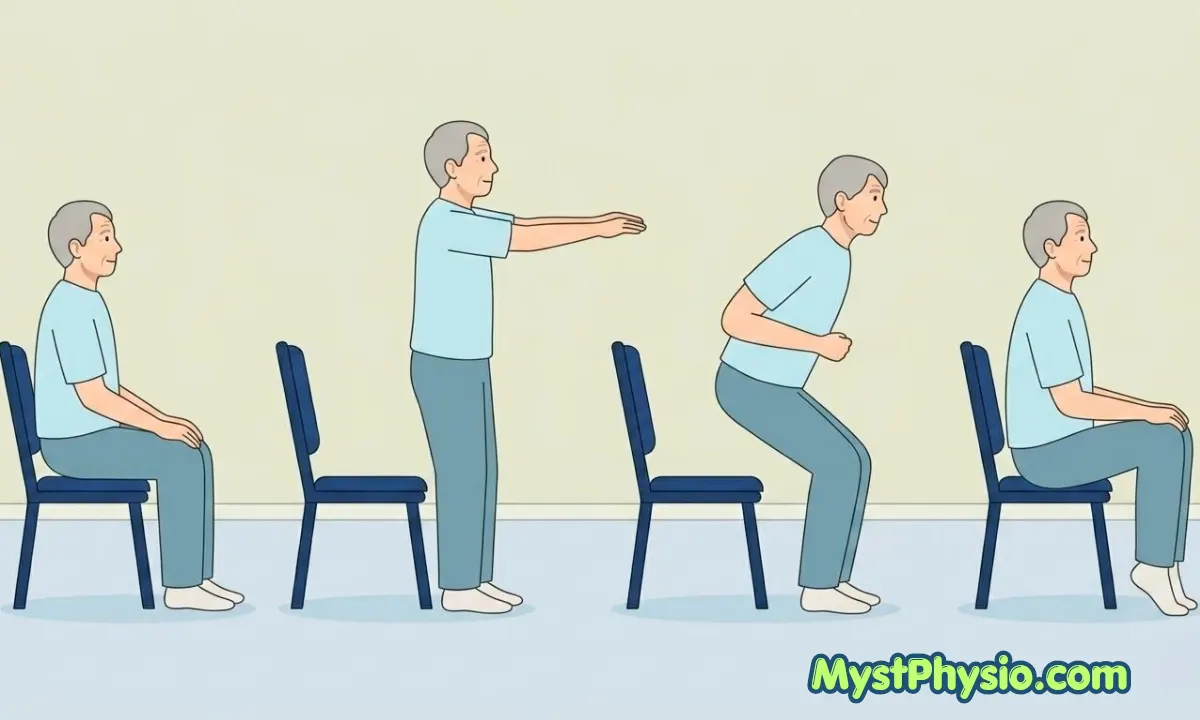
Why this one matters more than most people realise
The ability to safely get up from a chair is one of the strongest predictors of fall risk in older adults. Research published in the Journal of Physical Therapy Science links this movement to functional independence. Every time you practice sit-to-stand, you are training your quadriceps (front thigh muscles), glutes (buttock muscles), and core – the same muscles that catch you when you stumble.
How to do it:
- Sit in a sturdy, firm chair. Avoid soft sofas.
- Place your feet about shoulder-width apart.
- Lean slightly forward from your hips, not your waist.
- Push through your heels and rise slowly to standing.
- Pause for a moment at the top.
- Lower yourself back down with control. Resist the urge to drop.
Aim for: 8–10 repetitions
Beginner tip: Use the armrests or lightly push off your thighs to get started. As you get stronger, try to rely less on your hands.
The most common mistake: Dropping heavily into the chair. That lands hard on your joints and trains the wrong pattern. Lower yourself slowly, as if the chair might not be there.
2. Single-Leg Stand
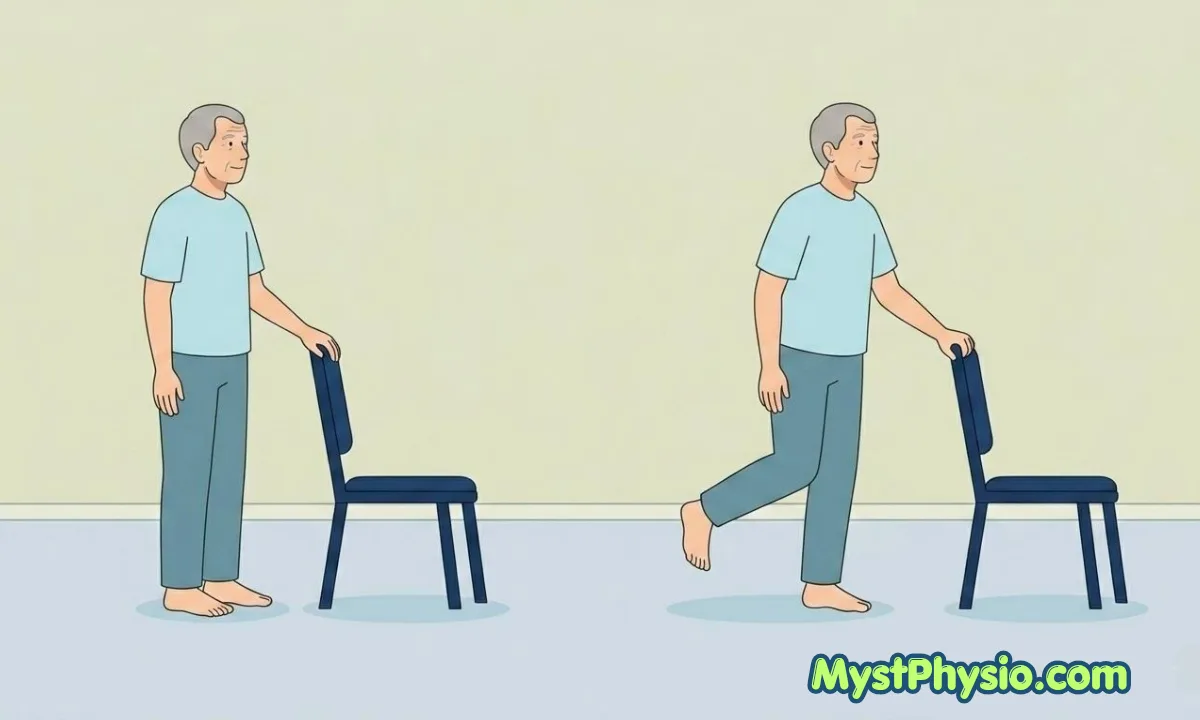
Why ankle strength is your hidden safety net
Most sideways stumbles happen in a fraction of a second. Your ankles are the first line of defense. This simple exercise trains the small stabilising muscles around the ankle and the balance receptors (called proprioceptors – tiny sensors in your joints that detect position and movement) that tell your brain where your foot is.
How to do it:
- Stand behind a sturdy chair. Hold the back lightly.
- Slowly lift one foot just a few centimetres off the floor.
- Hold the position for 10–15 seconds.
- Lower your foot gently.
- Switch to the other side.
Aim for: 2–3 rounds on each leg
How to make it harder over time: Start with a full grip on the chair. Move to fingertip contact. Then try hovering your hands near the chair without touching. Never rush this progression – it can take weeks and that is completely fine.
One important note: Always keep the chair within immediate reach. Balance training works best when it challenges you just enough – not so much that a fall becomes likely.
3. Heel-to-Toe Walk
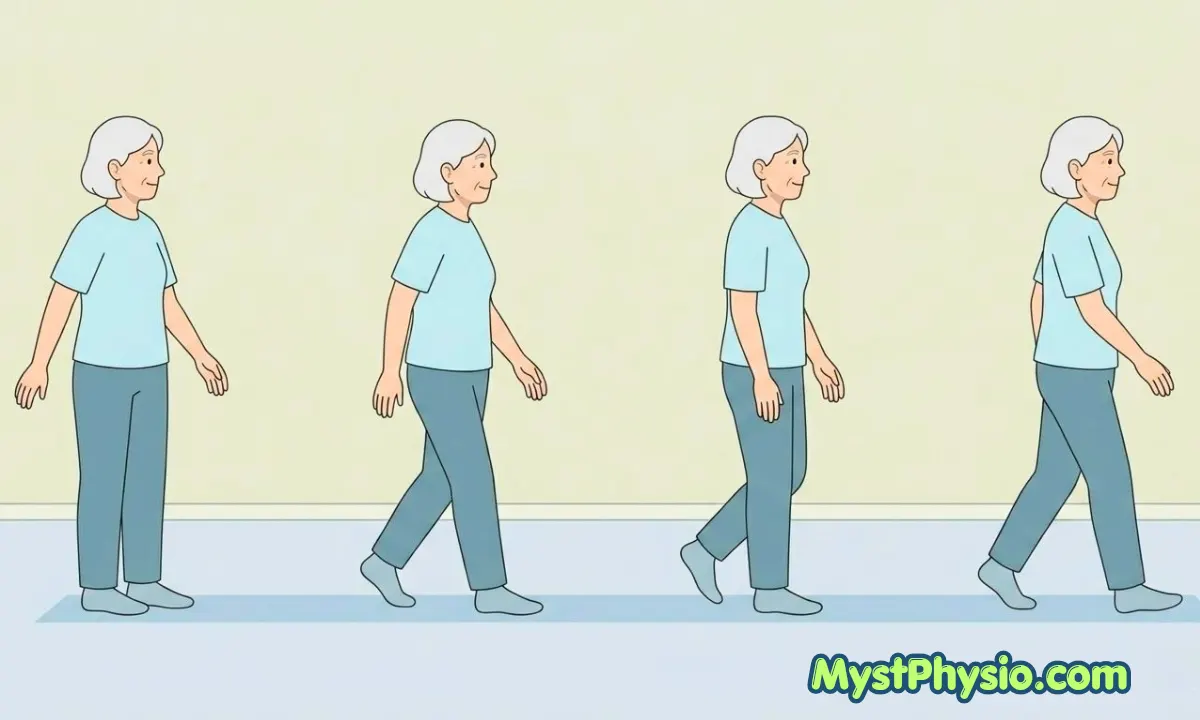
Dynamic balance is different from standing still
Most falls happen during movement while walking, turning, or stepping. This exercise trains what is called dynamic balance (balance while your body is in motion), specifically improving the coordination of each step you take.
How to do it:
- Stand alongside a wall or counter. Keep it within easy reach.
- Place your right heel directly in front of your left toes – as if walking a tightrope.
- Walk forward slowly, placing each heel directly in front of the opposite foot’s toes.
- Keep your eyes looking forward – not down at your feet.
- Walk 5–10 steps, then turn slowly and return.
Common mistakes to avoid: Looking down at your feet constantly disrupts your natural balance signals. Try to trust your feet and keep your gaze level. Rushing is the other big one – slower is always better here.
Why eyes-forward matters: Your vision is a major part of your balance system. Training yourself to balance without staring at the ground builds a more robust, real-world stability.
4. Side Leg Raises
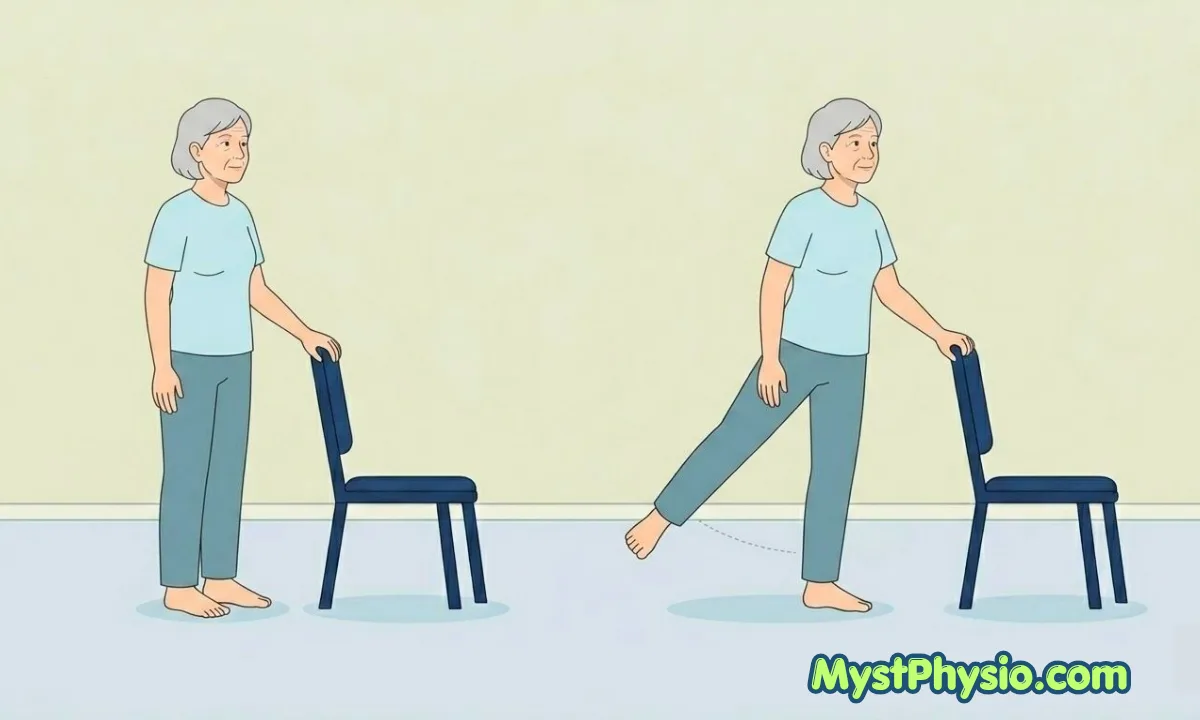
The exercise that prevents sideways falls
Falls to the side are among the most dangerous and they often happen when stepping sideways, getting out of a car, or navigating furniture. The hip abductor muscles (the muscles on the outer part of your hips and thighs) are your main defence here. Side leg raises strengthen them directly.
How to do it:
- Stand behind a chair with both hands holding the back.
- Keep your standing leg slightly bent – never locked straight.
- Slowly raise one leg out to the side. Keep your trunk upright.
- Hold briefly at the top.
- Lower with control.
Aim for: 8–12 repetitions each side
Critical tip: Do not tilt your body to the side to lift the leg higher. That cheats the movement and trains the wrong muscles. The range does not need to be large – a modest lift done correctly beats a wide lift done wrongly.
RELATED: 7 Reasons Why Shoulder Pain Increases at Night (How to Sleep Without Pain)
Your 10-Minute Daily Routine
You do not need more than 10 minutes. Here is how to put it all together:
| Exercise | Target |
|---|---|
| Sit-to-Stand | 8–10 repetitions |
| Single-Leg Stand | 10–15 seconds each side × 2–3 rounds |
| Heel-to-Toe Walk | 5–10 steps each direction |
| Side Leg Raises | 8–12 repetitions each side |
When Is the Best Time to Practice?
Honestly, whenever you will actually do it. Some people do this routine first thing in the morning before coffee. Others slot it in during TV commercial breaks or while waiting for a kettle to boil. There is no magic window. Consistency beats timing every time.
Short daily sessions outperform longer occasional ones. Your nervous system (the brain-body connection that governs balance) learns through repetition, not intensity.
How to Progress Safely Over Time
Start with full support. Both hands on the chair. That is not a sign of weakness, it is smart training. The goal is to gradually challenge your system without pushing past what is safe.
A reasonable progression looks like this:
- Full-hand grip on chair
- Fingertip contact only
- One finger touching lightly
- Hands hovering just above the surface
- Arms folded or held out to the sides
Add one level of difficulty only when you feel genuinely comfortable at the current level. There is no timetable. Some people progress in two weeks. Others take two months. Both are completely normal.
Signs Your Balance Is Getting Better
Progress in balance training is often subtle at first. Watch for these real-world signals:
In the exercises themselves:
- Holding the single-leg stand longer before needing support
- Getting up from the chair without needing your hands
- Walking the heel-to-toe line more smoothly
In everyday life:
- Stepping off a curb with more confidence
- Feeling steadier on stairs
- Less hesitation when walking on uneven ground
- Noticing you catch yourself more easily when you do stumble
Keep a simple log if you like. Time your single-leg stand once a week. Even 2–3 extra seconds is real progress worth celebrating.
Mistakes That Slow Progress (or Create Risk)
A few habits are worth avoiding:
- Moving too fast. Speed is the enemy of balance training. Slow, controlled movement builds the right neural pathways.
- Holding your breath. Breathe throughout. Breath-holding creates tension and can raise blood pressure briefly.
- Using wobbly furniture. A chair that slides or a counter that shifts is a genuine safety hazard. Choose firm, stable surfaces.
- Being inconsistent. Doing the routine three times one week then skipping two weeks resets much of the progress. Short and daily beats long and occasional every time.
- Ignoring warning signs. Dizziness, unusual leg pain, or sudden weakness are signals to stop and consult your doctor. Do not push through them.
When to See a Physical Therapist
Home exercises are a wonderful start. But some situations call for professional assessment.
Consider seeing a physiotherapist (a movement and rehabilitation specialist) if you:
- Have had more than one fall in the past year
- Feel significant unsteadiness when walking or turning
- Experience persistent dizziness, especially when changing position
- Are recovering from a stroke, hip replacement, or knee surgery
- Notice one leg feels significantly weaker than the other
A physiotherapist can assess your specific balance profile, identify the exact weak points in your system, and design a program that targets your individual needs. This is especially valuable if home exercises feel too uncertain or if progress has stalled.
Frequently Asked Questions (FAQs)
Most people notice small changes within 3–4 weeks of daily practice. Meaningful functional improvement feeling steadier in real life often comes within 6–8 weeks. Consistency is the key variable.
For most older adults, yes – with a chair or counter nearby at all times. If you have had recent falls or feel very unsteady, ask a family member to be present for the first few sessions, or consult a physiotherapist before starting.
Most of these exercises can be modified. Sit-to-stand can be done with more hand support and a shallower depth. Side leg raises can use a smaller range of motion. Move within a comfortable, pain-free range. Mild discomfort from muscle effort is normal; joint pain is not.
Yes. Unlike strength training with weights, balance training does not require recovery days. Daily practice is actually preferred because balance is a neurological skill – frequency of practice matters.
Not special, but supportive. Avoid bare socks on smooth floors. A well-fitted, flat-soled shoe with a non-slip sole is ideal. Avoid thick-soled or very cushioned shoes, which can reduce your ability to feel the floor.
Seated balance exercises exist and can be very effective. Chair yoga and seated leg lifts are a good starting point. A physiotherapist can recommend appropriate alternatives based on your specific situation.
A Final Word
You do not need to transform your lifestyle. You need 10 minutes, a chair, and the willingness to start.
Balance improves with practice. Confidence grows with small wins. And independence (the ability to move safely through your own home and your own life) is worth every one of those repetitions.
Start where you are. Use whatever support you need. Come back to it tomorrow.
Talk to your doctor or physiotherapist before beginning any new exercise program, especially if you have a health condition that affects your movement or balance.
References
- World Health Organization. Falls: Key Facts. WHO Global Report on Falls Prevention in Older Age. Available at: https://www.who.int/news-room/fact-sheets/detail/falls
- Bohannon RW. Sit-to-stand test for measuring performance of lower extremity muscles. Perceptual and Motor Skills. Published in peer-reviewed literature. Available via PubMed.
- Horak FB. Postural orientation and equilibrium: what do we need to know about neural control of balance to prevent falls? Age and Ageing. 2006;35(suppl 2):ii7–ii11.
- Shumway-Cook A, Woollacott MH. Motor Control: Translating Research into Clinical Practice. 5th ed. Lippincott Williams & Wilkins.
- Sherrington C, et al. Exercise for preventing falls in older people living in the community. Cochrane Database of Systematic Reviews. 2019; Issue 1. Art. No.: CD012424.
- National Institute for Health and Care Excellence (NICE). Falls in older people: assessing risk and prevention. Clinical Guideline CG161. London: NICE.
This article is written for informational purposes only and does not replace personalised medical advice. Always consult a qualified healthcare professional before starting a new exercise program.