


You probably know the feeling.
A dull stiffness at the base of your neck after hours of looking at your phone. Sometimes it spreads upward – behind the head, even toward the shoulders. At first it seems harmless… just a little tightness.
But days turn into weeks. Weeks turn into months.
And suddenly that “small stiffness” becomes chronic neck pain.
In the last decade, physiotherapists around the world have noticed a huge rise in this problem. Long hours of smartphones, laptops, and desktop work have created what many clinicians now call “tech neck.”
Organizations like the World Health Organization and the American Physical Therapy Association have repeatedly emphasized the importance of posture, movement, and workplace ergonomics to prevent musculoskeletal disorders related to screen use.
So let’s unpack this properly – what actually causes chronic neck pain from devices, why it becomes persistent, and what physiotherapy can realistically do to fix it.
Why Mobile and Computer Use Causes Neck Pain
The human neck was never designed to stay bent forward for hours.
When your head is upright, the cervical spine carries roughly 4-5 kg of weight. That’s manageable. Muscles, ligaments, and joints handle it easily.
But things change dramatically when the head tilts forward.
For example:
| Head Angle | Pressure on Neck |
|---|---|
| 0° (neutral) | ~5 kg |
| 30° forward | ~18 kg |
| 60° forward | ~27 kg |
This extra load places continuous strain on:
- cervical spine joints
- neck extensor muscles
- upper trapezius
- intervertebral discs
Over time, the body responds with muscle fatigue, stiffness, and inflammation.
A quick glance at your phone occasionally won’t cause damage. The problem appears when this posture is repeated thousands of times daily.
Common Habits That Trigger Chronic Neck Pain
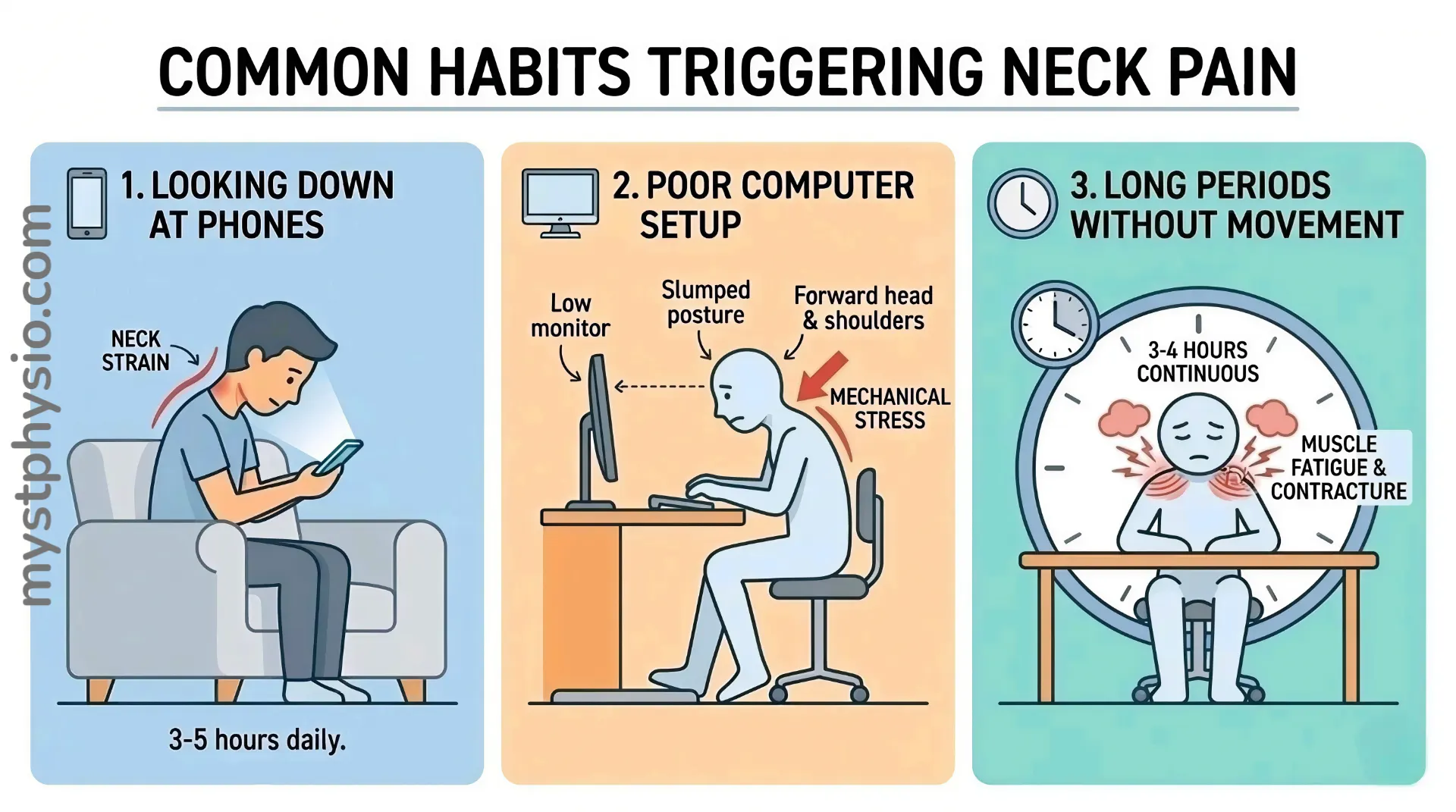
Many patients assume neck pain comes from “weak muscles.” In reality, the issue is usually prolonged mechanical stress.
Some everyday habits quietly worsen the problem.
1. Looking Down at Smartphones
Phones are usually held at chest or waist level, forcing the neck to bend forward.
Many people spend 3-5 hours daily in this position without noticing.
2. Poor Computer Workstation Setup
Common ergonomic mistakes include:
- monitor placed too low
- laptop-only workstations
- chair without back support
- keyboard placed too far forward
These setups force the head and shoulders to drift forward.
3. Long Periods Without Movement
The neck tolerates posture surprisingly well if movement happens regularly.
But when someone works for 3-4 hours continuously, muscles remain contracted for too long.
Eventually they fatigue and become painful.
Symptoms of Chronic Neck Pain from Device Use
The symptoms usually develop gradually.
At first they seem minor – easy to ignore.
But over time they become persistent.
Typical signs include:
- stiffness at the back of the neck
- pain at the base of the skull
- shoulder tightness
- headaches starting from the neck
- difficulty turning the head fully
- muscle tenderness in the upper trapezius
Some people also experience burning or aching between the shoulder blades.
According to clinical guidance from the National Health Service, prolonged poor posture is a common contributor to these symptoms, especially in office workers and students.
Why Neck Pain Becomes Chronic
This part is important.
Acute neck pain can resolve in a few days.
Chronic pain, however, persists for more than 3 months.
Why does that happen?
Three things usually combine.
1. Muscle Imbalance
Certain muscles become overworked while others weaken.
Typically:
Tight muscles
- upper trapezius
- levator scapulae
- suboccipital muscles
Weak muscles
- deep neck flexors
- lower trapezius
- scapular stabilizers
This imbalance keeps the neck stuck in a dysfunctional pattern.
2. Reduced Joint Mobility
When movement decreases, cervical joints lose flexibility.
Stiff joints create compensatory movements elsewhere.
3. Persistent Postural Stress
Even if pain starts improving, returning to the same posture every day restarts the cycle.
That’s why many people say:
“My neck gets better on weekends but worse again during workdays.”
How Physiotherapy Helps Chronic Neck Pain
Physiotherapy focuses on correcting the underlying problem, not just masking pain.
A treatment program typically includes several components.
Postural Correction
Patients learn how to maintain a neutral cervical spine position during daily activities.
Small changes make a big difference:
- raising the monitor to eye level
- keeping the phone at eye height
- supporting the lower back while sitting
Manual Therapy
Physiotherapists may use techniques such as:
- soft tissue release
- cervical mobilization
- trigger point therapy
These help reduce muscle tension and improve joint movement.
Strengthening Exercises
Weak stabilizing muscles must be retrained.
Exercises focus on:
- deep neck flexor activation
- scapular stabilization
- shoulder blade control
Stretching Tight Muscles
Tight muscles require gentle stretching to restore balance.
Common targets include:
- upper trapezius
- levator scapulae
- pectoral muscles
Research summarized by institutions like Mayo Clinic suggests that combining posture correction with strengthening exercises significantly improves long-term neck pain outcomes.
Simple Exercises That Help Relieve Neck Pain
These exercises are commonly used in physiotherapy programs. They should be performed slowly and without forcing movement.
Chin Tucks
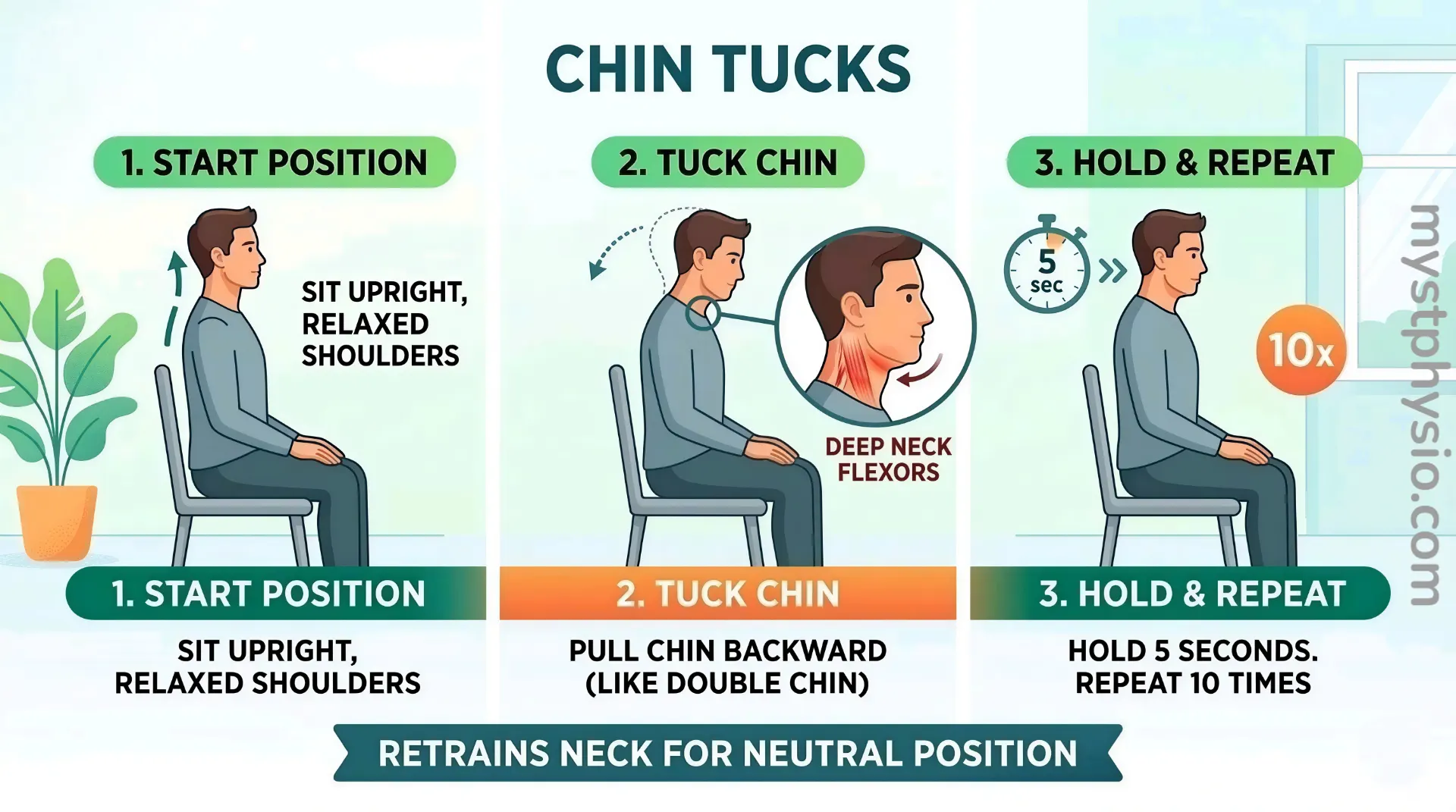
Purpose: strengthen deep neck flexors.
- Sit upright with shoulders relaxed.
- Gently pull the chin backward (like making a double chin).
- Hold for 5 seconds.
- Repeat 10 times.
This exercise retrains the neck to maintain a neutral position.
Upper Trapezius Stretch
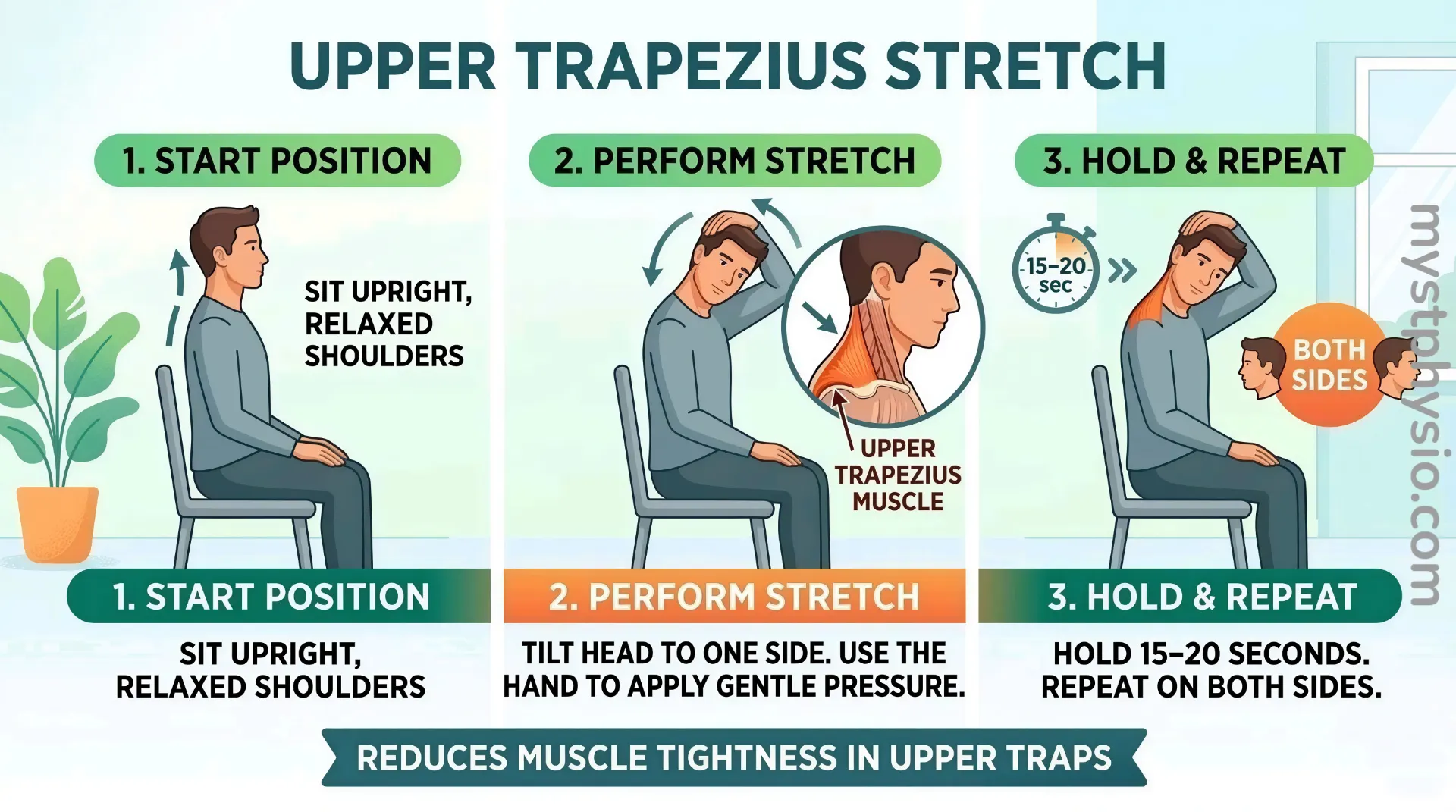
Purpose: reduce muscle tightness.
- Sit upright.
- Tilt the head to one side.
- Use the hand to apply gentle pressure.
- Hold for 15–20 seconds.
Repeat on both sides.
Scapular Retraction
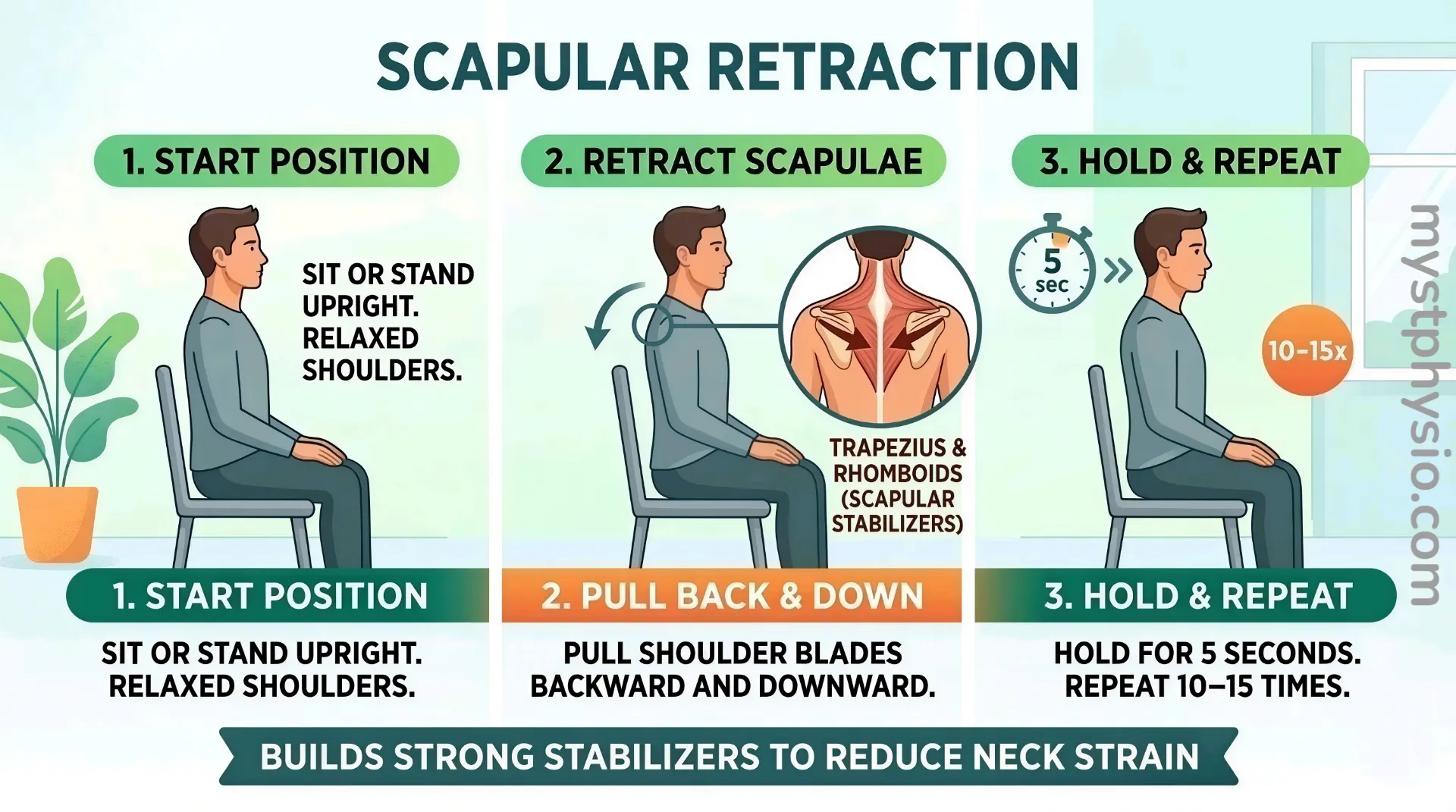
Purpose: strengthen upper back muscles.
- Sit or stand upright.
- Pull shoulder blades backward and downward.
- Hold for 5 seconds.
- Repeat 10–15 times.
Strong shoulder stabilizers reduce strain on the neck.
Ergonomic Tips to Prevent Neck Pain
Prevention is often simpler than treatment.
A few small adjustments can protect the neck during daily device use.
Adjust Your Screen Height
The top of the monitor should be at or slightly below eye level.
This prevents forward head posture.
Follow the 20-20-20 Rule
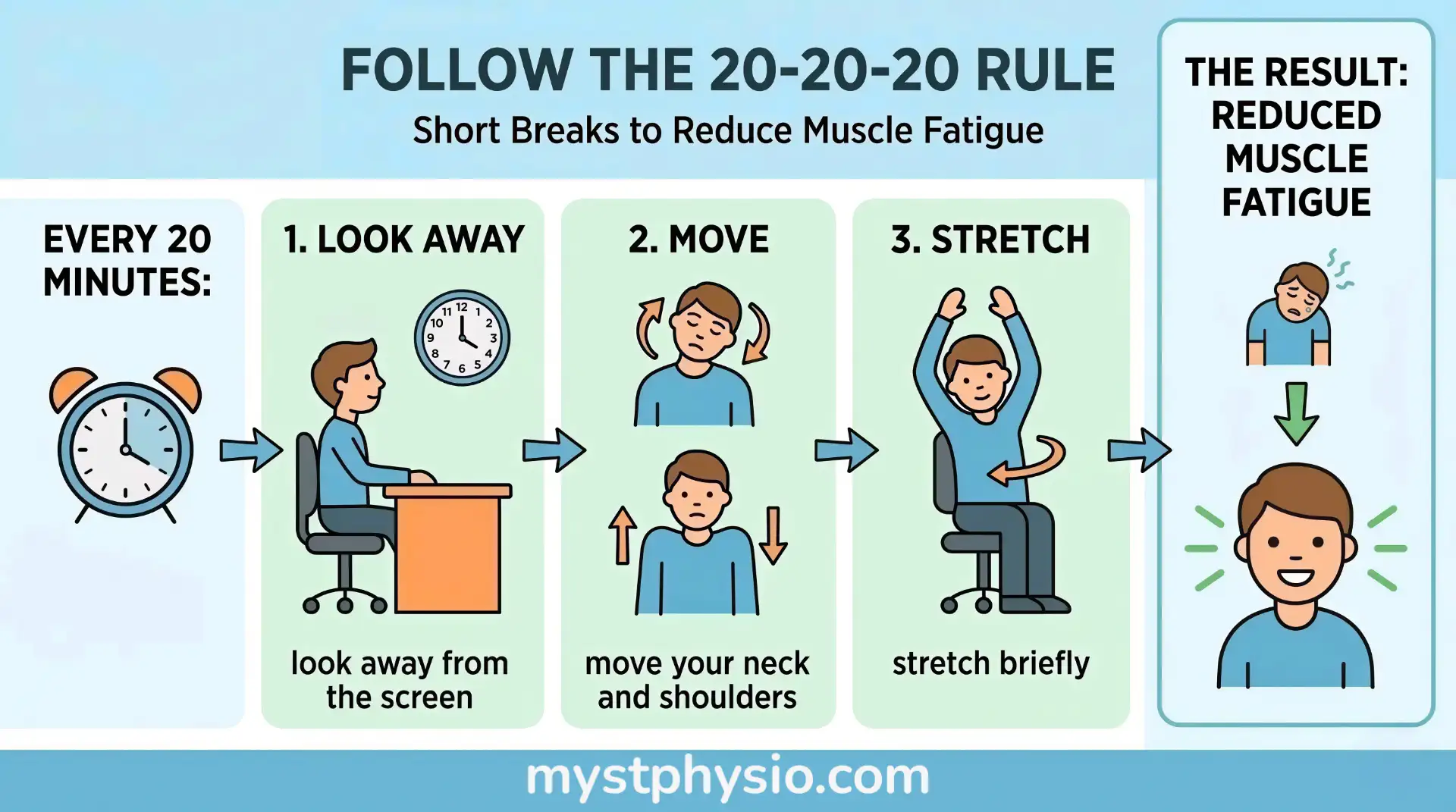
Every 20 minutes:
- look away from the screen
- move your neck and shoulders
- stretch briefly
Short movement breaks reduce muscle fatigue.
Use External Accessories
Laptop users benefit from:
- external keyboards
- separate monitors
- adjustable chairs
These changes allow proper workstation posture.
Avoid Using Phones for Long Periods
Try holding the phone at eye level rather than near the waist.
It feels awkward at first, but the neck appreciates it.
When to See a Physiotherapist
Occasional neck stiffness is common.
But professional assessment is recommended if:
- pain lasts longer than 2-3 weeks
- headaches become frequent
- neck movement becomes restricted
- pain spreads to shoulders or arms
Early physiotherapy intervention can prevent minor problems from turning into long-term chronic conditions.
Frequently Asked Questions (FAQs)
Yes, Prolonged smartphone use often requires bending the neck forward, which increases stress on the cervical spine. Over time, this posture can lead to muscle fatigue, joint stiffness, and chronic neck pain commonly known as “tech neck.”
Neck pain after computer use usually occurs due to poor posture, improper monitor height, and prolonged sitting without breaks. These factors strain the neck muscles and cervical joints.
Neck pain can often be relieved through posture correction, ergonomic workstation adjustments, stretching exercises, strengthening of neck muscles, and taking regular movement breaks.
Tech neck refers to neck pain and stiffness caused by prolonged use of smartphones, tablets, or computers while looking downward for extended periods.
Mild cases may improve within a few days with rest and exercises, while chronic neck pain may require several weeks of physiotherapy and posture correction.
Exercises like chin tucks, upper trapezius stretches, and scapular retraction help strengthen neck muscles and improve posture, reducing long-term neck pain.
You should consult a physiotherapist if neck pain lasts more than two to three weeks, restricts movement, causes headaches, or spreads to the shoulders or arms.
The Bottom Line
Modern technology has transformed how we work, communicate, and relax.
Unfortunately, our bodies haven’t adapted to spending hours each day with the head tilted forward.
Chronic neck pain from mobile and computer use is becoming one of the most common musculoskeletal complaints worldwide. The good news is that most cases respond well to:
- posture correction
- ergonomic adjustments
- targeted physiotherapy exercises
- regular movement breaks
Sometimes the solution isn’t complicated.
It’s simply reminding the body to move the way it was designed to move.
And occasionally… lifting your eyes away from the screen.