

Bell’s palsy can feel frightening at first. Your face may look uneven. Your eye may not close well. Your smile may feel weak or stuck. The good news is this often improves over time, and many people get better within months. [1]
What Is Bell’s Palsy?
Bell’s palsy is a sudden weakness of one side of the face. It happens when the facial nerve is not working well. That nerve helps you blink, smile, raise your eyebrows, and move your lips. Bell’s palsy is the most common cause of facial paralysis. [1]
Symptoms can start over a few days. You may notice a drooping mouth, trouble closing one eye, a dry eye, drooling, or a change in taste. If the face droop comes with arm weakness or speech trouble, treat it as possible stroke and get emergency help right away. [1]
Why Physiotherapy Exercises Are Important
Gentle facial rehab can help you regain control and symmetry. Recent reviews suggest physical therapy can reduce non-recovery and improve facial function, although the evidence quality is still limited. In simple terms, exercises may help, but they must be done the right way. [2]
That “right way” matters a lot. Some NHS rehab teams advise no exercises until a facial therapist has assessed you. Others begin active exercises when the first small movements return. Both approaches aim to avoid overworking the face, because forceful movement may worsen recovery or encourage unwanted movement patterns later. [3]
When Should You Start Facial Exercises?
Start with a careful plan, not a push. In the early stage, focus on eye care, rest, and gentle massage. Do not force facial exercises on your own if your face is still very weak or if no therapist has shown you how. Several NHS leaflets say exercises should begin only after assessment, or once movement starts to return. [4]
A simple rule helps here: if the movement is tiny, the exercise should be tiny too. Think smooth, slow, and controlled. Not hard. Not fast. Not repeated until tired. [5]
Best Physiotherapy Exercises for Bell’s Palsy
These exercises are usually used when movement begins to return, or when a facial therapist has cleared them. Use a mirror. Keep the effort light. Stop if you feel your face tightening, twitching, or getting more uneven. [6]
1. Eyebrow Raise Exercise
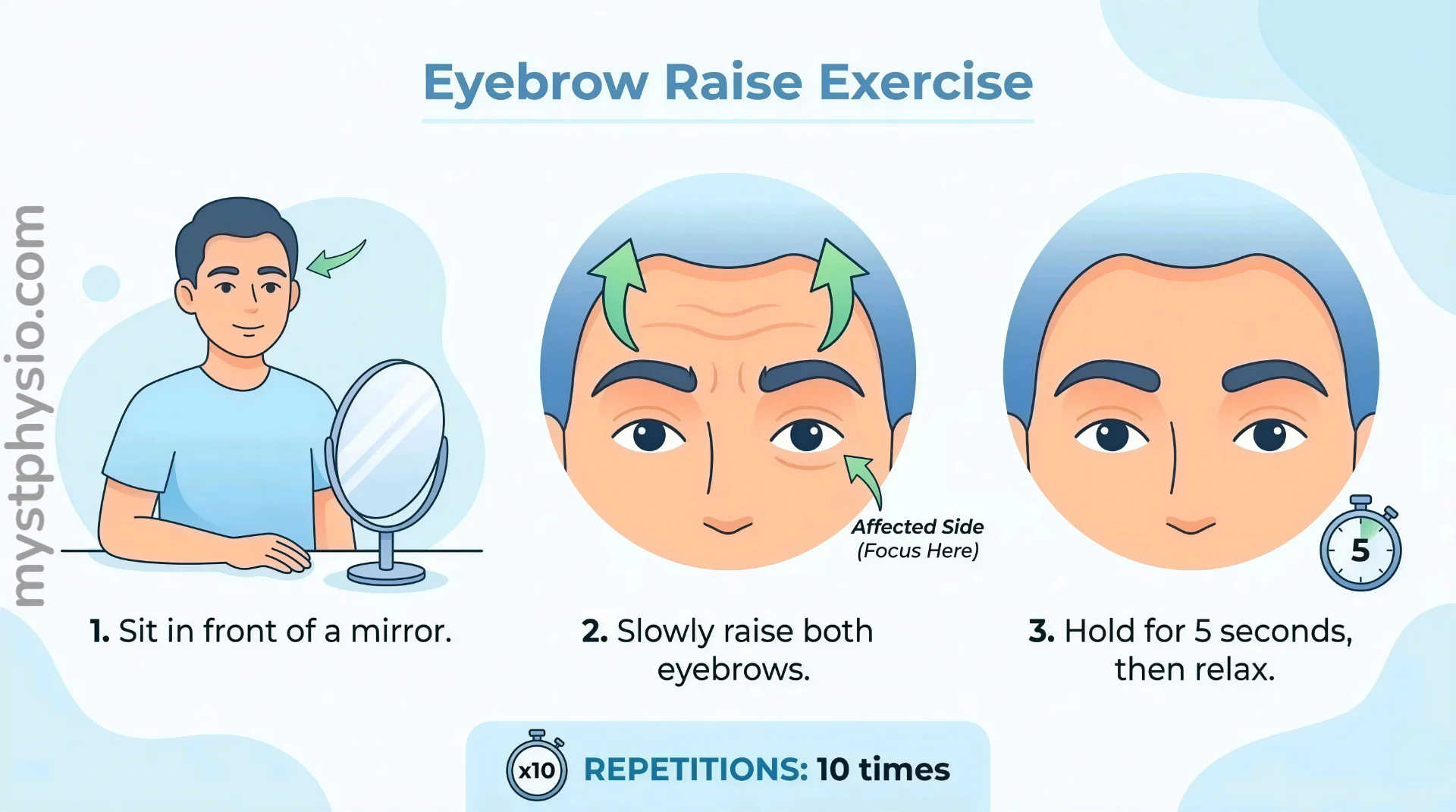
Place one or two fingers gently above the weak eyebrow. Try to lift the eyebrow slowly. Your fingers can help guide the movement. Do not wrinkle the whole forehead hard. The goal is a small, smooth lift. [6]
This exercise can help wake up the upper face. It also helps you notice whether both sides are moving together, or whether the stronger side is doing all the work. [5]
2. Gentle Eye Closing Exercise
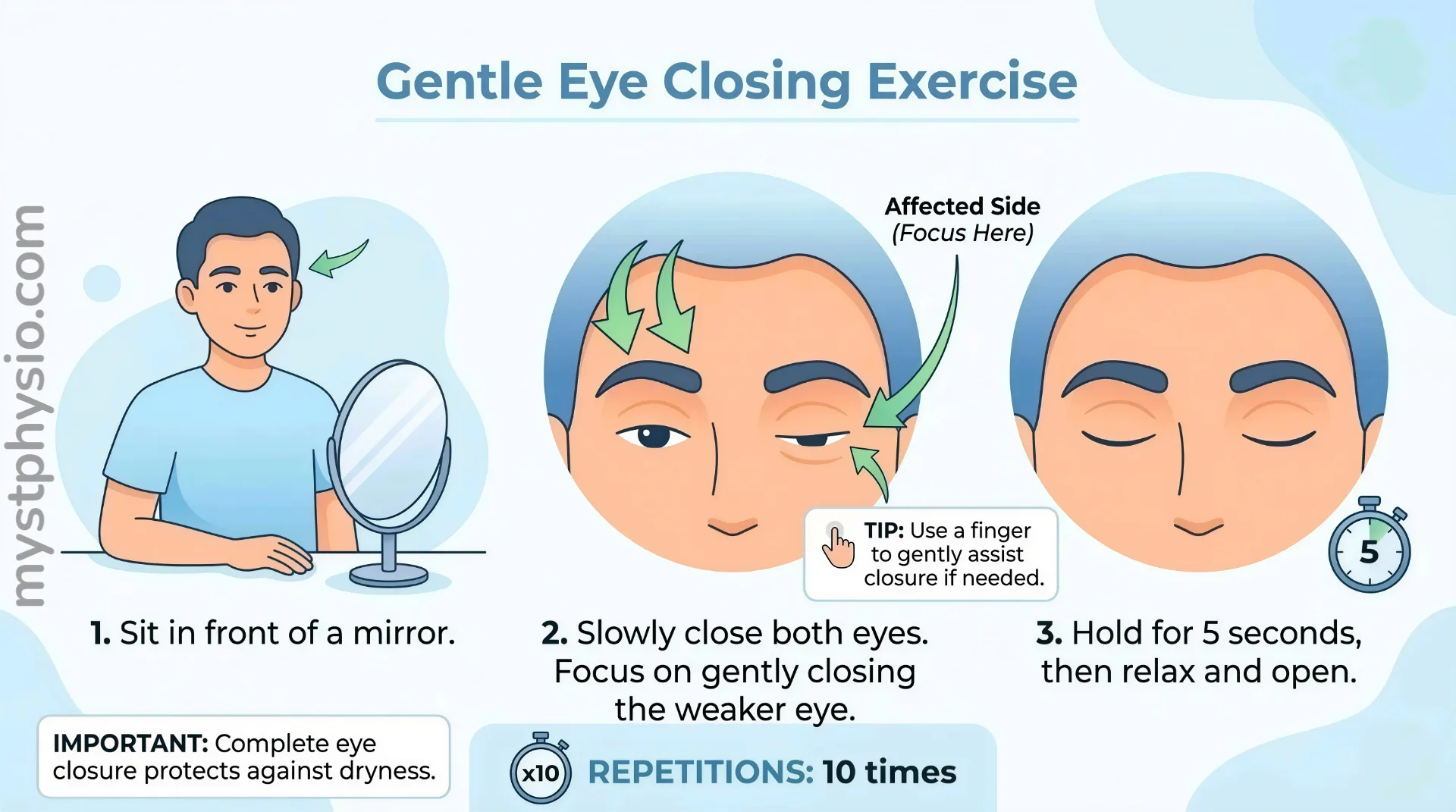
Look straight ahead. Slowly close the weak eye part way, then a little more. Use a clean finger to support the eyelid if needed. Do not screw the face shut. That can strain the cheek and make the movement less natural. [4]
This exercise is especially useful when blinking is weak. Still, eye protection comes first. Use drops, ointment, or taping if your care team advises it. A dry eye can be damaged if it is not protected. [1]
3. Smile Training Exercise
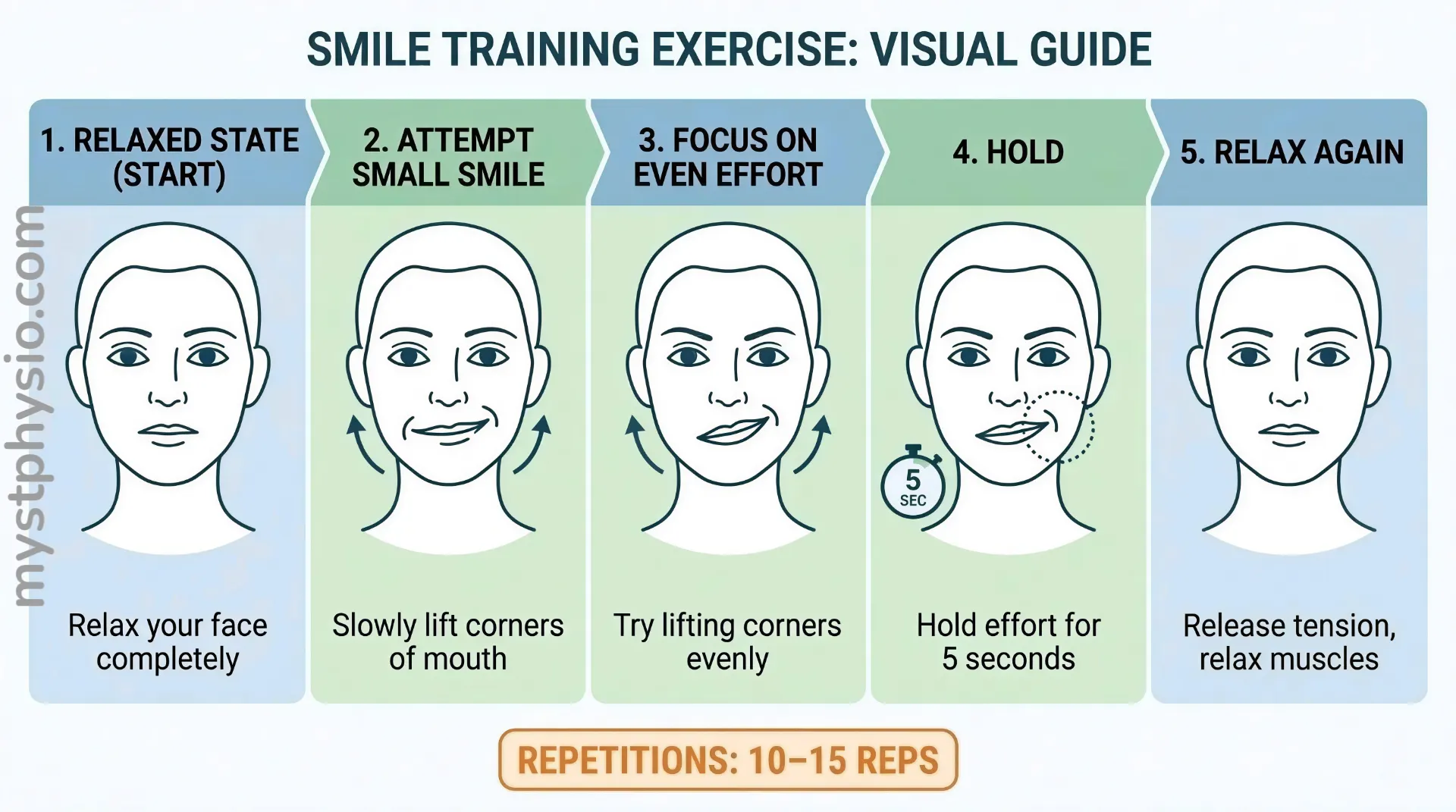
Try a small smile in the mirror. Start with lips closed. Then try a gentle smile with the teeth hidden. After that, try a slightly wider smile if the therapist has shown you how. Keep the movement soft. [6]
This exercise helps the mouth corner learn to lift again. It also helps you spot extra pulling in the eye or neck, which can happen when the face is trying too hard. [7]
4. Cheek Puff Exercise
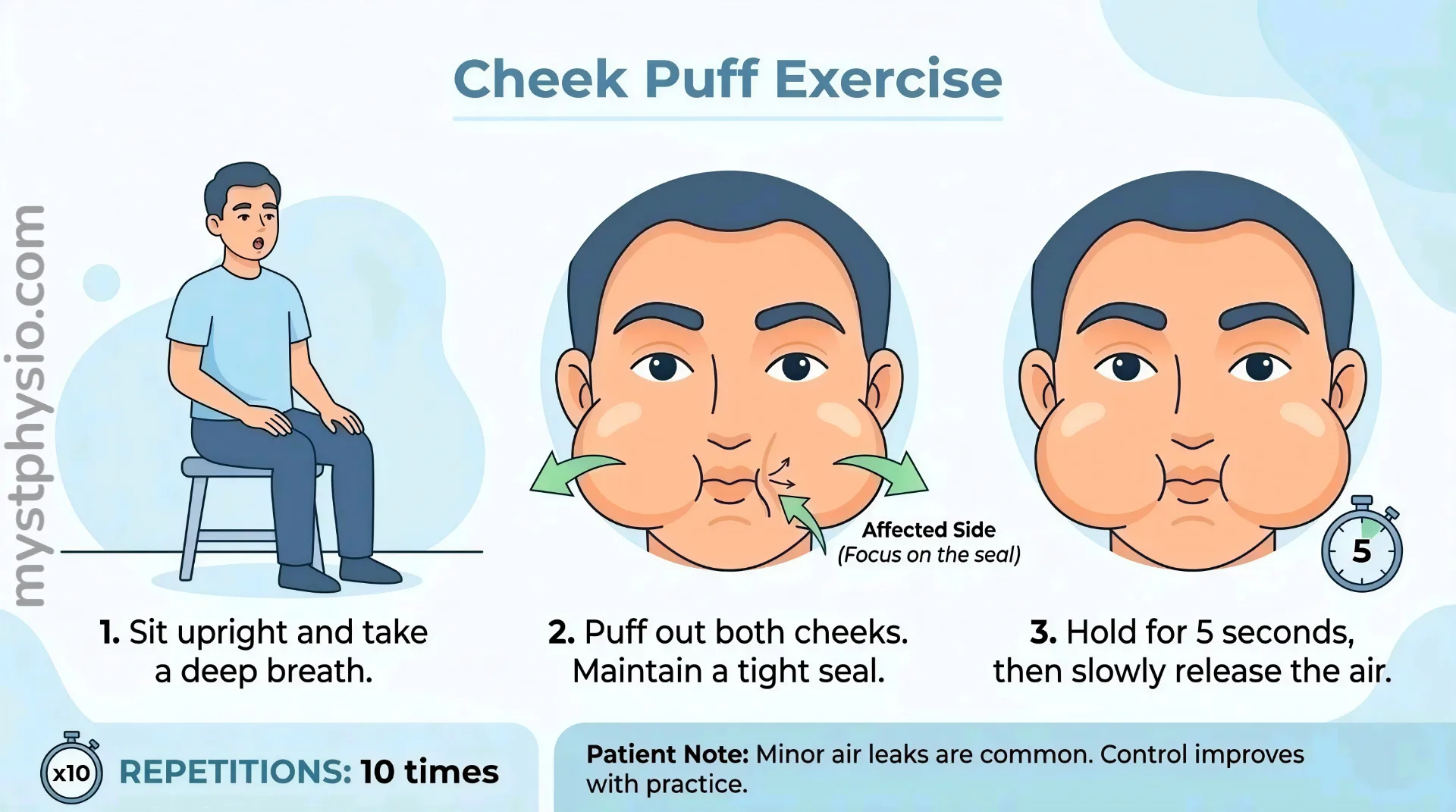
Take a small breath and gently puff out your cheeks. Hold the air for a second or two, then let it out slowly. If air escapes from one side, that is okay at first. The aim is gentle control, not a perfect puff. [5]
You can also try puffing one cheek at a time, but only if it feels easy. If the movement makes your face tense, go back to smaller efforts. [8]
5. Lip Pucker Exercise
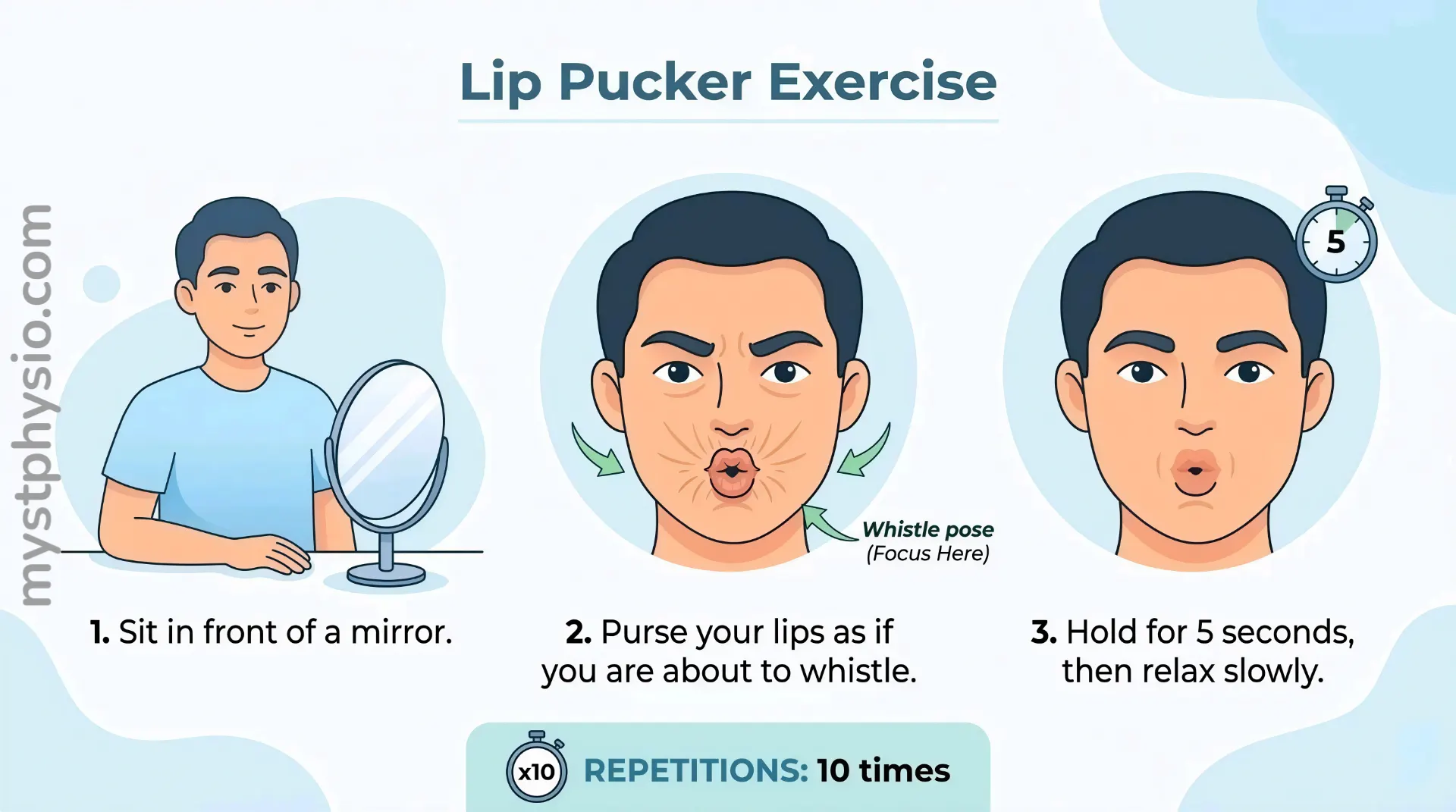
Pucker your lips as if you are about to kiss someone. Keep it soft and small. Do not squeeze the lips tightly. Hold for a moment, then relax fully. [5]
This helps the mouth muscles work together again. It may also help with drinking and speaking, which often feel awkward early on. [1]
6. Lip Corner Lift
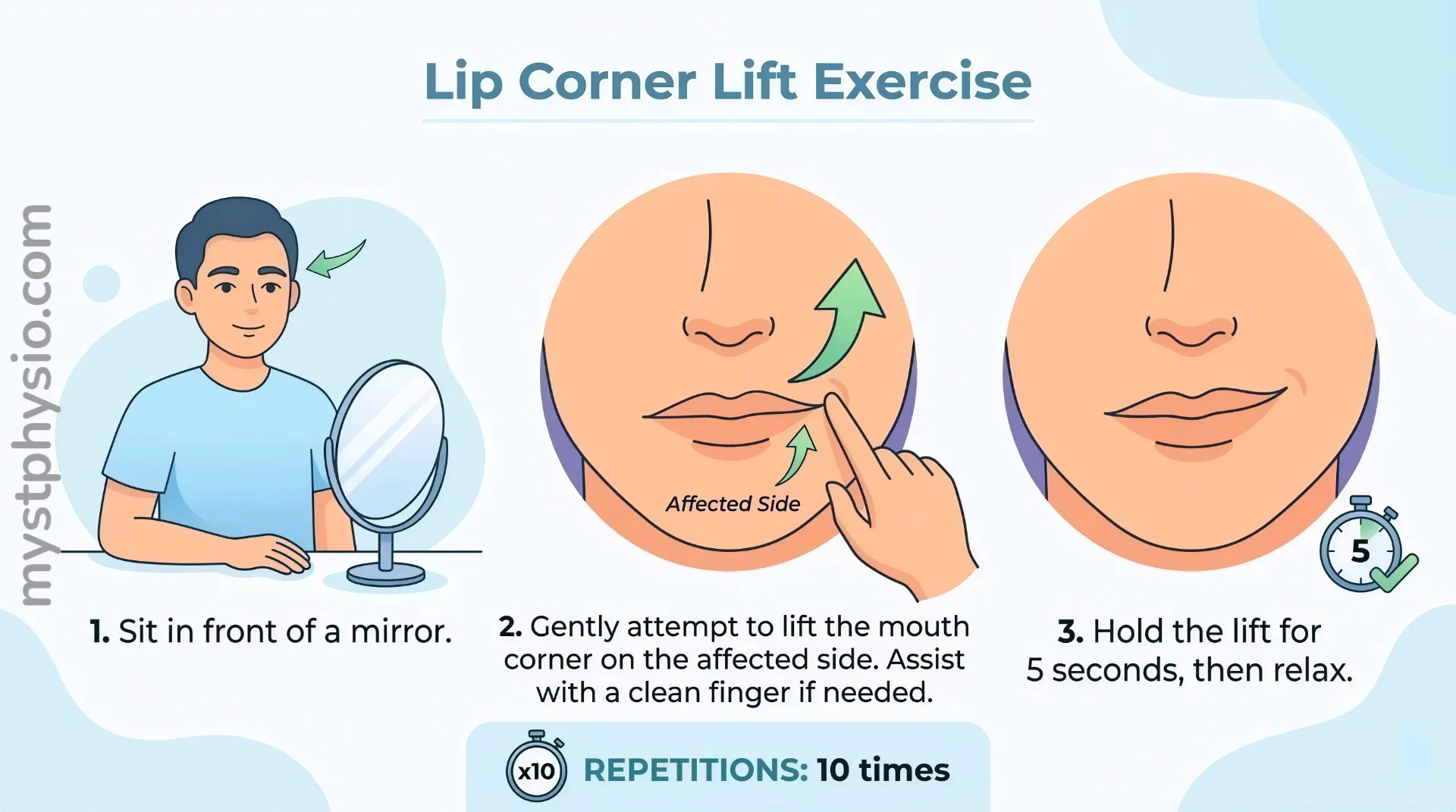
Place a finger at the weak mouth corner. Try to lift that side of the mouth a little. You can do this with your lips closed or with a tiny smile. The lift should be small, clean, and slow. [6]
This is one of the most useful exercises for facial symmetry. It trains the mouth to move without the whole face twisting. That matters because over-effort can lead to unwanted movement later. [8]
7. Nasal Wrinkle Exercise
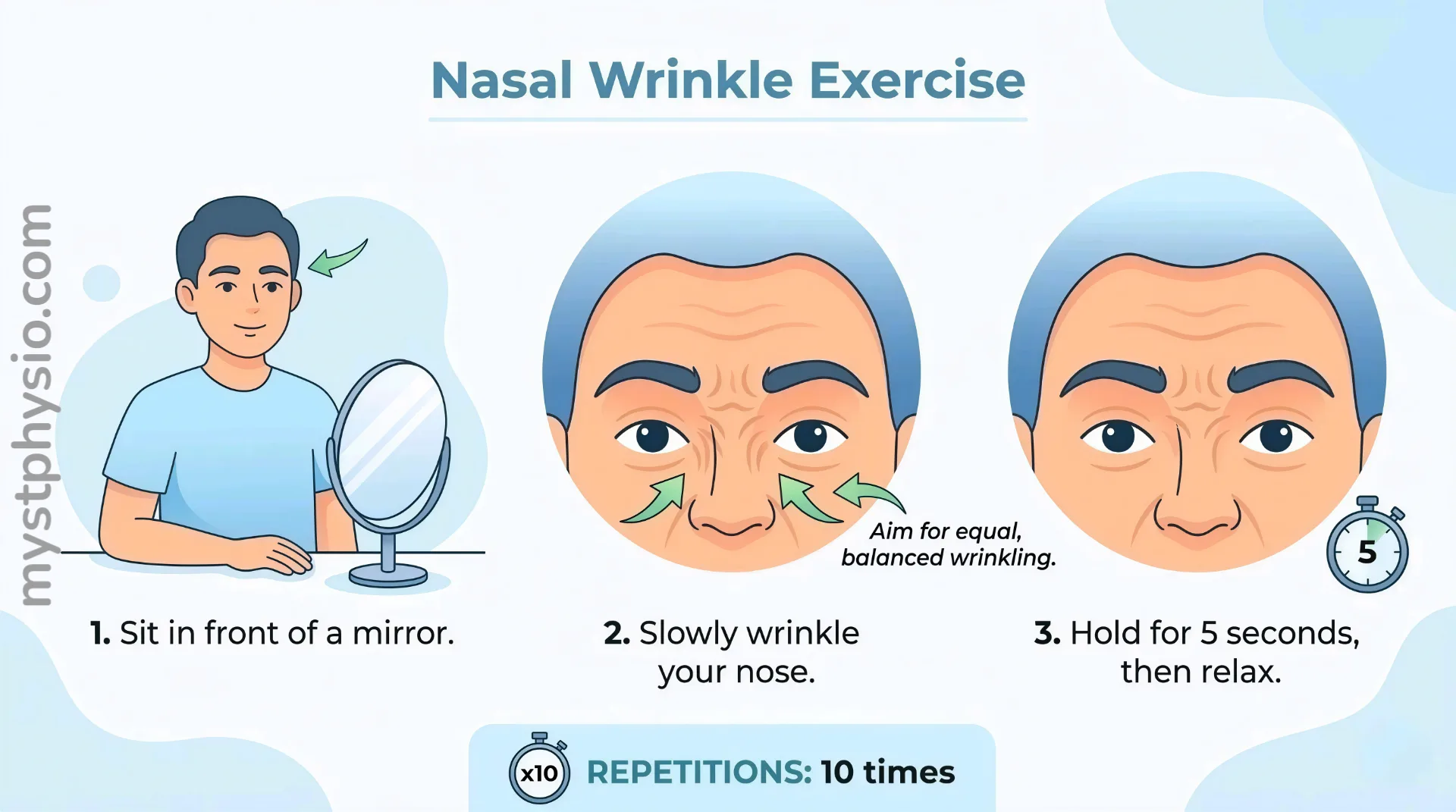
Wrinkle your nose gently, as if something smells odd. You can also try flaring your nostrils. Keep the movement light. Avoid a hard scrunch. [6]
This exercise helps the middle face join in again. It is small, but useful. Many people ignore it, then notice later that the nose and upper lip still feel stiff. [6]
Facial Massage for Bell’s Palsy
Facial massage is often used with exercises. It helps relax tight areas, improve blood flow, and keep the face flexible. Several NHS leaflets recommend gentle massage across the brow, temples, cheeks, chin, and neck. [9]
Use the pads of your fingers. Move slowly. A light circular motion is usually enough. Around the eye, the touch should be extra gentle because the skin is thin and fragile. If your skin bruises easily, talk with your therapist first. [10]
A simple massage routine may include:
- Brow and temple circles
- Soft strokes from the outer eye toward the nose
- Cheek circles from jaw to cheekbone
- Gentle chin massage
- Light neck strokes [10]
Massage should feel soothing. It should not feel painful or forceful. If it hurts, you are doing too much. [9]
Common Mistakes During Bell’s Palsy Exercises
The biggest mistake is pushing too hard. Some people try to “wake up” the face by forcing big grimaces. That can backfire. NHS guidance warns that overworking the face may slow recovery or lead to abnormal movement patterns. [8]
Other common mistakes include:
- Doing exercises too early, before assessment
- Repeating too many times and causing fatigue
- Pulling the face with strong hands
- Making fast, jerky movements
- Ignoring eye care while focusing only on exercises [3]
A good rehab session should leave your face feeling calm, not worn out. If the stronger side starts doing most of the work, the exercise needs to be simplified. [7]
Safety Tips During Recovery
Protect your eye first. Use prescribed drops or ointment. Tape the eye closed at night if advised. If you cannot close the eye fully, speak to a clinician soon, because the cornea can dry out and become damaged. [1]
Be careful with food and drink too. Small bites, soft foods, and extra mouth cleaning can help when chewing is weak. These little steps make daily life easier while the nerve heals. [4]
Also, rest matters. Stress can make recovery feel harder, and tired muscles do not move well. If your symptoms are not improving after a few weeks, go back to your doctor. [9]
How Long Does Recovery Take?
Recovery is different for everyone. NHS guidance says symptoms usually improve within six months, though some people take longer. Some people notice improvement in a few weeks. A few people have lingering weakness or tightness. [1]
The earlier Bell’s palsy is assessed and treated, the better. Treatment is more effective when started early, ideally within 72 hours. That means do not wait and hope it passes on its own if the face suddenly droops. [1]
When to See a Physiotherapist
See a physiotherapist who knows facial rehab if:
- Your face is still weak after the first few weeks
- You are unsure when to start exercises
- Your eye, smile, or speech is not improving
- You notice tightness, twitching, or unwanted linked movements
- You need help with massage, mirror work, or daily tasks [1]
A facial therapist can show you the right side to work on, how hard to work, and when to stop. That guidance is often the difference between helpful training and unhelpful strain. [3]
Frequently Asked Questions (FAQs)
Yes, physiotherapy can help improve facial muscle strength, coordination, and symmetry during Bell’s palsy recovery. Facial exercises stimulate weakened muscles and help restore communication between the facial nerve and muscles. Regular practice may support faster and more complete recovery.
Most physiotherapists recommend performing facial exercises 2–3 times per day. Each session may include 8–10 repetitions of each movement. Exercises should be done gently and in front of a mirror to maintain proper facial symmetry.
Recovery time varies depending on the severity of nerve inflammation. Many patients begin to improve within 2–3 weeks, while full recovery may take several weeks to a few months. Consistent rehabilitation exercises and early treatment may support better recovery outcomes.
Yes, facial exercises are generally safe when performed gently and correctly. However, excessive force or overtraining should be avoided because facial muscles fatigue easily. It is best to follow a physiotherapist’s guidance when starting rehabilitation exercises.
You should consult a physiotherapist if facial weakness persists for several weeks, if movements become uncoordinated, or if recovery appears slow. Professional guidance can help design a personalized facial rehabilitation program.
Final Thoughts
Bell’s palsy can shake your confidence, but recovery is often possible. The best physiotherapy exercises are gentle, precise, and matched to your stage of healing. Do not rush. Do not force. Start with protection, then movement, then control. [1]
Small daily practice can help. So can good eye care, rest, and professional guidance. The face heals best when you respect its pace. [4]
Call to Action: If you have Bell’s palsy symptoms, consult your doctor or a facial physiotherapist for a personalized plan.
References
- NHS. Bell’s palsy. Source ↝
- Nakano H, et al. Physical therapy for peripheral facial palsy. Source ↝
- University Hospitals Southampton NHS Foundation Trust. Facial exercise videos. Source ↝
- Oxford University Hospitals NHS Foundation Trust. Managing Early Facial Palsy. Source ↝
- Chung-Hua Hospital Trust. Facial Palsy Advice. Source ↝
- Leeds Teaching Hospitals NHS Trust. Bell’s Palsy patient information. Source ↝
- Frontiers in Neurology. Facial nerve paralysis therapy. Source ↝
- University Hospitals Southampton NHS Foundation Trust. Facial rehabilitation treatments. Source ↝
- Queen Victoria Hospital NHS Trust. Facial palsy therapy. Source ↝
- University Hospitals Plymouth NHS Trust. Facial Palsy Booklet. Source ↝