

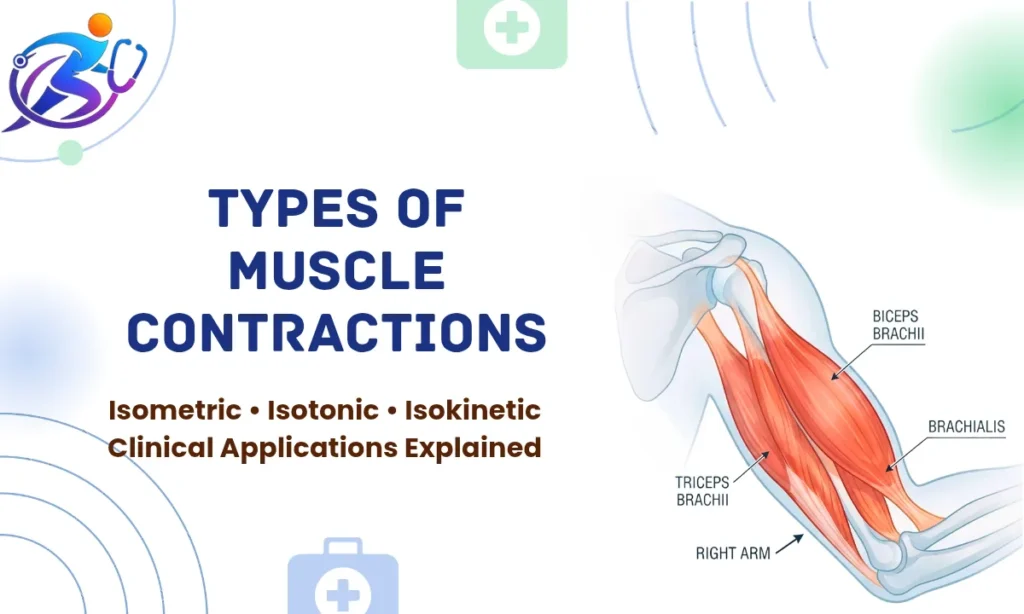
Your muscles work hard every single day. They lift your coffee cup. They hold your posture. They push you up a flight of stairs. But here’s something most people don’t know – muscles contract in very different ways depending on what your body needs.
Understanding these differences isn’t just for scientists. It matters deeply if you are recovering from an injury, working with a physiotherapist, or simply trying to train smarter. Three main types of muscle contractions drive almost every physical movement you make: isometric, isotonic, and isokinetic. Each one has a unique role in clinical care and everyday life.
Let’s break them down – clearly, honestly, and without the confusing jargon.
What Is a Muscle Contraction?
Before diving in, let’s get one thing straight. A muscle contraction doesn’t always mean the muscle gets shorter. It actually means the muscle is producing force – sometimes to move, sometimes to hold still.
When your brain sends a signal, muscle fibers tighten (contract). Depending on the load, your speed, and the task at hand, that contraction will fall into one of three categories. Researchers and clinicians use these categories every day to design safe, effective treatment and training programs.
Isometric Contractions: When Muscles Work Without Moving
What Is an Isometric Contraction?
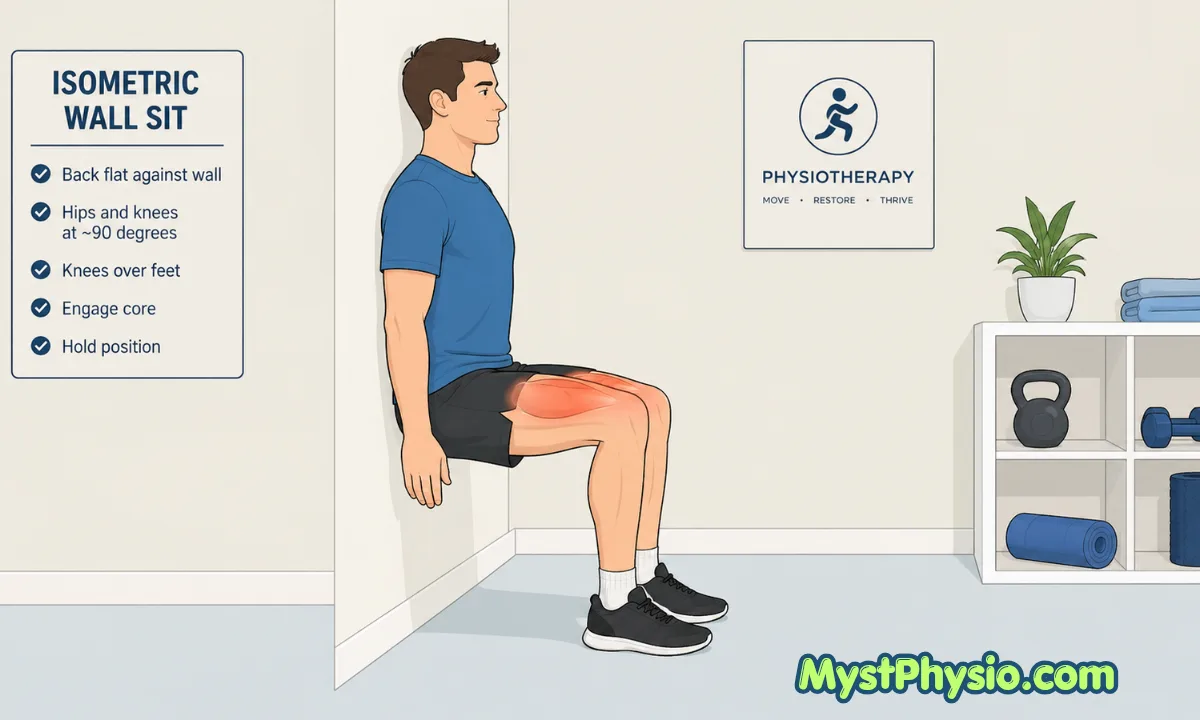
“Iso” means equal, and “metric” relates to length. So an isometric contraction happens when your muscle produces force without changing its length. No joint movement. No visible motion. Just tension.
Think about pressing your palms together flat in front of your chest. Your arms don’t move – but your chest and arm muscles are working hard. That’s isometric.
Why Clinicians Use Isometric Exercises
This type of contraction is a cornerstone of early rehabilitation. After surgery or injury, a person’s joint may be too swollen or fragile to move. Isometric exercises let the muscles around that joint stay active and strong – without stressing the healing tissue.
Here is where it gets clinically interesting. Studies show isometric contractions can reduce pain signals quite quickly. This effect – sometimes called exercise-induced hypoalgesia (a reduction in pain sensitivity caused by movement) – has been observed particularly in people with tendon pain, such as patellar tendinopathy (painful tendon just below the kneecap).
Common clinical uses of isometric contractions include:
- Post-surgical limb strengthening (e.g., after knee replacement)
- Managing joint inflammation (arthritis, bursitis)
- Mild blood pressure management through supervised training
- Facial and jaw rehabilitation after dental or neurological procedures
One thing to keep in mind – isometric exercises can briefly raise blood pressure during effort. If you live with high blood pressure (hypertension – a condition where the force of blood against artery walls is consistently too high), always speak to your doctor before starting any new exercise routine.
Isotonic Contractions: The Workhorse of Movement
What Is an Isotonic Contraction?
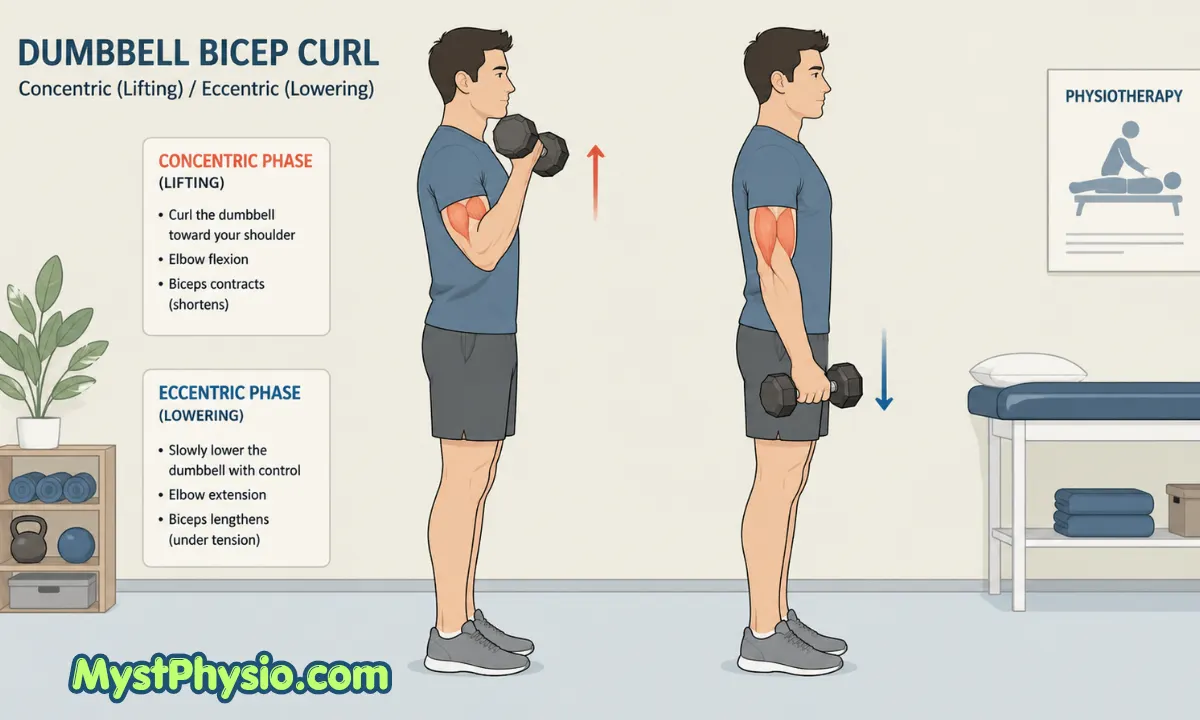
“Isotonic” means equal tension. Here the muscle force stays relatively constant while the muscle changes length and moves a joint. This is the type of contraction most people are familiar with – it’s what happens during a bicep curl, a squat, or even walking.
Isotonic contractions split into two subtypes, and both matter clinically.
Concentric Contractions: Shortening Under Load
A concentric contraction happens when a muscle shortens as it contracts. Curling a dumbbell up toward your shoulder is a concentric bicep contraction. The muscle generates force and gets shorter at the same time.
Concentric contractions are fundamental to building functional strength. In rehabilitation, clinicians use them to help people with muscle weakness regain the ability to perform daily activities – like standing up from a chair or climbing steps.
Eccentric Contractions: Lengthening Under Load
This one surprises many people. An eccentric contraction is when a muscle lengthens while still producing force. Slowly lowering a dumbbell back down? That’s eccentric. Walking downstairs? Your quadriceps (thigh muscles) are working eccentrically to control the descent.
Eccentric training has become a powerhouse in modern physiotherapy. It is particularly effective for people with tendinopathy – a painful overuse condition in tendons – and has strong evidence behind it. The Alfredson protocol for Achilles tendinopathy (pain in the cord above your heel) is built almost entirely on eccentric loading.
Why eccentric work matters so much:
- It places more mechanical stress on the tendon – which promotes healthy remodeling
- It builds strength faster than concentric-only programs in some populations
- It may reduce injury recurrence in athletes returning to sport
However, eccentric exercise also produces more muscle soreness – that familiar ache you feel a day or two after a new workout. Clinically this is called DOMS (delayed onset muscle soreness). It’s a sign of adaptation, not damage.
Isokinetic Contractions: Precision at a Controlled Speed
What Is an Isokinetic Contraction?
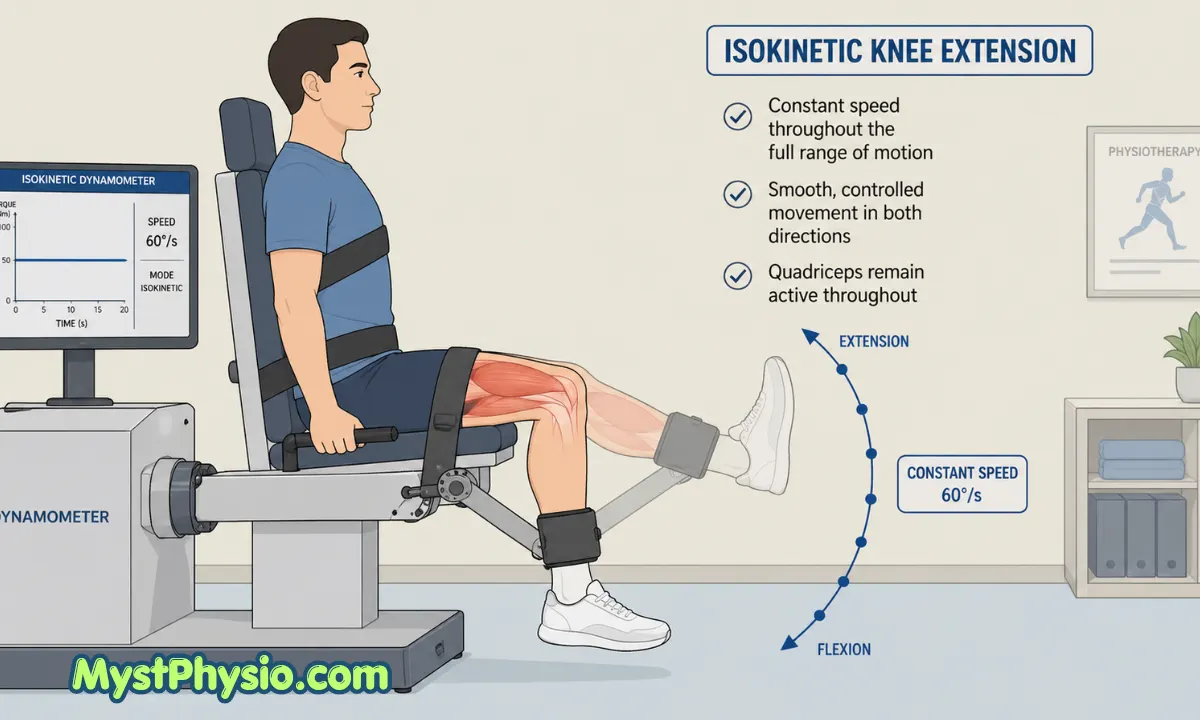
This is the most technical of the three. An isokinetic contraction occurs at a constant speed throughout the full range of motion, with the resistance automatically adjusting to match the force you apply. No matter how hard you push, the speed stays the same.
You can’t replicate this in a standard gym. It requires specialist equipment – typically a computerized dynamometer (a machine that measures muscle force and controls movement speed). These machines are found in sports medicine clinics, hospital physiotherapy departments, and high-performance athletic facilities.
Why Isokinetic Testing Is So Valuable
Isokinetic assessment is considered the gold standard for measuring muscle strength objectively. It gives clinicians precise data – not just whether a muscle is “strong enough,” but exactly how much force it produces at different speeds, at every angle of movement.
This matters enormously when:
- Deciding if an athlete is truly ready to return to competitive sport after ACL reconstruction (a common knee ligament injury)
- Assessing asymmetry between limbs – for example, whether one leg is significantly weaker than the other after a stroke
- Tracking rehabilitation progress with measurable, reproducible data
The numbers don’t lie. If your injured knee produces only 70% of the force of your healthy knee, the evidence suggests your re-injury risk is still elevated. Most clinicians want to see at least 85–90% symmetry before clearing someone for full sport.
Limitations of Isokinetic Training
It’s not without drawbacks. The equipment is expensive. It doesn’t replicate natural movement patterns perfectly. And access is limited – most community physiotherapy clinics simply don’t have these machines.
For this reason, isokinetic testing is typically reserved for high-level sport rehabilitation or complex clinical assessments, rather than day-to-day exercise programming.
Quick Comparison: At a Glance
| Contraction Type | Muscle Length Change | Speed Controlled? | Best Used For |
|---|---|---|---|
| Isometric | No change | No | Early rehab, pain relief, joint protection |
| Isotonic (Concentric) | Shortens | No | Functional strength, daily activities |
| Isotonic (Eccentric) | Lengthens | No | Tendon rehab, injury prevention |
| Isokinetic | Changes | Yes (constant) | Clinical testing, sport return assessment |
How These Contractions Work Together in Real Clinical Practice
Rehabilitation rarely uses just one type. A well-designed clinical program blends all three – strategically, based on your healing stage and goals.
Take someone recovering from a total knee replacement as an example. In the first week or two, they’ll focus on isometric quad sets – tensing the thigh muscle without bending the knee. As the joint heals, the therapist introduces isotonic exercises: leg raises, then shallow squats with eccentric lowering. If the person is a competitive athlete, isokinetic testing might be used weeks later to objectively confirm they’re ready to run again.
This progression isn’t arbitrary. It follows the tissue healing timeline – protecting early, loading progressively, and confirming readiness before return to full activity.
Frequently Asked Questions (FAQs)
Yes, generally. Because isometric exercises don’t cause much muscle damage, they can be performed daily – especially during early rehabilitation. However, the intensity, duration, and your specific condition all matter. Ask your physiotherapist what’s right for you.
Yes, with appropriate guidance. Eccentric exercises are increasingly used with older adults to counter muscle loss (sarcopenia – the age-related decline in muscle mass). Supervised, progressive eccentric programs are safe and effective in this population.
Research suggests that all three contribute to muscle growth (hypertrophy). Eccentric contractions, in particular, appear to produce greater muscle hypertrophy per session due to the higher mechanical tension placed on the fibers.
No. Most everyday training and rehabilitation happens without it. Isokinetic machines are primarily assessment tools in clinical settings. Effective strength training can be achieved with free weights, resistance bands, and bodyweight exercises that combine concentric and eccentric loading.
Emerging evidence suggests that supervised isometric hand-grip and lower-body exercises may help reduce resting blood pressure. However, this should always be discussed with a cardiologist or GP before starting, as high blood pressure management is highly individual.
A Final Word From a Clinical Perspective
These three categories – isometric, isotonic, and isokinetic are not just textbook concepts. They are the building blocks of how clinicians design safe, effective programs for people at every stage of health and recovery.
Whether you’re managing a chronic condition, bouncing back from injury, or optimizing your athletic performance, knowing which type of contraction applies to your situation helps you ask better questions and make more informed decisions about your care.
Every patient deserves a program built on this understanding. And every clinician worth their experience uses all three.
Call to Action
If you are recovering from an injury, managing a musculoskeletal condition, or simply want to train smarter – consult a registered physiotherapist or your General Practitioner (GP) for a personalised assessment and exercise plan. The right type of contraction, at the right time, can make all the difference.
References
- Enoka RM, Duchateau J. “Muscle fatigue: what, why and how it influences muscle function.” Journal of Physiology. 2008;586(1):11–23.
- Rio E, Kidgell D, Purdam C, et al. “Isometric exercise induces analgesia and reduces inhibition in patellar tendinopathy.” British Journal of Sports Medicine. 2015;49(19):1277–1283.
- Beyer R, Kongsgaard M, Hougs Kjær B, et al. “Heavy slow resistance versus eccentric training as treatment for Achilles tendinopathy.” American Journal of Sports Medicine. 2015;43(7):1704–1711.
- Dvir Z. Isokinetics: Muscle Testing, Interpretation and Clinical Applications. 2nd ed. Churchill Livingstone; 2004.
- Kyritsis P, Bahr R, Landreau P, Miladi R, Witvrouw E. “Likelihood of ACL graft rupture: not meeting six clinical discharge criteria before return to sport is associated with a four times greater risk of rupture.” British Journal of Sports Medicine. 2016;50(15):946–951.
- Hoppeler H. “Moderate load eccentric exercise; a distinct novel training modality.” Frontiers in Physiology. 2016;7:483.
- Schoenfeld BJ. “The mechanisms of muscle hypertrophy and their application to resistance training.” Journal of Strength and Conditioning Research. 2010;24(10):2857–2872.
- Inder JD, Carlson DJ, Dieberg G, McFarlane JR, Hess NC, Smart NA. “Isometric exercise training for blood pressure management: a systematic review and meta-analysis to optimise benefit.” European Journal of Preventive Cardiology. 2016;23(1):10–22.
This article is written for educational purposes only. It does not replace professional medical advice, diagnosis, or treatment. Always seek the guidance of a qualified healthcare provider with any questions you may have regarding a medical condition.