

If you’re a physiotherapy student encountering electrotherapy for the first time, or a patient who has just been offered TENS as part of a treatment plan, the same question tends to come up: what is this machine actually doing to your nervous system? And does it genuinely help with pain, or is the evidence more complicated than the equipment brochure suggests?
These are fair questions. TENS is one of the most widely used electrotherapy modalities in physiotherapy practice, and one of the most frequently misunderstood – partly because the research is genuinely mixed, and partly because the therapy’s effectiveness depends on parameters that many clinical trials have consistently applied incorrectly. At MystPhysio.com, all electrotherapy content is developed with reference to current clinical evidence and reviewed by qualified physiotherapists. What follows is an honest account of the science, the evidence base, and the clinical reasoning behind TENS.
What Is TENS Therapy?
TENS (transcutaneous electrical nerve stimulation) is a form of electrotherapy used in physiotherapy to reduce pain. A small, battery-powered device delivers low-voltage electrical pulses through self-adhesive electrodes placed on the skin. These pulses stimulate sensory nerve fibres and are thought to reduce pain through 2 main biological mechanisms: the gate control theory and endogenous opioid release. TENS does not address the underlying cause of pain, but it can provide clinically useful short-term relief for a range of musculoskeletal and neuropathic conditions.
TENS machines range from clinical-grade units used in physiotherapy departments to compact, over-the-counter home devices. The same 3 parameters apply across all types: frequency (measured in Hz), pulse width (measured in microseconds), and intensity (measured in milliamps). A physiotherapist adjusts these to target the appropriate biological mechanism for the condition being treated.
According to NHS guidance on TENS, the therapy is considered safe for most people when used correctly and can be self-administered at home once a clinician has provided instruction on setup and appropriate settings.
How Does TENS Relieve Pain?
The mechanism is more interesting than most patients expect, and worth understanding properly if you want to apply TENS effectively or explain it to the people you’re treating.
High-frequency TENS, typically set between 80 and 150 Hz, works primarily through the gate control theory of pain, first described by Melzack and Wall in their 1965 paper in the journal Science. The theory explains how stimulating large-diameter A-beta sensory nerve fibres activates inhibitory interneurons in the substantia gelatinosa of the dorsal horn, the region of the spinal cord where incoming pain signals are processed and modulated. These interneurons close a neural gate on pain signals travelling along slower, smaller A-delta and C fibres. Pain relief arrives quickly, usually within minutes of starting treatment, and the sensation during treatment is a comfortable tingling or buzzing known as paresthesia.
Low-frequency TENS, set between 1 and 4 Hz and commonly called acupuncture-like TENS or AL-TENS, works through a different pathway entirely. The pulses are delivered at high enough intensity to recruit motor fibres and produce rhythmic muscle twitching. This activates descending inhibitory pathways running from the periaqueductal grey (PAG) in the brainstem and the raphe nuclei, triggering the release of the body’s endogenous opioid peptides: beta-endorphin, dynorphin, and enkephalin. As documented by Sluka and Walsh in their 2003 review in the Journal of Pain, this opioid-mediated mechanism explains why AL-TENS takes 20 to 30 minutes to produce its full effect but generates a considerably longer carry-over after the session ends.
Low-frequency TENS can continue to reduce pain for several hours after the machine is switched off, because the endorphin release it triggers outlasts the electrical stimulation itself.
This distinction has real clinical implications. Conventional TENS suits situations where fast-acting relief during activity is the goal. AL-TENS is more appropriate when longer-lasting relief is needed or when patients report that their pain returns quickly once conventional TENS ends. Choosing between modes should follow this reasoning, not habit or convenience.
The Three Types of TENS Used in Clinical Practice
Most clinical references describe 3 modes of TENS, each with distinct parameters, mechanisms, and clinical applications. Understanding their differences is central to making purposeful treatment decisions.
| Mode | Frequency | Intensity | Primary Mechanism | Onset of Relief | Carry-Over Effect |
|---|---|---|---|---|---|
| Conventional TENS | 80 to 150 Hz | Low (paresthesia only, no muscle activation) | Gate control via A-beta fibre stimulation at the dorsal horn | Rapid (within minutes) | Short (fades soon after stimulation ends) |
| Acupuncture-like TENS (AL-TENS) | 1 to 4 Hz | High (visible rhythmic muscle twitching) | Endogenous opioid release via descending inhibitory pathways | Slow (20 to 30 minutes) | Long (several hours post-stimulation) |
| Burst-mode TENS | Bursts of high-frequency pulses delivered at 2 to 4 bursts per second | Moderate | Combined gate control and partial opioid activation | Moderate | Moderate |
In everyday clinical practice, conventional TENS is the most frequently prescribed mode, particularly for home use. AL-TENS requires closer clinical oversight because the intensity needed to produce visible muscle twitching must be reached gradually to stay within a comfortable and therapeutically appropriate range.
Which Conditions Is TENS Used For?
Physiotherapists apply TENS across a range of pain conditions, and the strength of evidence differs considerably by condition. Knowing where that evidence is solid, and where it remains limited, is part of applying the modality responsibly.
Postoperative pain has the most consistent evidence base. A 2003 meta-analysis by Bjordal, Johnson, and Ljunggreen, published in the European Journal of Pain, found that TENS significantly reduced postoperative analgesic consumption compared with placebo across multiple trials. This remains one of the strongest areas of evidence for TENS in clinical practice.
Chronic musculoskeletal pain shows moderate evidence of benefit. A 2007 meta-analysis by Johnson and Martinson in the journal Pain analysed data from randomised controlled trials on electrical nerve stimulation and found statistically significant pain reductions compared with control conditions.
Knee osteoarthritis has been examined in a 2009 Cochrane review by Rutjes and colleagues on transcutaneous electrostimulation for knee OA. The review found statistically significant pain reductions, though reviewers noted that clinical significance of the effect size was modest. TENS continues to be used as an adjunct in osteoarthritis pain management; patients and clinicians should check current NICE guidance directly, as OA guidelines are reviewed periodically.
Labour pain is a well-established application. NHS guidance acknowledges TENS as an option for managing pain in the early stages of labour, and TENS machines are widely used for this purpose. Evidence for effectiveness in advanced labour is more limited.
Chronic low back pain requires particular care. NICE guideline NG59 on low back pain and sciatica in adults, published in 2016 and updated in 2020, does not recommend TENS for non-specific chronic low back pain. This is a frequently overlooked clinical fact, given how widely TENS is used for this presentation in practice and as a home therapy.
Phantom limb pain was assessed in a 2015 Cochrane review by Johnson, Mulvey, and Bagnall, which identified only 2 qualifying randomised controlled trials, providing insufficient evidence to support or refute the use of TENS for this condition.
Does TENS Actually Work? What the Evidence Shows
The honest answer to this question depends on which TENS, applied at what parameters, in which population.
2 widely cited Cochrane reviews are often used to question the effectiveness of TENS. Nnoaham and Kumbang’s 2008 Cochrane review of TENS for chronic pain concluded that poor trial quality prevented definitive conclusions from being drawn. Khadilkar and colleagues reached a similar position in their 2008 Cochrane review of TENS versus placebo for chronic low back pain. Both reviews are real. Their conclusions are accurate. But they are often misread as evidence that TENS simply doesn’t work.
A 2011 analysis by Bennett, Hughes, and Johnson, published in Pain, examined the methodological quality of TENS randomised controlled trials and found a consistent problem: most studies delivered TENS at intensity levels too low to produce meaningful sensory activation. When stimulation is insufficient to engage the gate control or opioid mechanisms, the outcome is functionally sham TENS, regardless of what the study protocol describes.
Most negative TENS trials tested an underdosed version of the therapy, where stimulation intensity was too low to activate either of the neural mechanisms involved in pain relief.
This is supported by Vance, Dailey, Rakel, and Sluka, whose 2014 review in Pain Management concluded that when TENS is applied at strong but comfortable intensity, the evidence for analgesic effects is considerably more consistent. A 2011 systematic review by Claydon and colleagues in the Clinical Journal of Pain confirmed dose-specific effects across experimental pain models: higher intensity within the comfortable range reliably produced better analgesic outcomes.
The practical implication is clear. TENS trials should be evaluated for parameter fidelity, not just for design quality. For students reading the literature, the absence of benefit in a given trial often reflects how the therapy was delivered, not whether the therapy can work. For patients, if TENS has not helped in the past, the settings used may have been the limiting factor.
Electrode Placement and Treatment Parameters
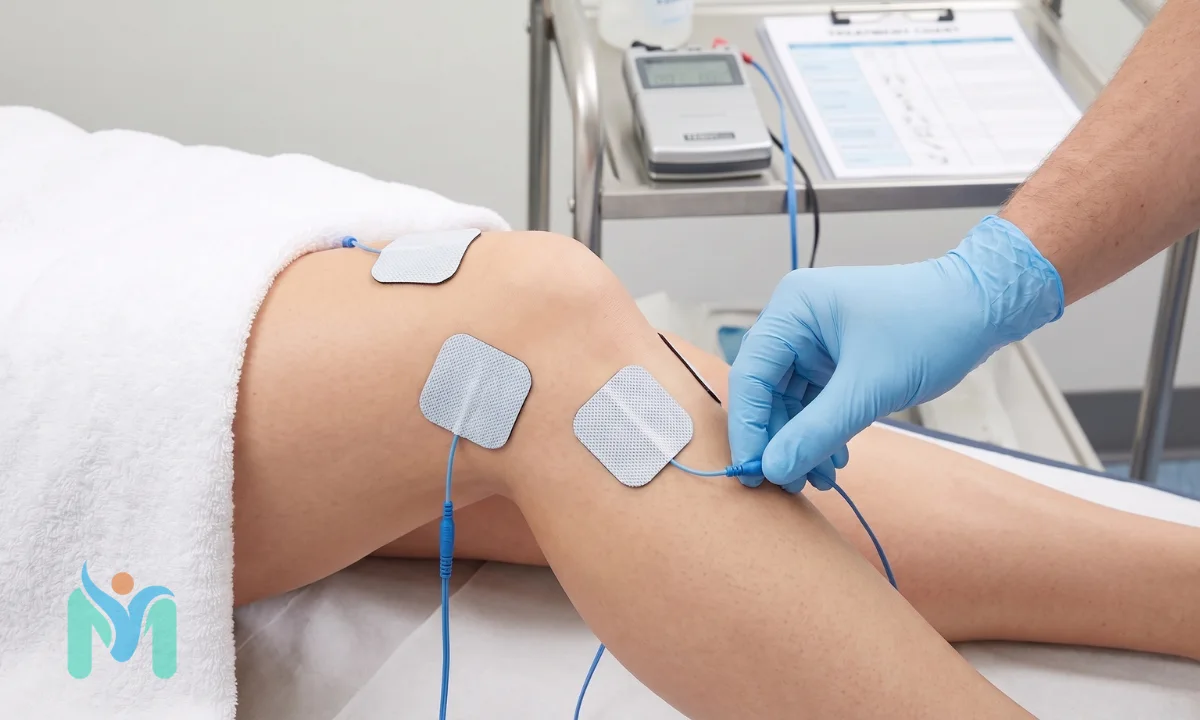
Getting placement and parameters right matters more for TENS than for most physiotherapy modalities. An electrode in the wrong position or intensity set too low directly undermines the mechanism being targeted.
The 4 main placement strategies used in physiotherapy are:
- Over the painful area: Electrodes are positioned directly over or around the site of pain, bracketing the region on either side. This is the most common approach and targets the local sensory nerve supply directly.
- Dermatome placement: Electrodes are applied over the skin area (dermatome) supplied by the same spinal nerve root as the painful region. This allows segmental analgesia without placing electrodes on tissue that may be hypersensitive, inflamed, or compromised.
- Nerve trunk placement: Electrodes are placed over the main peripheral nerve proximal to the site of pain. This is useful for radiating pain or nerve-related presentations where direct electrode placement at the pain site is impractical.
- Trigger point or acupuncture point placement: Used particularly with AL-TENS, targeting sites with dense innervation or known electrodermal activity. This approach draws on acupuncture point theory to amplify the opioid-mediated response.
For intensity, the target for conventional TENS is a strong but comfortable paresthesia: felt clearly and consistently, without crossing into discomfort. This is the single most clinically important parameter. A 2011 systematic review by Claydon and colleagues in the Clinical Journal of Pain confirmed that higher intensity within the comfortable range produces greater analgesic effect. If the sensation is barely perceptible, the stimulation is almost certainly insufficient to produce meaningful pain relief.
Session duration typically ranges from 20 to 60 minutes, and TENS can be used multiple times daily when needed. A 2011 study by Liebano and colleagues, published in Pain, found that analgesic tolerance to TENS can develop with repeated use at identical parameters. Rotating between frequencies or electrode positions across sessions helps maintain effectiveness over time and is something a physiotherapist can advise on as part of a home programme.
When Should You Not Use TENS?
TENS is safe for most people when applied correctly, but specific contraindications must be understood before use. Applying TENS in the wrong clinical situation carries genuine risk.
Based on NHS guidance and established clinical practice, TENS should not be used by people with:
- Active implanted electronic devices, including pacemakers, implantable cardioverter-defibrillators (ICDs), spinal cord stimulators, or cochlear implants. Electrical current from TENS can interfere with device function and presents a serious safety risk.
- Undiagnosed pain. TENS should not be applied before a medical assessment has identified the source of pain, as it may mask symptoms that require clinical investigation.
- Known or suspected malignancy at the electrode site. Electrodes should not be placed over or adjacent to a tumour. Applying electrical stimulation in this context carries theoretical risks that have not been adequately studied.
- Deep vein thrombosis or thrombophlebitis. Electrodes should not be applied over a limb with confirmed or suspected DVT.
- Broken, damaged, or infected skin at the intended electrode site.
- Pregnancy, particularly in the first trimester, or over the abdomen and pelvis at any stage of pregnancy. TENS is used for labour pain under clinical supervision but should otherwise be avoided during pregnancy.
- Epilepsy, where electrode placement would be on the head or neck.
- Significantly reduced sensation at the electrode site. Patients who cannot accurately report the intensity of stimulation cannot provide the feedback needed to maintain safe parameter adjustment.
TENS must not be applied over the anterior neck, due to the risk of laryngeal spasm and potentially dangerous cardiovascular effects, or over the eyes. Clinicians should also avoid placing electrodes directly over the thorax of patients with known cardiac conditions without specific medical clearance.
For any patient with conditions not covered above who has concerns about TENS suitability, a physiotherapist or treating clinician should make the assessment individually before treatment begins.
Understanding What TENS Can and Cannot Do
TENS therapy occupies a specific and useful place in physiotherapy practice, but understanding its limits is as important as knowing its applications.
The evidence supports TENS as a non-pharmacological analgesic with well-understood neurophysiological mechanisms. For postoperative pain, the evidence is strong. For chronic musculoskeletal conditions, it is moderate and depends on correct parameter selection. For chronic low back pain, NICE guideline NG59 does not recommend TENS, and this reflects genuine difficulty in producing consistent trial evidence for this particular presentation, not a general verdict on the modality.
The mixed picture across the TENS literature is largely a product of a single recurring problem: trials testing insufficient stimulation intensity. The same TENS unit applied at low intensity and the same unit applied at the correct strong-but-comfortable intensity are not equivalent interventions. One engages the neural pathways involved in pain modulation. The other does not. This distinction is rarely made explicit in published summaries of the evidence, but it matters significantly for how that evidence is interpreted.
TENS works best as part of a broader physiotherapy plan, not as a standalone approach. Its most clinically valuable role is often making movement and exercise more tolerable by reducing pain in the short term, which supports active rehabilitation rather than replacing it. For students building their electrotherapy knowledge, the core insight is this: frequency and intensity are not dial positions, they are mechanistic choices. Get them right, and the physiology follows.
Consult your doctor or a qualified physiotherapist before starting any new treatment programme, especially if you have an existing injury or medical condition.
Frequently Asked Questions (FAQs)
Conventional TENS uses high frequencies of 80 to 150 Hz at low intensity, producing a comfortable tingling sensation without muscle movement. It activates the gate control pathway at the dorsal horn and provides rapid but relatively short-lived pain relief. Acupuncture-like TENS (AL-TENS) uses low frequencies of 1 to 4 Hz at higher intensity, producing visible muscle twitching. It stimulates endorphin release through descending inhibitory pathways, offering slower-onset relief that can persist for several hours after the session ends.
TENS has genuine physiological mechanisms and is not a placebo effect. A 2003 meta-analysis by Bjordal and colleagues found TENS significantly reduced postoperative analgesic requirements compared with placebo. The broader evidence is mixed, but a 2011 analysis in Pain by Bennett and colleagues showed that most negative trials used stimulation intensity too low to activate the relevant neural mechanisms. When TENS is applied correctly, a 2014 review by Vance and colleagues in Pain Management found considerably more consistent evidence of analgesic benefit.
TENS must not be used by anyone with an active implanted electronic device such as a pacemaker or defibrillator, as it can interfere with device function. Avoid electrode placement over malignant tissue, over a limb with suspected DVT, on broken or infected skin, or over the anterior neck. TENS should not be applied to the abdomen or pelvis during pregnancy outside of supervised labour care. People with epilepsy should avoid electrode placement on the head or neck. Undiagnosed pain should always be medically assessed before TENS is used.
A typical TENS session lasts 20 to 60 minutes, depending on the condition and mode being used. TENS can be used multiple times per day when needed for pain relief. A 2011 study by Liebano and colleagues, published in Pain, found that analgesic tolerance to TENS can develop with prolonged use at the same parameters. Rotating between different frequencies or electrode positions across sessions helps maintain the therapy’s effectiveness. A physiotherapist can advise on an appropriate schedule for your specific condition and treatment goals.
NICE guideline NG59 on low back pain and sciatica in adults, published in 2016 and updated in 2020, does not recommend TENS as a treatment for non-specific chronic low back pain. This reflects the difficulty in demonstrating reliable superiority over placebo in well-conducted clinical trials. Despite this guidance, TENS continues to be used by some clinicians for back pain as part of a broader management plan. Patients considering TENS for low back pain should discuss the current evidence and their individual circumstances with a physiotherapist.
TENS is used for some forms of neuropathic pain, though evidence varies by condition. A 2015 Cochrane review by Johnson, Mulvey, and Bagnall on TENS for phantom limb pain found only 2 qualifying randomised controlled trials, providing insufficient evidence for firm conclusions. Clinically, TENS is often used for neuropathic pain as part of a broader management approach, particularly where pharmacological options are limited or poorly tolerated. A physiotherapist should assess individual suitability based on pain type, location, and the patient’s overall clinical picture.
Electrode placement directly affects TENS outcomes. The most common strategy positions electrodes over or around the painful area. Electrodes may also be placed over the dermatome supplying the painful region, over the proximal nerve trunk, or at trigger points for low-frequency TENS. Placement should never be over broken skin, the anterior neck, the eyes, or near an implanted electronic device. Optimal placement depends on the condition, pain location, and TENS mode being used. A physiotherapist should advise on the most appropriate placement strategy for your specific presentation.
References
- NHS. “Transcutaneous electrical nerve stimulation (TENS).” NHS Conditions. URL: https://www.nhs.uk/conditions/transcutaneous-electrical-nerve-stimulation-tens/. Evidence Level: 7.
- Melzack R, Wall PD. “Pain mechanisms: a new theory.” Science. 1965;150(3699):971-979. DOI: 10.1126/science.150.3699.971. PMID: 5320816. URL: https://pubmed.ncbi.nlm.nih.gov/5320816/. Evidence Level: 6.
- Sluka KA, Walsh D. “Transcutaneous electrical nerve stimulation: basic science mechanisms and clinical effectiveness.” Journal of Pain. 2003;4(3):109-121. DOI: 10.1054/jpai.2003.47. PMID: 14622708. URL: https://pubmed.ncbi.nlm.nih.gov/14622708/. Evidence Level: 6.
- Bjordal JM, Johnson MI, Ljunggreen AE. “Transcutaneous electrical nerve stimulation (TENS) can reduce postoperative analgesic consumption: a meta-analysis with assessment of optimal treatment parameters for postoperative pain.” European Journal of Pain. 2003;7(2):181-188. DOI: 10.1016/S1090-3801(02)00098-8. PMID: 12600800. URL: https://pubmed.ncbi.nlm.nih.gov/12600800/. Evidence Level: 2.
- Johnson M, Martinson M. “Efficacy of electrical nerve stimulation for chronic musculoskeletal pain: a meta-analysis of randomized controlled trials.” Pain. 2007;130(1-2):157-165. DOI: 10.1016/j.pain.2007.02.007. PMID: 17383095. URL: https://pubmed.ncbi.nlm.nih.gov/17383095/. Evidence Level: 2.
- Rutjes AW, Nüesch E, Sterchi R, et al. “Transcutaneous electrostimulation for osteoarthritis of the knee.” Cochrane Database of Systematic Reviews. 2009;(4):CD002823. DOI: 10.1002/14651858.CD002823.pub2. PMID: 19821296. URL: https://pubmed.ncbi.nlm.nih.gov/19821296/. Evidence Level: 2.
- NICE. “Low back pain and sciatica in over 16s: assessment and management.” NICE guideline [NG59]. National Institute for Health and Care Excellence. 2016 (updated 2020). URL: https://www.nice.org.uk/guidance/ng59. Evidence Level: 1.
- Johnson MI, Mulvey MR, Bagnall AM. “Transcutaneous electrical nerve stimulation (TENS) for phantom pain and stump pain following amputation in adults.” Cochrane Database of Systematic Reviews. 2015;(8):CD007264. DOI: 10.1002/14651858.CD007264.pub2. PMID: 26284511. URL: https://pubmed.ncbi.nlm.nih.gov/26284511/. Evidence Level: 2.
- Nnoaham KE, Kumbang J. “Transcutaneous electrical nerve stimulation (TENS) for chronic pain.” Cochrane Database of Systematic Reviews. 2008;(3):CD003222. DOI: 10.1002/14651858.CD003222.pub2. PMID: 18646088. URL: https://pubmed.ncbi.nlm.nih.gov/18646088/. Evidence Level: 2.
- Khadilkar A, Odebiyi DO, Brosseau L, Wells GA. “Transcutaneous electrical nerve stimulation (TENS) versus placebo for chronic low-back pain.” Cochrane Database of Systematic Reviews. 2008;(4):CD003008. DOI: 10.1002/14651858.CD003008.pub3. PMID: 18843638. URL: https://pubmed.ncbi.nlm.nih.gov/18843638/. Evidence Level: 2.
- Bennett MI, Hughes N, Johnson MI. “Methodological quality in randomised controlled trials of transcutaneous electric nerve stimulation for pain: low fidelity may explain negative findings.” Pain. 2011;152(6):1226-1232. DOI: 10.1016/j.pain.2010.12.009. PMID: 21435786. URL: https://pubmed.ncbi.nlm.nih.gov/21435786/. Evidence Level: 5.
- Vance CG, Dailey DL, Rakel BA, Sluka KA. “Using TENS for pain control: the state of the evidence.” Pain Management. 2014;4(3):197-209. DOI: 10.2217/pmt.14.13. PMID: 24953072. URL: https://pubmed.ncbi.nlm.nih.gov/24953072/. Evidence Level: 6.
- Claydon LS, Chesterton LS, Barlas P, Sim J. “Dose-specific effects of transcutaneous electrical nerve stimulation (TENS) on experimental pain: a systematic review.” Clinical Journal of Pain. 2011;27(7):635-647. DOI: 10.1097/AJP.0b013e31821289ab. PMID: 21317763. URL: https://pubmed.ncbi.nlm.nih.gov/21317763/. Evidence Level: 2.
- Liebano RE, Rakel B, Vance CG, et al. “An investigation of the development of analgesic tolerance to TENS in humans.” Pain. 2011;152(2):335-342. DOI: 10.1016/j.pain.2010.10.040. PMID: 21147498. URL: https://pubmed.ncbi.nlm.nih.gov/21147498/. Evidence Level: 4.